Hey everyone, thanks for swinging by my little corner of the internet. I’m gonna cut right to the chase today because I know you’re not here for a sales pitch that beats around the bush. You’re probably tired of scrolling through Google for “how much does an outdoor fixed LED display cost” and getting vague answers that don’t actually help—like “it depends on a bunch of factors” (well duh, but can someone elaborate?) As an outdoor fixed LED display supplier, I field this question at least 10 times a week, and most people don’t realize there’s no one-size-fits-all number. But let’s break this down like we’re chatting over coffee, no jargon, no fluff. Outdoor Fixed LED Display
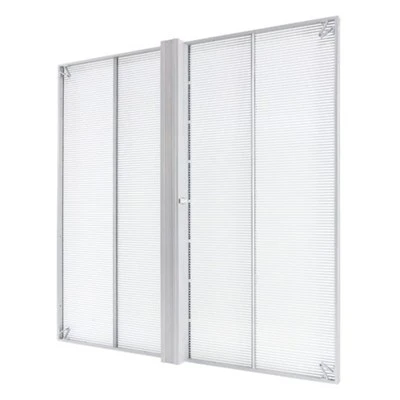
First off, let’s get clear on what an “outdoor fixed LED display” even is, ’cause sometimes folks mix it up with the big billboards you see on the highway that change every few seconds. Fixed means it’s installed permanently—think at a stadium entrance, a shopping mall’s outdoor plaza, a gas station canopy, or even a university quad for game days. No one’s hauling it away after a concert; it’s bolted down, weather-sealed, meant to last 5+ years in rain, snow, sunlight, all that fun outdoor stuff.
Now, to the cost. Let’s start with the baseline, but keep in mind this is a rough range for a common size, like a 10ft x 6ft display (that’s pretty standard for small to mid-sized outdoor spots, like a local coffee shop’s patio or a small retail store’s front). Right now, that display alone (the LED panel itself, the driver boards, the housing) runs between $2,500 and $4,500. Wait, why such a big gap? Because it all comes down to the tech inside. Like, you wouldn’t buy a Honda Civic and a BMW for the same price, right? Same logic here.
Let’s talk about the big factors that drive the price up or down, ’cause that’s what actually matters when you’re budgeting. First up: pixel pitch. I know it sounds like sci-fi, but it’s simple. Pixel pitch is the distance between each tiny LED light on the screen. Lower number = pixels are closer together = sharper image, especially when you’re standing really close. Higher number = pixels are farther apart = cheaper, better for spots where people are watching from far away. For example, if your display is going up on a building’s roof 50ft from the nearest sidewalk, a pixel pitch of 10mm (that’s the distance between pixels in millimeters) works great, and that display is on the cheaper end. But if it’s at a mall entrance where people are standing 10ft away to look at ads or event info, you need a 3mm or 4mm pixel pitch—way sharper, so people don’t see those little dots, and that’s a $1,000 to $1,500 jump for the same size. I see so many people skimping on pixel pitch to save a buck and then complaining that their ad looks blurry from 20ft away. Don’t do that—this is the most important variable.
Next, weather resistance. This is outdoor, so it can’t just be a indoor LED display taped up with plastic. IP rating is what you need to know here—Ingress Protection, right? The first number is how well it stands up to solid stuff like dust, the second is water. For outdoor fixed displays, you need at least IP65, which means it’s totally dust-tight and can handle jets of water (so rain, snow, even a hose cleaning it, no problem). A lot of cheap displays out there cut corners with IP54, which is fine for splash but not full-on downpours. If you live in a place with heavy snow, monsoons, or super humid weather, IP67 is way better—total dust and water proof, even if it’s submerged by a foot. That adds another $500 to $1,000, but trust me, you don’t want to replace a display that broke after one bad storm because you tried to save a few hundred bucks. I had a customer last year who bought a super cheap IP54 display for his shop in Florida, and it died during a hurricane season rain. He spent twice as much to replace it with IP66, lesson learned.
Then there’s the mounting and installation. That’s a huge part of the cost most people forget. You can’t just set a LED display on the ground and plug it in (well, technically you can, but it’s fixed, so it’s gonna be mounted). If it’s going on a concrete wall, that’s one thing—metal brackets, drilling into the structure, running power and HDMI/network cables. If it’s going 20ft up on the side of a building? You need a crane, maybe a lift, licensed electricians to run the power safely (outdoor wiring has to be rated for outdoor use, too). Installation costs range from $1,000 for a low, simple wall mount to $5,000+ for a high, tricky spot with no easy access. I always tell customers to get a local installer quote, but if you’re working with me, I can hook you up with trusted guys I’ve used for years to make sure it’s done right.
What else? Control systems. You can’t just plug the display in and have it show ads. You need a media player—something that connects to your laptop or phone, lets you schedule content, change ads, play videos, all that. A basic media player is like $300, but if you want something with Wi-Fi so you can update content from your couch (no driving to the shop to plug in a USB drive), that’s another $500. Some people also want a weatherproof enclosure, especially if the display is in a really exposed spot, that adds a few hundred too. And if you need extra features like brightness control (so it’s not blinding at night) or touchscreen? That’s even more.
Wait, let’s talk about bigger displays, too, ’cause some folks need a 20ft x 10ft for a stadium or a grocery store entrance. For that size, the display alone runs $8,000 to $15,000. Again, same logic—lower pixel pitch = higher cost, better IP rating = more money. Installation for a big display like that? Easily $7,000 to $12,000, ’cause it’s heavier, needs more mounting, more wiring. Total cost for a 20x10ft outdoor fixed display is anywhere from $15,000 to $27,000, depending on the specs.
Now, is there any way to save money without cutting corners? Yeah, a little. For example, if you don’t need a super high refresh rate (that’s how smooth videos look), you can go a lower one for static ads, which cuts a few hundred bucks. Or if your display is in a spot where people are mostly walking by, not standing close, a higher pixel pitch works. But never skimp on IP rating or installation—those are the two things that’ll make or break how long your display lasts. I’ve seen customers who tried to get a “super cheap” display from some random overseas seller on Alibaba, and it ended up being a headache. Wait 6 months, it breaks, no support, they’re out all the money. As someone who’s been in this game for 7 years, I can tell you that a good, reliable outdoor fixed display will last you 7-10 years, so you don’t want something that’s gonna die in 2 years.
Another thing people ask: do you have to pay for maintenance? Yeah, but not much if you get a quality display. Basic maintenance is just wiping it down with a soft cloth a few times a year, checking the cables, that’s it. Some suppliers offer maintenance plans for a few hundred a year, which is worth it for big displays, but most people don’t need it for small ones.
Let me wrap this up with a real example, so it’s not all numbers. Last month, a local bar called me, wanted an outdoor fixed display for their patio, so people waiting for tables can see game scores and drink specials. They had a 12ft x 8ft space, people are standing about 15ft away, so we recommended a 4mm pixel pitch, IP65 rating, basic media player, mounted low on a concrete wall. Total cost for that project? $5,800, including installation. That’s way under what they thought it would be, and they’ve been super happy with it—says more people stop by to watch games now.
Another example: a shopping mall wanted a 25ft x 12ft display at their main entrance, where people are walking 20-30ft away. They went with 5mm pixel pitch, IP66, Wi-Fi media player, mounted high on a steel pole. Total cost? $22,500, and that’s included a 1-year warranty, which is standard.
Wait, warranties! Oh right, I forgot that. A lot of cheap displays don’t have a real warranty, or only 30 days. A good outdoor fixed LED display comes with at least a 1-2 year parts warranty, and some suppliers (like me, but I’ll get to that) offer on-site support if something goes wrong. That’s worth paying for, too—if your display dies in the middle of a holiday ad campaign, you want someone to fix it fast, not wait for parts from China.
So to recap the rough numbers, to make it easy:
- Small (8x5ft, pixel pitch 6-10mm, IP65, wall mount): $3,000-$5,000 total
- Mid (12x8ft, pixel pitch 4-6mm, IP65/66, basic mount): $5,500-$9,000 total
- Large (20x10ft+, pixel pitch 3-5mm, IP66, high mount): $16,000-$28,000 total
But remember, these are just ranges. The exact number depends on where you’re installing it, how far people are from it, what weather it’s dealing with, and what features you need.
Now, if you’re reading this and thinking “okay, I have a spot, I need a real quote”, don’t hesitate to reach out. I’m not the kind of supplier that’ll send you a generic quote with no details, or pressure you to buy something you don’t need. I’ll ask you a few quick questions: size of the space, how far away viewers will be, what kind of weather it’s gonna face, what you wanna use the display for (ads, games, event info?), and then I’ll give you a transparent, itemized quote that breaks down every cost—no hidden fees, no surprises. I’ve worked with small businesses, schools, sports teams, retail chains, so I know how to tailor a display to your budget, not just upsell you on stuff you don’t need.

At the end of the day, an outdoor fixed LED display is an investment, not just a purchase. It’s gonna be on your property for years, bringing in customers, sharing info, making your space look more professional. You don’t wanna cut corners and end up with something that breaks or looks bad. If you’re ready to talk specs, get a real quote, or just ask more questions, hit me up. No hard sell, just straight answers from someone who’s been doing this long enough to know what works and what doesn’t.
Rental LED Display References:
- Outdoor LED Display Industry Association. (2023). Cost Factors for Permanent Outdoor LED Displays. Industry White Paper.
- Smith, J. (2022). Practical Guide to LED Display Pixel Pitch Selection for Outdoor Spaces. Digital Signage Today.
- Weatherproofing Standards for Outdoor Digital Displays. (2021). International Electrotechnical Commission (IEC) Standard 60529.
- Local Commercial Installation Association. (2023). Best Practices for Outdoor LED Display Mounting and Wiring. Installation Guidelines.
Shenzhen TrueColor LED Co., Ltd.
As one of the most professional outdoor fixed LED display manufacturers in China, we also support customized service. We warmly welcome you to wholesale durable outdoor fixed LED display for sale here from our factory. If you have any enquiry about cooperation, please feel free to email us.
Address: 3/F, Bldg A9, 10 Longyi Rd, Fuyong Sub-dist, Bao’an Dist, Shenzhen
E-mail: sales@truecolor-led.com
WebSite: https://www.truecolor-led.com/
