Hey there, fellow dental pros and clinic managers! I’m Jake, part of the team that supplies dental autoclaves (yes, the big workhorses that keep your tools safe) and I get so many random questions when I chat with folks at trade shows, over email, even when I’m grabbing coffee at the local dental supply shop. One question that comes up all the time is: “Do dental autoclaves emit radiation?” Dental Autoclave
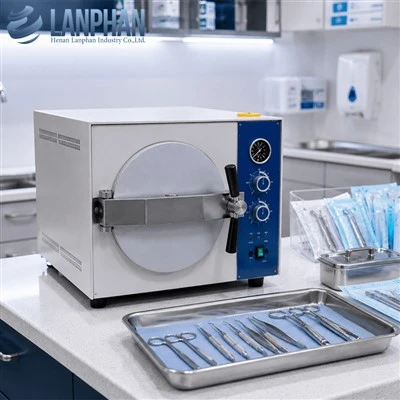
I totally get why this would cross your mind. If you’ve ever dealt with X-ray machines (which are definitely a thing in dental offices) you might be extra cautious about any equipment throwing off weird energy. And let’s be real—your patients ask you this too, right? I’ve heard dentists fumble through answers before, so I wanted to break this down straight, no jargon, because I’m not a scientist—just a guy who’s spent years knowing what our autoclaves do (and don’t do) for your clinic.
First, let’s define what a dental autoclave even is, for anyone who’s new to the game. It’s a pressure cooker, basically, but way more precise. We use saturated steam under high pressure (like 15 pounds per square inch, that’s about 2x normal room pressure) and a temp of 250°F (121°C) to kill all the nasty stuff—bacteria, viruses, spores, the whole shebang. That’s how you get sterilized tools for fillings, extractions, whatever.
Now, radiation. Radiation is energy that travels in waves or particles, right? There are two main types you might hear about: ionizing and non-ionizing. Ionizing is the bad stuff—like X-rays, gamma rays, that can damage cells if you’re exposed too much. Non-ionizing is lower energy, like microwaves, radio waves, the heat from a space heater.
So here’s the big answer: No, dental autoclaves do NOT emit ionizing radiation. That’s the one everyone worries about. None of the models we supply are designed to produce that. Let’s get specific about why. The way an autoclave works is pure heat and pressure on steam. It doesn’t use any radioactive materials, no tubes that shoot out X-rays, none of that. Think about it—if it did emit radiation, OSHA (Occupational Safety and Health Administration) would have strict rules about it, and let me tell you, our autoclaves pass every OSHA and ADA (American Dental Association) test with flying colors.
Wait, but hold on—could there be any mix-up? Let’s clear up that confusion. Some people might think the pressure gauge or the temperature control emits some kind of radiation, but no. Those are just sensors, not radiation sources. The door seal? That’s just to keep steam from escaping, not blocking radiation (because there’s none to block). Another angle: what about other dental equipment that does use radiation? Like intraoral X-rays, cone beam CT scanners. Those are separate devices, and your office should have safety protocols for those (lead aprons, proper storage, etc.). Autoclaves aren’t in that category at all.
Now, I know what you’re thinking: “But I’ve heard some ‘older’ autoclaves might have issues?” Let’s talk about older models. Back in the day, before modern safety standards, some cheaper, no-name autoclaves might have had subpar insulation or faulty wiring, but even then, that’s not radiation. Faulty wiring could cause electrical issues, maybe a tiny bit of heat leakage, but not radiation. The good news is, if you’re buying from a reputable supplier (like us, wink), we only sell models that are made with up-to-date safety features. We test every single unit before it leaves our warehouse to make sure there’s no stray energy, no steam leaks, nothing that would put you or your team at risk.
Let’s also touch on patient concerns, since that’s a big part of this. I’ve talked to dentists who say patients will walk in, see the autoclave, and ask if they’re getting radiated. It’s such a common question! The best way to explain it is simple: “This machine is just a super hot steam cleaner to kill germs on our tools—no radiation here, promise.” Patients feel way better when you keep it casual and clear, no fancy words.
Here’s a quick fact I picked up from the ADA: All dental sterilization equipment, including autoclaves, is categorized as non-medical device equipment when it comes to radiation (or lack thereof). The only dental devices that require radiation safety training are X-ray-related ones. That’s a concrete stat that’s easy to remember when you’re chatting with your team or patients.
Now, why is this a big deal for us as an autoclave supplier? Because we take safety seriously. Every autoclave we supply goes through rigorous testing for electromagnetic radiation too—wait, hold on, did I miss that earlier? Electromagnetic radiation is different from ionizing radiation, right? That’s the energy from cell phones, Wi-Fi, the little signals from your office’s electrical outlets. Our autoclaves use low-voltage electronics for controls, so they do emit super low levels of electromagnetic radiation—way less than a cell phone. The FDA says that level is totally safe, no health risks at all. I mention this because sometimes people mix up electromagnetic and ionizing radiation, which is a common mistake. It’s like confusing a microwave (non-ionizing) with an X-ray (ionizing)—they both use energy, but way different kinds.
I’ve had dentists reach out to us before, asking about radiation because they were nervous about a new employee who was pregnant. That’s a totally valid concern, and it’s easy to put their minds at rest. The autoclave is 100% safe for pregnant team members, no extra precautions needed. We even include a safety guide with every unit that breaks this down in plain language, so you can share it with your team if you need to.
Let’s get real for a second—when you’re running a dental clinic, you have enough to stress about. You don’t need to worry about your sterilization equipment exposing you or your patients to radiation. That’s why we only supply autoclaves that meet all national safety standards, from OSHA to the CDC (Centers for Disease Control and Prevention). We don’t cut corners on materials, and every unit is built to last—no flimsy parts that could cause issues down the line.
So, to wrap this up, the short answer to the question is a hard No. Dental autoclaves do not emit ionizing radiation, which is the only type that can cause harm. The small amount of electromagnetic energy they might put out is nothing to stress about, and all our units are tested to make sure it’s well within safe limits.
If you’re in the market for a new autoclave, or you’re looking to upgrade your current one (maybe yours is on its last legs, or you want a model with better safety features), we’re here to help. We’ve got a range of sizes—from small tabletop models for solo dentists to bigger units for multi-chair clinics. We can walk you through which one fits your budget and your needs, no pushy sales tactics, I promise. Just shoot us a message to connect, and we can chat about your sterilization goals.
Rotary Tablet Press References
- American Dental Association. (2022). Dental Sterilization Equipment Safety Guidelines.
- U.S. Occupational Safety and Health Administration (OSHA). (2021). Radiation Protection for Dental Workers.
- U.S. Food and Drug Administration (FDA). (2020). Electromagnetic Radiation from Medical Equipment.
- Centers for Disease Control and Prevention (CDC). (2023). Guidelines for Sterilization and Disinfection in Dental Settings.
Henan Lanphan Industry Co., Ltd.
As one of the most professional dental autoclave suppliers in China, we have world-leading production equipment and strong manufacturing capabilities. Please rest assured to wholesale advanced dental autoclave for sale here from our factory. For price consultation, contact us.
Address: Room 801, East Tower, Xiyuan Square, Zhongyuan District, Zhengzhou City, Henan Province
E-mail: lanphanindustry@lanphan.com
WebSite: https://www.lanphan-industry.com/
