Hey everyone, it’s Alex here—been running a kaolin supply business for 8 years now, and I get so many questions from customers about all the little properties that make our kaolin different. Lately, one question’s been popping up more than most: “What’s up with kaolin’s magnetic properties?” I know a lot of buyers focus on things like brightness, particle size, or even how it works in their specific product, but magnetic stuff actually matters way more than most people realize—especially if you’re using kaolin for things like ceramics, paper coating, or even food packaging. Let me break this down like I would with a customer who just stopped by my office, no jargon, no confusing lectures. Kaolin
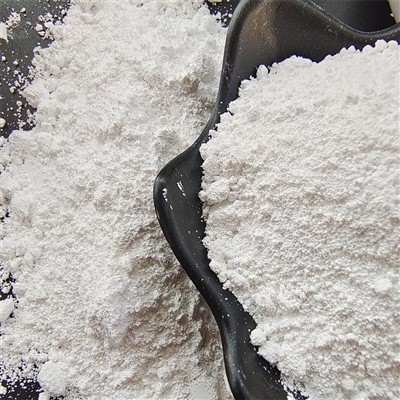
First off, let’s get one thing straight: kaolin itself—pure kaolin, the clay mineral kaolinite—isn’t magnetic. Like, at all. Kaolinite is an aluminum silicate hydroxide, right? Its chemical formula’s Al₂Si₂O₅(OH)₄, and those molecules don’t have any unpaired electrons that create a magnetic field. If you take a super pure sample of kaolin, run it next to a regular fridge magnet, nothing’s gonna happen. It just doesn’t have that magnetic pull. So where does all the talk about kaolin’s magnetic properties come from? Oh, that’s easy—the impurities. Kaolin forms in weathered rock deposits, usually feldspar or granite, right? When that rock breaks down over millions of years, it mixes with other minerals from the surrounding area, and those are the ones that add magnetic bits.
Most of the magnetic stuff in kaolin is iron-bearing minerals, specifically ones like hematite, goethite, and magnetite. Wait, magnetite’s the really magnetic one, obviously—you know, the stuff that sticks to magnets. Hematite’s a bit weaker, goethite even weaker, but they all count. There’s also other trace minerals, like ilmenite (titanium iron oxide) or even tiny bits of other clay minerals that have iron in their structure, but iron oxides are the main magnetic culprits. And here’s the thing: where your kaolin is mined makes a huge difference in how much of those impurities you get. I’ve worked with deposits in Georgia that have super low magnetic content, like parts per million levels, and ones from Cornwall that have a bit more. That’s why knowing the magnetic profile of your kaolin source is non-negotiable for a lot of industries.
Let’s talk about why that magnetic stuff matters, because that’s what actually makes this useful for customers. If you’re making glossy paper, for example—like the kind in magazines or high-end brochures—you need kaolin that’s super bright, right? Even a tiny bit of magnetic iron impurity can leave a dark speck in the coating, and that’s a huge defect. Printers won’t touch paper with those specks; it ruins the whole batch. Same with ceramics. If you’re making fine porcelain, those iron particles will cause little gray or black spots when the kiln heats up, and that’s unmarketable. Even in things like paint or rubber, magnetic impurities can cause discoloration or affect how the product cures. Oh, and food packaging too—regulations are strict about heavy metals and foreign particles, and magnetic stuff is easy to catch during processing, but only if you know it’s there in the first place.
Now, how do we measure kaolin’s magnetic properties? I don’t get too deep into lab techniques with customers, but it’s good to know the basics. The main test is magnetic susceptibility, which is just a way to measure how much a material is attracted to a magnetic field. Pure kaolinite has a magnetic susceptibility close to zero, like less than 1e-6 SI units. The more iron impurities you have, the higher that number gets. For most high-grade kaolin we supply for paper or ceramics, we aim for susceptibility under 5e-6—super low. Some lower-grade kaolin, like the stuff used for fillers in less demanding products, might have susceptibility up to 50e-6 or higher, but that’s not for the premium stuff. We also do magnetic separation tests, which is basically running the kaolin slurry through a magnetic filter to pull out all the magnetic particles, and we weigh how much we take out. That tells us exactly how many parts per million of magnetic impurities we’re dealing with—usually between 10 and 50 ppm for our high-grade material, which is perfect.
Wait, a common question I get is: “Can you remove those magnetic impurities?” And the answer is yes, that’s a big part of what we do here at my supply company. We don’t just mine kaolin, we process it. The main method is high-gradient magnetic separation (HGMS). It’s basically passing a very thin kaolin slurry through a big machine with strong magnets that pull out all those tiny magnetic iron particles. You have to control the strength of the magnetic field, too—if you make it too strong, you pull out some of the kaolinite itself, and we don’t want that. If it’s too weak, you leave too many impurities. We’ve tweaked our process over the years, working with different deposit sources, to get that balance just right. For our Georgia kaolin, we can get magnetic impurities down to under 10 ppm with HGMS, which is why a lot of top paper brands come to us specifically for that.
But here’s a thing that most people don’t talk about: kaolin’s magnetic properties also change based on how it’s processed. If you calcine it—heat it up to super high temps, like 1000°C or more—something wild happens to the iron impurities. They undergo a chemical change, right? Most of the iron oxides in raw kaolin are paramagnetic, meaning they’re only slightly attracted to magnets. When you calcine them, some of them turn into ferrimagnetic or ferromagnetic minerals, which are way more magnetic. Wait, that’s actually a good thing for some specialty uses! I’ve had customers come to us needing calcined kaolin for things like magnetic tape or even certain types of sensors. The increased magnetic susceptibility after calcination makes those products work better. Obviously, that’s a niche use, but it’s one that’s grown a lot over the last few years, and we’ve developed a line of calcined kaolin tailored for that exact purpose. I didn’t even realize how many different uses there are for kaolin beyond paper and ceramics until I started dealing with that side of the business.
Another point: particle size can affect magnetic properties too? Wait, no, not really, but how you handle the kaolin after processing can. If kaolin dries out and forms lumps, those lumps can trap magnetic impurities inside, so when you go to use it, you might find specks that you thought were removed during processing. That’s why we always recommend storing processed kaolin in airtight, dry bins, and breaking up lumps carefully before processing it at the customer’s end. We also give every customer a little guide with our kaolin’s magnetic test results, plus handling tips, because we don’t just sell you a bag of clay—we help you get the most out of it.
Let me give you a real example to make this concrete. Last year, a customer who makes high-end porcelain mugs came to me frustrated. They were getting kaolin from another supplier, and every third batch had gray specks, which meant they had to throw out a whole shipment of mugs—costing them thousands of dollars. They sent us a sample, and when we tested it, the magnetic impurities were at 120 ppm, way higher than what’s acceptable for fine porcelain. We processed it through our HGMS system, got the magnetic content down to 8 ppm, and sent them test batches. After that, they switched all their orders to us. That’s the kind of difference understanding kaolin’s magnetic properties makes—for our business, and for theirs.
I also want to bust a myth here: some people think that all kaolin has magnetic impurities, but that’s not true. The purest kaolin deposits, formed in areas with very little iron-bearing rock nearby, can have almost no magnetic material at all. Those are the deposits we prioritize for our premium line. We do routine testing on every batch we mine, so we know exactly what the magnetic susceptibility is, how much iron is present, and whether it needs extra processing. We post those test results right on our customer portal, so buyers can see for themselves—no hidden specs, no surprises.
Now, if you’re a customer reading this, what does this mean for you? Let’s say you’re buying kaolin for paper: if you need a brightness of 92% or higher, you need magnetic impurities under 20 ppm, otherwise you’ll get specks that ruin the print. If you’re using it for rubber fillers, maybe you can go a bit higher, up to 50 ppm, because specks won’t show as much. If you’re into those specialty magnetic products, you’ll actually want the calcined kaolin with increased magnetic susceptibility, so you can get the right performance. The key is knowing your end use, and then matching it to kaolin with the right magnetic profile.
I get asked a lot, “Why should I care about magnetic properties if my product doesn’t have magnets in it?” Because even if you’re not making something magnetic, those tiny iron particles can cause big problems. Discoloration, defects, wasted material, lost revenue. That’s why we make magnetic testing a core part of our quality control here. We don’t just test brightness and particle size—we test magnetic content on every single batch, because it’s that important.
At the end of the day, kaolin is way more than just a soft white clay. Its magnetic properties are a key part of what makes it useful for so many different industries, from packaging to ceramics to advanced materials. And as a supplier, that’s what I’m here for: to help you understand those properties, pick the right kaolin for your needs, and process it properly so you don’t run into avoidable issues.

If you’re currently working with kaolin and dealing with defects, or you’re just looking to switch suppliers to get more consistent quality, feel free to reach out. We can send you free samples of our different grades, share our full test data, and work with you to figure out exactly what kaolin with the right magnetic properties will do for your product. No pressure, just straight talk about what works for your business.
Iron Oxide References
- Murray, H. H. (2007). Applied kaolin deposits and uses. Applied Clay Science, 36(1-3), 3-12.
- Xie, X., et al. (2018). Magnetic properties and purification of kaolin from different deposits. Clay Minerals, 53(2), 217-226.
- Zhang, L., et al. (2020). Effect of calcination on magnetic properties of kaolin iron oxides. Journal of Non-Crystalline Solids, 535, 119987.
Lingshou County LM Mineral Products Co., Ltd.
As one of the most professional kaolin manufacturers and suppliers in China, we’re featured by quality products and good service. Please rest assured to buy customized kaolin made in China here from our factory. Contact us for more details.
Address: Dongzhuang Village, Nanyanchuan Township, Lingshou County, Shijiazhuang City, Hebei Province
E-mail: lmwtwz@163.com
WebSite: https://www.lmwtz.com/
