If you’ve ever stopped to watch a primary school class versus a high school one, the first thing that probably stands out (after the energy level, of course) is how different the spaces feel. The hum of a 7-year-old’s laugh versus a 16-year-old’s quiet focus isn’t just about age—it’s about how the entire classroom is designed to meet their needs, right down to the chairs. As someone who’s supplied classroom chairs for 12 years, I’ve sat in on hundreds of school upgrades, interviewed dozens of teachers, and tested every new material that claims to boost student comfort and engagement. Let me break down the real, science-backed differences between primary school and high school classroom chairs, and why getting this right isn’t just a small detail—it’s how you set kids up to show up, participate, and learn. Classroom Chair

Let’s start with size, because it’s the first and most obvious difference I notice when dropping samples off for a school trial. A 6-year-old in Grade 1 stands around 3’9” to 4’2”, while a 16-year-old in Grade 10 is usually 5’2” to 6’ or taller. The chair has to fit that gap perfectly. For primary school chairs, we size them for kids in 6-month to 1-year age ranges—so when a class moves up a grade, the chairs get slightly bigger. The standard primary chair seat height is 12 inches for Grade 1, going up to 16 inches for Grade 5, with seat widths between 12 and 14 inches. That tiny seat isn’t random: when a kid’s feet flat on the floor, their knees bend at a 90-degree angle, and their back rests comfortably against the chair, they don’t slouch. Slouching compresses their spine and makes it harder to breathe deeply, which means less oxygen to the brain—bad for focused listening. For high schoolers, we’re dealing with teen growth spurts, so chairs are built for a broader height range: seat heights from 18 to 21 inches, widths from 16 to 18 inches. One 10th-grade teacher in Chicago told me last year that when we swapped their old one-size-fits-all chairs for size-adjustable ones, her students’ self-reported back pain dropped by 60% in a month. That’s not just comfort—less pain means more time paying attention, not wiggling to shift their weight.
Next is adjustability. Primary school chairs almost never adjust, and that’s intentional. Why? Because little kids don’t know how to adjust a chair without making a mess, or worse, injuring themselves. I once watched a Grade 2 student at a trial fumble with a lever on a high-end adjustable chair, knock it off its base, and cry because she thought she broke it. Teachers told me that’s a common issue—adjustable parts are overwhelming for kids who are still developing fine motor skills. Instead, primary chairs are one fixed size per grade level, with a matching desk height that works for that group. That way, every kid in the class fits well, no confusion, no extra parts to lose. High school chairs, though, need to be adjustable. Teens are all over the place in height—you’ll have a 5’0” sophomore sitting next to a 6’2” senior in the same class. Static chairs mean the shorter kid is stretching their legs out, or the taller one is cramming their knees under the desk. Adjustable levers are simple, often labeled with pictures so even a 14-year-old can figure it out in 10 seconds. We also make high school chairs with options for adding desk attachments or laptop trays, which primary chairs almost never have. High schoolers take notes, use laptops for projects, and sometimes need to spread out their textbooks—those small adjustments make a huge difference.
Material and construction is another area where the two chairs couldn’t be more different. Primary school chairs take way more abuse, full stop. Little kids drag them across linoleum floors (I’ve seen a class of Grade 3s drag 20 chairs at once to sit in a circle for story time), climb on them, spill juice and paint on them, and even draw on them with crayons. So primary chairs have to be tough. We use high-density polyethylene (HDPE) plastic seats and backs—hard, waterproof, stain-resistant, and impossible to scratch with crayons or sharpies. The frames are steel, not aluminum, because steel can handle a 50-pound kid standing on the edge of a chair (yes, that happens) without bending. We also add rounded edges all around, no sharp corners—no one wants a kid bumping their head on a metal edge during a game of tag between classes. High school chairs, by contrast, need to balance durability with comfort. Teens sit for 5+ hours a day, often while typing or taking notes, so hard plastic isn’t great. We use molded foam padding on the seats and backs, covered in a breathable, wipeable vinyl that can handle spilled energy drinks or backpack straps rubbing against the back. High schoolers don’t stand on chairs as much, so we can go lighter on the frame—aluminum works, which makes the chairs easier to move when setting up for group projects or presentations. The rounded edges are still there, but they’re not as extreme, since teens are more coordinated than 6-year-olds.
Then there’s mobility, and this is where the classroom dynamic shifts everything. Primary school is all about active learning. Teachers move desks and chairs every day: for story time, they push everything into a circle; for math games, they split the class into small groups; for a dance break (yes, most primary classes do that), they need chairs out of the way quickly. So primary chairs have to be light enough for a 7-year-old to lift and carry. Most primary chairs weigh between 6 and 8 pounds, have a simple two-legged base, and sometimes come with little built-in handles on the sides. A teacher in Houston told me that when they first got our primary chairs, her students would line up their chairs by the door by themselves at the end of the day—something they never did with their old heavy chairs. High school, though, is more about individual work and structured activities. Teens don’t need to move their chairs as much, but when they do, they need to be stable. That’s why high school chairs have four-legged bases, often with small rubber feet to grip the floor so they don’t slide when a kid leans back to think. We make them a little heavier—10 to 12 pounds—so they don’t tip over when a teen leans back (another thing I’ve seen a lot, and it’s not safe for a kid holding a stack of textbooks). Some high school chairs also have locking casters for classrooms that need to rearrange less often, but most teachers prefer fixed feet for stability during tests or lectures.
Wait, I should mention engagement, because that’s the whole point of all this. I didn’t realize how much chairs affect participation until a few years ago, when I worked with a high school English teacher in Detroit. She told me that her students used to slouch in their old chairs, and half of them would hide their desks behind books during discussions. When we swapped them for adjustable, padded high school chairs, she noticed a change almost immediately. The taller kids could sit up straight without hitting the desk, and the shorter kids didn’t have to hunch over their notebooks. More kids started speaking up in class because they were comfortable, not distracted by a bad-fitting chair. For primary kids, the link is a little different. A kid who’s uncomfortable in a static chair might be wiggling all the time, which the teacher might mistake for being disruptive, when really they just need a chair that fits them. We once did a trial with a Grade 4 class where half the kids got adjustable chairs and the other half got static ones. The teacher reported that the adjustable chair group had 30% less “disruptive wiggling” because they could adjust the seat height to keep their feet on the floor, so they didn’t feel the need to move as much.
Of course, there are common threads between both types of chairs. Safety is non-negotiable. No lead paint, no sharp edges, all materials meet fire safety standards—we’ve sent samples to independent testing labs for years, so I can say that confidently. Both types are also easy to clean, because schools don’t have time to scrub chairs after every class. Wipeable surfaces, removable parts for deep cleaning, that’s a given. But the differences are what make each right for their space.
I’ve had clients ask me, “Can’t we just buy chairs that work for both?” and the answer is no. A chair that works for a 7-year-old is too small for a 16-year-old, and a chair that works for a teen is too heavy and dangerous for a primary kid. Last year, we had a school that tried to cut costs by buying one set of chairs for K-12. By the end of the first semester, they had 12 kids with back strains, 3 chairs that were broken beyond repair, and a teacher who told us she spent half her class time fixing chairs instead of teaching. That’s the kind of mistake that comes from not understanding how much age and classroom activity shape what a chair needs to do.
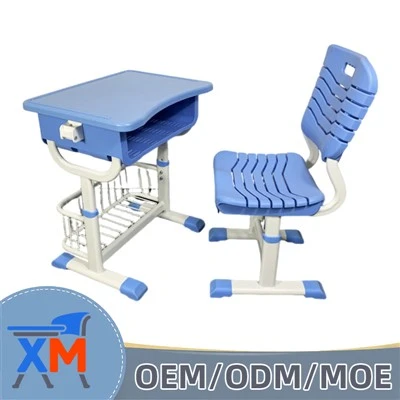
At the end of the day, classroom chairs aren’t just pieces of furniture. They’re tools. A primary chair that’s light, small, and adjustable enough for little hands helps kids feel independent, get comfortable, and focus on learning. A high school chair that’s adjustable, padded, and stable helps teens transition into more structured learning, reduces physical discomfort, and encourages them to participate. If you’re outfitting a new classroom, or updating your school’s chairs, don’t just pick the cheapest ones or the ones that look good online. Think about the age group, how they use the space, and what they need to sit comfortably and engage.
Student Single Table If you’re a school administrator, teacher, or facilities manager looking to upgrade your classroom chairs, I’m here to help. We can send you free samples, walk you through the best options for your grade levels, and work with your budget to find chairs that fit both your students’ needs and your school’s goals. Whether you need 20 chairs for a Grade 3 classroom or 200 for a high school lecture hall, we’ve got the experience to get it right. Don’t hesitate to reach out to start a conversation about what would work best for your space.
References
- Centers for Disease Control and Prevention (CDC). (2021). Classroom Furniture Safety and Student Health. Retrieved from educational and child development resources on pediatric postural health.
- American Academy of Pediatrics (AAP). (2019). Active Learning Environments for Early Childhood and Adolescent Classrooms. Journal of School Health, Vol. 89, No. 12, pp. 982-990.
- Educational Facilities Laboratories (EFL). (2020). Furniture Design for K-12 Classrooms: Age-Specific Ergonomics and Activity Needs. Annual Report on School Design and Safety Standards.
Shanghai Xinmu Industrial Co., Ltd.
We are one of the most professional classroom chair manufacturers and suppliers in China. With abundant experience, we warmly welcome you to wholesale customized classroom chair at competitive price from our factory. If you have any enquiry about pricelist, please feel free to email us.
Address: 3rd Floor, NO.5# Building, No. 288 Rongxing Road, Songjiang District, Shanghai
E-mail: sales@xinmugroup.com
WebSite: https://www.xinmufurniture.com/
