What is the Voltage Standing Wave Ratio (VSWR) of RF Coaxial Cable?
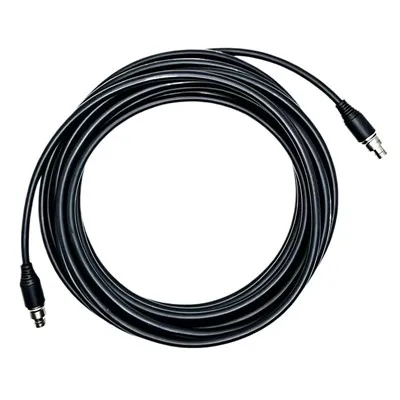
As a seasoned supplier of RF coaxial cables, I’ve encountered numerous inquiries regarding the Voltage Standing Wave Ratio (VSWR) of our products. In the realm of radio frequency (RF) transmission, understanding VSWR is paramount. It serves as a crucial metric that reflects the efficiency and quality of signal transmission through an RF coaxial cable. In this blog post, I’ll delve into the concept of VSWR, its significance in RF coaxial cables, and how it impacts the performance of your RF systems. RF Coaxial Cable
Understanding Voltage Standing Wave Ratio
The Basics of Wave Propagation
To grasp the concept of VSWR, we first need to understand how waves propagate in an RF coaxial cable. An RF coaxial cable consists of an inner conductor, an insulating layer, an outer conductor, and an outer jacket. When an RF signal is transmitted through the cable, it travels as an electromagnetic wave. In an ideal scenario, the signal would travel smoothly along the cable from the source to the load without any reflections. However, in real-world applications, this is rarely the case.
Reflection and Standing Waves
When the impedance of the load connected to the cable does not match the characteristic impedance of the cable, a portion of the signal is reflected back towards the source. These reflected waves interfere with the forward-traveling waves, creating a phenomenon known as standing waves. Standing waves are characterized by points of maximum and minimum amplitude along the cable. The ratio of the maximum voltage amplitude to the minimum voltage amplitude of these standing waves is defined as the Voltage Standing Wave Ratio (VSWR).
Mathematically, VSWR is expressed as:
[ VSWR=\frac{V_{max}}{V_{min}} ]
where (V_{max}) is the maximum voltage amplitude and (V_{min}) is the minimum voltage amplitude of the standing waves on the cable.
Understanding the VSWR Range
The VSWR value ranges from 1 to infinity. A VSWR of 1 indicates a perfect impedance match between the cable and the load, meaning that there are no reflections and all the power is transferred from the source to the load. In this case, the standing wave pattern has a uniform amplitude along the cable, with (V_{max}=V_{min}).
As the impedance mismatch increases, the VSWR value also increases. A high VSWR indicates a significant amount of signal reflection, which results in power loss, reduced system efficiency, and potential damage to the RF equipment. In practical applications, a VSWR of less than 1.5 is generally considered acceptable for most RF systems.
Significance of VSWR in RF Coaxial Cables
Power Transfer Efficiency
One of the primary reasons why VSWR is important in RF coaxial cables is its impact on power transfer efficiency. When there is an impedance mismatch between the cable and the load, a portion of the transmitted power is reflected back towards the source. This reflected power represents a loss of energy that could have been delivered to the load.
The power loss due to reflection can be calculated using the following formula:
[ P_{reflected}=P_{incident}\times\left(\frac{VSWR – 1}{VSWR + 1}\right)^2 ]
where (P_{reflected}) is the reflected power, (P_{incident}) is the incident power, and VSWR is the Voltage Standing Wave Ratio.
For example, if the VSWR of a cable is 2, then the reflected power is:
[ P_{reflected}=P_{incident}\times\left(\frac{2 – 1}{2 + 1}\right)^2=\frac{1}{9}P_{incident} ]
This means that approximately 11% of the incident power is reflected back towards the source, resulting in a corresponding loss of power at the load.
Signal Quality
In addition to power loss, a high VSWR can also degrade the quality of the RF signal. The reflected waves can interfere with the forward-traveling waves, causing distortion, attenuation, and phase shifts in the signal. These effects can lead to errors in data transmission, reduced range, and poor performance of the RF system.
For example, in a wireless communication system, a high VSWR can cause dropped calls, slow data transfer rates, and poor signal strength. In a radar system, it can result in inaccurate target detection and tracking.
Equipment Protection
Another important aspect of VSWR is its impact on the protection of RF equipment. When there is a high VSWR, the reflected power can cause excessive heating in the RF source, such as a transmitter. This can lead to premature failure of the equipment and increase the risk of damage.
Most RF transmitters are designed to operate within a certain VSWR limit. If the VSWR exceeds this limit, the transmitter may automatically reduce its output power or shut down to protect itself from damage. Therefore, maintaining a low VSWR is essential for ensuring the reliable operation and longevity of RF equipment.
Factors Affecting VSWR in RF Coaxial Cables
Cable Characteristics
The characteristic impedance of an RF coaxial cable is a fundamental parameter that determines its electrical properties. It is typically specified by the cable manufacturer and is usually 50 ohms or 75 ohms for most RF applications. Any deviation from the specified characteristic impedance can result in an impedance mismatch and a high VSWR.
The quality of the cable construction, including the uniformity of the inner and outer conductors, the dielectric material, and the shielding, can also affect the VSWR. Imperfections in the cable, such as kinks, bends, or cuts, can cause reflections and increase the VSWR.
Connector Quality
The connectors used at the ends of the RF coaxial cable play a crucial role in determining the VSWR. Poorly designed or installed connectors can introduce impedance mismatches and reflections, resulting in a high VSWR.
Factors such as the contact resistance between the connector pins and the cable conductors, the alignment of the connector components, and the quality of the insulation can all affect the VSWR. It is important to use high-quality connectors that are properly installed and matched to the cable impedance.
Load Impedance
The impedance of the load connected to the cable is another important factor that affects the VSWR. In an ideal scenario, the load impedance should match the characteristic impedance of the cable. However, in real-world applications, the load impedance can vary depending on the type of equipment and the operating conditions.
For example, in a wireless communication system, the impedance of the antenna can change depending on the frequency, the orientation, and the surrounding environment. It is important to ensure that the load impedance is properly matched to the cable impedance to minimize reflections and maintain a low VSWR.
Measuring and Controlling VSWR
Measuring VSWR
There are several methods for measuring VSWR in an RF coaxial cable. One of the most common methods is to use a VSWR meter, which is a specialized instrument that measures the ratio of the forward and reflected power in the cable. The VSWR meter typically consists of a directional coupler, a power detector, and a display unit.
Another method for measuring VSWR is to use a network analyzer, which is a more advanced instrument that can measure the scattering parameters (S-parameters) of the cable. The S-parameters provide a comprehensive description of the electrical properties of the cable, including the VSWR, the insertion loss, and the return loss.
Controlling VSWR
To control the VSWR in an RF coaxial cable, it is important to ensure that the cable and the connectors are properly selected and installed. Here are some tips for controlling VSWR:
- Select the Right Cable: Choose an RF coaxial cable with the appropriate characteristic impedance and electrical properties for your application. Make sure to select a cable that is of high quality and has a low VSWR specification.
- Use High-Quality Connectors: Use high-quality connectors that are properly designed and matched to the cable impedance. Make sure to install the connectors correctly and follow the manufacturer’s instructions.
- Match the Load Impedance: Ensure that the impedance of the load connected to the cable is properly matched to the characteristic impedance of the cable. This may require the use of impedance matching networks or other techniques.
- Inspect and Maintain the Cable: Regularly inspect the cable for any damage or defects, such as kinks, bends, or cuts. Replace any damaged or worn-out cables or connectors as soon as possible.
Conclusion
In conclusion, the Voltage Standing Wave Ratio (VSWR) is a critical parameter that reflects the efficiency and quality of signal transmission through an RF coaxial cable. Understanding VSWR and its significance is essential for ensuring the reliable operation of RF systems. By selecting the right cable, using high-quality connectors, matching the load impedance, and maintaining the cable properly, you can minimize reflections and maintain a low VSWR, which will result in improved power transfer efficiency, signal quality, and equipment protection.
Control Cable Low Voltage If you are in need of high-quality RF coaxial cables with low VSWR and excellent performance, we are here to assist you. Our team of experts has extensive experience in the RF industry and can help you select the right cable for your specific application. We offer a wide range of RF coaxial cables, connectors, and accessories to meet your needs. Contact us today to discuss your requirements and start a procurement negotiation.
References
- Pozar, D. M. (2011). Microwave Engineering (4th ed.). Wiley.
- Collin, R. E. (2001). Foundations for Microwave Engineering (2nd ed.). Wiley.
- Jasik, H. (Ed.). (1961). Antenna Engineering Handbook. McGraw-Hill.
Yangzhou Huayu Cable Co., Ltd.
Yangzhou Huayu Cable Co., Ltd. is one of the most professional rf coaxial cable manufacturers and suppliers in China, also supports customized service with low price. Please feel free to wholesale advanced rf coaxial cable made in China here from our factory. Contact us for pricelist.
Address: No. 9 Jingang Road, Yangzhou City, Jiangsu Province, China
E-mail: huayucableco@126.com
WebSite: https://www.huayucabletech.com/
