As a supplier of screw gas compressors, I get this question all the time from plant managers, maintenance supervisors, and even design engineers who’re putting together new process systems. “What’s the noise level of a screw gas compressor?” It makes sense to ask—industrial noise isn’t just a nuisance; it’s a regulatory headache, a safety risk, and a factor that can make or break equipment placement in tight, multi-use facilities. Over the years, I’ve learned the answer isn’t a single number—it’s a range shaped by design, installation, and how the compressor is used. Let me break this down like I would when walking a new customer through our product line, using real-world examples from the projects I’ve worked on. Screw Gas Compressor

First, let’s start with the basics: screw gas compressors work by trapping gas between two rotating helical rotors, compressing it as the rotors turn and reducing the volume of the gas. Unlike reciprocating compressors, which have pistons that slam back and forth and create sharp, loud impulses, screw compressors produce a more constant sound—but that doesn’t mean they’re quiet. The noise comes from three main sources: the rotors moving against each other and the compressor housing, the gas being compressed and released, and the motor or drive system powering the unit.
When a customer first asks about noise level, I don’t just toss out a decibel number. I explain that noise is measured in decibels (dB), but not all dB ratings are equal. There’s dB(A), which measures sound in the range that’s most harmful to human hearing (the frequency range we’re most sensitive to), and that’s the number we use for industrial equipment. For most standard oil-injected screw gas compressors we supply, the noise level at the compressor casing (measured at a distance of 1 meter, per ISO standards) falls between 75 dB(A) and 95 dB(A). Wait—why such a wide gap? Let’s narrow that down with context. A small, 10-horsepower (HP) unit for low-pressure natural gas applications will land on the lower end, around 75-80 dB(A). That’s roughly as loud as a busy restaurant or a vacuum cleaner running at full power. It’s noticeable but not overwhelming, which is why we’ve installed dozens of these in small chemical plants where equipment is located near office break rooms.
Mid-range units, between 20 HP and 100 HP, used for higher-pressure applications like boosting landfill gas or compressing natural gas for pipeline feed, typically clock in between 85 dB(A) and 90 dB(A). That’s comparable to the noise of a heavy truck driving past your home—loud enough that you’d need to raise your voice to have a conversation 3 feet away from the unit. A few years back, a food processing plant reached out to us because their old reciprocating compressor was so loud it disrupted their night shift workers. They swapped it for our 50 HP screw compressor, which came in at 88 dB(A), and their workers reported a huge difference in comfort after just a month.
The big units, 100 HP and up, for heavy industrial uses like refineries or large-scale biogas facilities, can hit up to 95 dB(A) at the casing. That’s right around the limit set by OSHA for 8-hour work shifts—any noise louder than 95 dB(A) requires hearing protection and limited exposure time, so these units almost always need extra noise mitigation. I remember a refinery in Texas that had a 200 HP screw compressor installed outdoors near a worker walkway. Without any enclosure, it was 97 dB(A) at walking distance, which meant workers could only be near it for 2 hours a day before needing hearing protection upgrades. We worked with their team to add a custom acoustic enclosure, and that dropped the noise level down to 82 dB(A) at the walkway—well under OSHA’s limit, so workers could move through the area safely without constant ear protection.
Now, let’s talk about the factors that push noise levels outside that 75-95 dB(A) range, because that’s where most customers run into issues. First is the type of screw compressor: oil-injected vs. oil-free. Oil-injected compressors use a mist of oil to lubricate the rotors, seal gaps, and cool the gas. That oil dampens the sound from the rotors, so oil-injected units are almost always quieter than oil-free ones. Oil-free screw compressors, used for applications where gas purity is critical (like pharmaceutical manufacturing or food-grade CO2), have no oil between the rotors, so the rotors rub against each other more and create friction noise. Those units often run 5-10 dB(A) louder than equivalent oil-injected models, so you might see oil-free units hitting 90-100 dB(A) at the casing. I once had a pharmaceutical client who needed a 30 HP oil-free compressor for breathing oxygen, and they were surprised when we told them it would be 89 dB(A) without an enclosure—they’d expected the same quiet as the oil units they’d used for their dryers. That’s when I explained the rotor design difference, and we added a small acoustic enclosure that brought it down to 79 dB(A), which worked for their lab space near the compressor.
Next is installation quality. A compressor installed on a flimsy base or a floor that’s not isolated from vibration will transmit more noise into the surrounding area, which can make the perceived noise level 10-15 dB(A) higher than the casing rating. I saw this early in my career: a customer installed a 40 HP screw compressor on a wooden mezzanine instead of a concrete foundation, and when we did a noise test, it was 92 dB(A) in the mezzanine right above the unit, compared to 83 dB(A) at the compressor casing. We had to add vibration isolators and reinforce the mezzanine to bring the noise down. On the flip side, a well-installed unit with proper vibration isolation and ducting for inlet and exhaust gases can reduce perceived noise more than you might expect. Last year, a brewery used our 25 HP screw compressor for their CO2 recovery system, and they installed it in a small utility closet with flexible ductwork and acoustic foam on the walls. The noise outside the closet was just 68 dB(A)—quieter than a normal conversation. That’s a huge win because their brew house is right next to the closet, and their brewers didn’t want to deal with loud noise during production runs.
Another big factor is the application. If a screw compressor is running continuously at full load, like one in a pipeline that’s always compressing gas, the noise level will be higher than a unit that cycles on and off. When a compressor is unloaded, the rotors turn but don’t compress much gas, so the noise drops by 5-10 dB(A). I recently checked in on a customer with a 150 HP screw compressor at a biogas plant that runs 24/7. At full load, it’s 94 dB(A) at the enclosure wall, but when the plant’s gas storage tank is full, the compressor unloads, and that drops to 86 dB(A). That small difference might not matter for workers who are only near it occasionally, but for the maintenance team who has to do daily checks, it makes a big difference in long-term comfort.
Now, let’s talk about noise mitigation, because that’s what most customers need to know after they get their initial number. No matter the noise level at the casing, there are ways to bring it down to meet regulatory requirements or fit into a quiet facility. The most common solutions are acoustic enclosures, which are custom-built boxes around the compressor with sound-absorbing material inside and sealed doors for maintenance. A good enclosure can reduce noise by 15-25 dB(A)—so that 95 dB(A) big unit becomes 70-80 dB(A) outside the enclosure, which is as quiet as a library. We’ve also done custom acoustic lagging for pipework, because the compressor’s inlet and exhaust pipes can be a big source of noise too, if they’re not insulated. That’s a step many customers miss—they focus on the compressor itself, but a noisy exhaust pipe can add 5-10 dB(A) to the overall noise in the area.
I should also mention regulations, because that’s why so many customers ask about noise levels in the first place. In the U.S., OSHA sets the 8-hour time-weighted average exposure limit at 85 dB(A) as of 2024, down from 90 dB(A) to reflect new research on hearing damage. The EU’s Noise at Work directive has a similar limit, and many local governments have their own limits for industrial areas—some residential zones won’t allow equipment louder than 60 dB(A) at the property line. That means a screw gas compressor for a residential-area installation will almost always need an enclosure, and sometimes even a sound barrier wall around the entire unit. A customer in a suburban industrial park last year had to install a 10-foot-tall sound barrier around their 60 HP screw compressor to keep the noise below 65 dB(A) at the neighboring office building. We worked with them to size the barrier correctly, and it brought the outdoor noise down to 63 dB(A), which passed the city’s inspection easily.
As someone who’s been in the screw gas compressor industry for 12 years, I’ve seen a lot of changes in noise reduction over that time. Early screw compressors were much louder—sometimes 100 dB(A) or more at the casing, no matter the size. But advances in rotor design (precision machining instead of casting), better materials for rotor coatings, and more efficient drive systems have brought those numbers down dramatically. Now, even our largest industrial units are under 95 dB(A) when unmodified, which is a far cry from the equipment I worked with when I started. That’s why I always tell customers that if noise is a concern, we can engineer a solution—whether that’s choosing a quieter oil-injected model, adding a custom enclosure, or designing the installation for maximum vibration isolation.
I should also clear up a common misconception: some people think that all screw gas compressors are quieter than reciprocating compressors, which is true for most cases, but not always. A very large screw compressor can be just as loud as a small reciprocating one, and a small, poorly maintained reciprocating compressor might actually be quieter than a large, old screw unit. But on average, screw compressors produce a more consistent, lower-pitched noise that’s less fatiguing for workers than the high-pitched, sharp noise of reciprocating units. That’s a big reason why so many plants are switching from reciprocating to screw compressors, even if the initial noise level is similar—worker comfort goes up significantly.
If you’re reading this and you’re in the market for a screw gas compressor, don’t just look for a unit that meets your pressure and flow requirements. Ask about the noise level at the casing, and think about where you’ll install it, who will be around it, and what regulatory limits you need to meet. We’ve helped hundreds of customers balance performance and noise—whether that’s a small bakery needing a quiet compressor for their CO2 system, or a refinery needing a heavy-duty unit that meets OSHA’s latest rules. We don’t just sell equipment; we work with you to find a solution that fits your facility, your workers, and your budget.
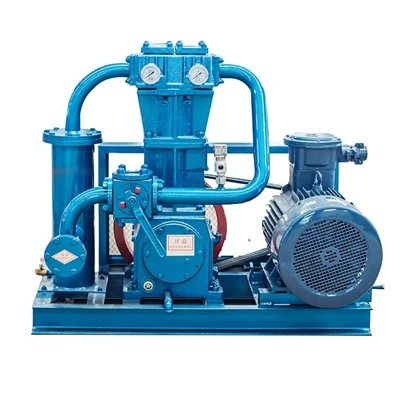
If you’re ready to discuss your screw gas compressor needs, including noise level requirements, feel free to reach out to us. Our team of application engineers can walk you through our product lines, explain the noise levels for different models, and help you design a system that works for your specific space. Whether you’re replacing an old compressor for a quieter operation or building a new facility from scratch, we have the expertise to guide you through every step.
High Pressure Breathing Air Compressor References
ISO 1217:2020, Displacement compressors – Acceptance tests
OSHA Occupational Noise Exposure Standard (29 CFR 1910.95)
EU Noise at Work Directive (2003/10/EC)
Compressed Air Gas Institute (CAGI) Screw Compressor Noise Performance Data, 2023
Industrial Ventilation: A Manual of Recommended Practice, ACGIH, 2022
Shanghai Sollant Energy Saving Technology Co., Ltd.
As one of the most professional screw gas compressor manufacturers and suppliers in China, we’re featured by quality products and good service. Please rest assured to buy bulk durable screw gas compressor from our factory. Welcome to view our website for more information.
Address: No.215, Songri Center, Beihongqiao, Jiading District, Shanghai, China.
E-mail: info3@sollant.com
WebSite: https://www.sollant-gas.com/
