If you’ve ever worked in manufacturing, construction, metal fabrication, or even a simple home renovation project, chances are you’ve crossed paths with a parallel line laser module. As a supplier of these precision tools, I get asked a lot of questions about how they work, why they’re more reliable than old-school tools like spirit levels or chalk lines, and what makes our modules stand out in a crowded market. Let’s break it down in plain, practical terms—no overly complicated jargon, just the real science that makes these modules work, and why that matters for your work. Parallel Line Laser Modules
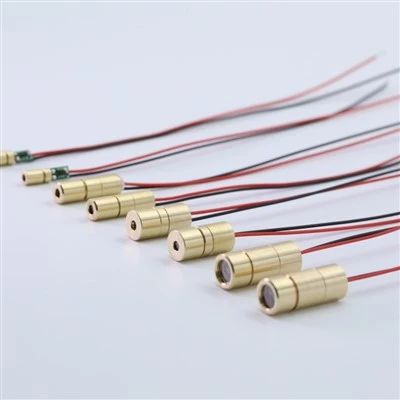
First, let’s set the scene. Before parallel line lasers, getting perfectly parallel, evenly spaced lines was a hassle. A spirit level could give you a straight line, but it was easy to nudge, hard to replicate at long distances, and impossible to get two parallel lines without measuring and marking by hand, which left room for human error. For example, a cabinet installer might spend half a day measuring and marking lines for upper and lower cabinets, only to find a 1mm gap that throws everything off. A construction team framing a wall might waste materials because their chalk lines were slightly uneven. That’s where parallel line laser modules come in—they turn a complicated, error-prone task into something fast, accurate, and consistent.
So how do these modules actually create parallel lines? Let’s start with the core components, because every part serves a specific purpose, and understanding that helps you see why quality matters.
At the heart of any parallel line laser module is a laser diode. This isn’t the same as the laser pointer you used in high school—those are low-power, often inconsistent. Industrial parallel line laser modules use Class 2 or Class 3R laser diodes, which are safe for general use when operated correctly, and emit a narrow, focused wavelength of light—usually red (650nm) or green (520nm). Green is brighter to the human eye, so it’s more visible in bright outdoor or well-lit indoor spaces, while red is more affordable and works great for enclosed, dim jobs. The diode’s job is to emit a consistent, monochromatic beam of light; without that consistency, the lines would be wobbly or uneven.
Next comes the most critical part for parallel lines: the optical assembly, specifically the line generator lens (often called a Powell lens, though some modules use a cylindrical lens depending on their design). This is where the magic of turning a single laser beam into a straight line happens. A cylindrical lens works by focusing the laser beam in only one axis—so instead of a small dot, it stretches that beam into a thin, straight line. A Powell lens, by contrast, is designed specifically to create a uniform, non-divergent line over a set distance. Divergence is a common issue with simple cylindrical lenses: the line gets wider and less intense the farther you get from the module, which is bad for jobs that span large areas. A Powell lens minimizes that divergence, so your line stays thin and accurate at 10 feet, 50 feet, even 100 feet away.
Now, to get parallel lines, the module has more than one of these line-generating optics—arranged at a precise, fixed angle relative to each other. Wait, but how do we make sure those lines are perfectly parallel, not just close? That’s where calibration comes in, and it’s the part that separates a cheap, unreliable module from one that professional contractors and manufacturers trust. When we manufacture our parallel line laser modules, each optical assembly is aligned and calibrated to within a fraction of a degree. For example, two lines might be spaced 16 inches apart at the module, and over a 30-foot span, the gap between them will be off by less than 1/32 of an inch—accurate enough for cabinet installation, tile laying, metal framing, or even road marking. Some higher-end modules add a leveling sensor (a pendulum or MEMS gyroscope) to lock the lines in horizontal or vertical alignment, so if the module is set at a slight tilt, the lines automatically adjust to stay level, keeping them parallel to the reference plane.
Let’s walk through a real example to make this concrete. Imagine a tile setter working on a bathroom floor. They need two sets of parallel lines: one for the rows of tiles, another for the columns, all evenly spaced 12 inches apart. If they used a traditional tape measure and chalk line, they’d have to mark every 12 inches, double-checking with a spirit level each time, which could take an hour. With a parallel line laser module, they just set the module in the center of the room, power it on, and two sets of two parallel lines appear: one horizontal, one vertical, all at a consistent 12-inch spacing. The laser lines are bright enough to see over the tile adhesive, and because they’re aligned perfectly, the setter can lay tiles right along the lines, no extra measuring needed. The module’s built-in calibration ensures that the lines stay parallel from one end of the room to the other, so every tile fits flush.
Now, you might be wondering: are all parallel line laser modules the same? No, and that’s why our customers keep coming back. The difference is in the details of the design and manufacturing. For example, some low-cost modules use plastic lenses that warp over time, especially if exposed to heat or cold, which throws the line alignment off. Our modules use aerospace-grade aluminum housing and anti-abrasive glass optics, so they can hold their calibration for years, even on job sites where they get dropped, exposed to dust, or used in extreme temperatures. Another key detail is the spacing of the lines. Some modules only offer a fixed line spacing, but we can customize modules to match your specific needs—whether you need lines 8 inches apart for cabinetry, 2 feet apart for framing, or a custom spacing for metal stamping applications.
Wait, let’s touch on a common misconception: parallel lines vs. cross lines. A cross line laser has one horizontal and one vertical line that intersect at a right angle. A parallel line laser module has multiple lines—often two or four, all running parallel to each other. That’s the key difference, and it’s why they’re so useful for tasks that require consistent spacing. For example, in automotive manufacturing, parallel lines are used to align body panels, ensuring that gaps between doors and fenders are uniform across the entire vehicle. In sign making, parallel lines help align lettering and borders so they’re evenly spaced, no crooked edges.
How do these modules maintain their line consistency over long distances, too? That goes back to the Powell lens design I mentioned earlier. A simple cylindrical lens will create a line that’s brightest at the module and fades as you move away, and the line’s width can double over 50 feet. A Powell lens shapes the beam’s intensity so it stays uniform along the entire line, and the width remains consistent within 5% of its original size up to the module’s rated range. That means when you’re working on a 100-foot warehouse floor, the parallel lines are just as sharp and accurate at the far end as they are right next to the module.
Another component that affects performance is the power supply. For job sites that use portable power, our modules are designed to run on standard AA batteries or rechargeable lithium-ion packs, giving up to 10 hours of continuous use on a single charge. For fixed installation applications, like assembly lines, we offer versions that plug into 12V or 24V power sources, so they can run 24/7 without interruption. We also have dust and water-resistant models (IP65 rating) for outdoor use, like laying concrete foundations or marking parking lot lines, so they can withstand rain, dust, and harsh weather.
I hear from a lot of first-time users who are worried about setting up the module correctly. Let’s clarify that too—you don’t need to be a laser expert. Most modules have a mounting bracket that lets you attach them to a tripod, a wall, or a workbench, so you can position them exactly where you need them. Once you power it on, the leveling sensor (if included) will take 10-15 seconds to lock into place, and the lines will be perfectly aligned. If you’re using a manual leveling module, a built-in bubble level ensures it’s set straight, so the lines stay parallel.
The real value of a parallel line laser module becomes obvious when you calculate time saved and reduced waste. Let’s go back to that cabinet installer example: if they spend an extra hour measuring and marking lines, that’s an hour they could be installing cabinets, which translates to more jobs completed and more revenue. With a parallel line laser, that task is done in 5 minutes, and the accurate lines mean no wasted materials from misaligned cuts. For a small construction team, that can add up to thousands of dollars in savings a year. For large manufacturing facilities, using calibrated parallel line lasers reduces defect rates by up to 15% in some applications, because manual alignment is eliminated.
Now, as someone who’s been in this space for years, I’ve seen how fast the technology has evolved. Early parallel line lasers were bulky, expensive, and only used by large industrial companies. Now, they’re compact, affordable, and accessible for small businesses and DIYers too. But even with that accessibility, quality still matters. A cheap module might cost half as much, but it will lose calibration after a few months, require frequent adjustments, and produce lines that are off by the time you get to the end of a long job. Our modules go through three quality checks before they leave our facility: first during manufacturing, then line-by-line testing to confirm parallel alignment, then a final calibration check to ensure accuracy across the full range.
So, whether you’re a contractor, a manufacturer, a DIY enthusiast, or someone who just wants to understand how these handy tools work, the core principle of a parallel line laser module is simple: take a stable laser beam, shape it into uniform lines with precision optics, and align those lines to stay parallel over distance. The difference between a good module and a great one is in the details: the quality of the laser diode, the precision of the optics, the calibration process, and the durability to hold up on even the toughest job sites.
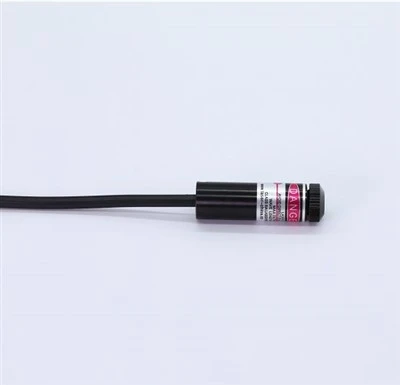
If you’re in the market for a parallel line laser module, whether you need a standard model for general construction or a custom design for a specific application, we’re here to help. We offer a range of modules to fit different needs and budgets, and our team can walk you through choosing the right one for your work—no pushy sales pitches, just honest advice from people who use these tools every day. Reach out to our team to discuss your requirements, test sample modules, or get a quote tailored to your project.
Parallel Line Laser Modules References
- Standard for Safety of Laser Products, IEC 60825-1:2014
- Optical Design for Engineering Applications, W. J. Smith, McGraw-Hill, 2000
- Industrial Laser Applications Handbook, D. C. O’Shea, CRC Press, 2018
- Construction Laser Technology: Principles and Practice, R. S. McNeill, Wiley, 2021
Changshu Desheng Optics Electronics Co., Ltd.
As one of the most professional parallel line laser modules manufacturers and suppliers in China, our products have good reputation in the market. Please feel free to buy advanced parallel line laser modules for sale here from our factory. Good service and quality products are available.
Address: 8A, Yineng science and technology industrial park, No.183, Yinhe Road, Southeast Development Zone, Changshu, Jiangsu Province, China.
E-mail: desheng1@dershinelaser.com
WebSite: https://www.ds-lasers.com/
