If you’ve ever stood in a commercial parking lot at dusk, watching the LED lights flicker on automatically to illuminate empty spaces, or adjusted the color of accent lights in a boutique to match a new window display, you’ve interacted with a wireless LED controller. As someone who’s spent the last eight years building and refining these devices for businesses, I can tell you this question—how far do they reach—is one of the first ones I get from electricians, facility managers, and design teams looking to upgrade their lighting systems. The short answer isn’t a single number, though; it depends on what kind of wireless technology the controller uses, the environment it’s installed in, and what exactly you’re trying to connect. Let’s break this down like I would during a site walkthrough, with real-world context from projects I’ve supported. LED Controller
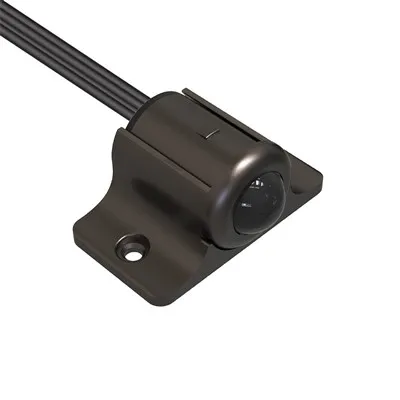
First, let’s start with the core: a wireless LED controller’s range is the maximum distance between the controller (the device that sends signals to dim, change color, or turn lights on/off) and the LED drivers or light fixtures it operates. This isn’t like a Wi-Fi router for your home, where range is advertised as 150 feet or so, because LED lighting wireless signals are specialized for low-power, short-to-medium range communication, designed to avoid interference with other building systems like security cameras or fire alarms. The two most common wireless technologies we use for our controllers are Bluetooth Low Energy (BLE) and Zigbee, with a smaller subset using Wi-Fi or proprietary radio frequency (RF) for large-scale commercial projects.
Let’s start with BLE, which is the most popular for residential lighting and small commercial spaces, like a 10,000-square-foot office or a small café. Our standard BLE controllers have a typical line-of-sight range of 50 to 100 feet. Line-of-sight is key here—if there’s nothing between the controller and the light fixtures, that’s how far the signal travels. But in real buildings, you almost always have walls, floors, and office partitions. A single drywall wall can cut BLE range by 30 to 50 percent. A concrete or cinder block wall? That drops it even more, often by 70 percent or more. Last year, we worked with a restaurant in downtown Chicago that wanted to add BLE-controlled strip lighting along the bar and in the back private dining room. The main controller was mounted in the front office, and the private room was separated by two cinder block walls. We initially tried a standard BLE controller, and the signal wouldn’t reach the back room at all. We ended up adding a $15 BLE repeater, which acts like a middleman to rebroadcast the signal, and that pushed the range to over 150 feet, which was exactly what they needed. BLE is great for small jobs because it’s easy to set up, no complicated wiring, and works with most smartphones for on-site adjustments, but it’s not ideal for spaces larger than 5,000 square feet. That’s where Zigbee comes in.
Zigbee is a mesh network technology, which is a game-changer for larger commercial projects. Unlike BLE, which is a point-to-point signal, a Zigbee controller connects to every compatible light fixture and signal repeater in the space, so if one fixture gets a signal, it can pass that signal along to the next one, extending the network exponentially. Our Zigbee controllers have a base line-of-sight range of 100 to 150 feet, but because of the mesh network, we’ve supported projects where the total coverage is over 50,000 square feet. I remember a school district project we did in suburban Ohio last year: they had 12 elementary schools, each with gymnasiums, classrooms, and hallways, all set to get new LED lighting controlled by Zigbee. The largest gym was 12,000 square feet, and the controller was mounted at the front of the gym, with lights all the way at the far end, 250 feet away. Because of the mesh, the signal hopped through the middle fixtures, no problem. That’s the big difference between Zigbee and BLE for medium-to-large spaces: mesh networks eliminate most of the range issues that come with walls and obstacles. We do still recommend adding a few repeater nodes in really large, open spaces with high ceilings, though—if a gym has a 20-foot ceiling, signals have to travel farther through open air, so adding one repeater in the center brings the total usable range up even more, to 300+ feet for that single controller’s coverage area.
Now, if we’re talking about large-scale commercial or industrial projects—like a 100,000-square-foot warehouse, a retail strip mall with 10 separate storefronts, or a multi-building campus—we use Wi-Fi or proprietary RF controllers. Wi-Fi LED controllers work like any other Wi-Fi device, with a typical range of 150 feet indoors, but if you connect them to a building’s existing Wi-Fi network, you can extend range across an entire facility, even between buildings, as long as the network is set up to cover that area. The downside here is that Wi-Fi uses more power and can be slower, but for controlling large numbers of lights from a central office, it’s reliable. Last year, we worked with a grocery store chain that had 8 locations across Texas, each with 200+ LED lights in parking lots, aisles, and produce sections. They wanted to adjust all the lighting across stores from a single headquarters, 200 miles away. Our Wi-Fi-enabled controllers let them dim lights during slow hours, turn on aisle lights automatically when staff arrive, and even adjust color temperature for different seasons. The range here isn’t limited by the controller’s signal—it’s limited by the store’s internet connection, and as long as there’s a stable Wi-Fi signal, the controller works no matter how far away the user is. Proprietary RF controllers are another option for industrial spaces with a lot of metal, which can block both BLE and Zigbee signals. We’ve used these for manufacturing facilities with heavy machinery and metal warehouse walls, where a standard controller would only work 30 or 40 feet away, but our proprietary RF models push that to 800 feet line-of-sight, even through metal. That’s a huge range for industrial projects, where you might need to control lights at opposite ends of a 500-foot warehouse without running extra wiring for repeaters.
But here’s the thing I always tell people: the range numbers we advertise on our website are ideal, and real-world range almost always varies. I’ve seen BLE controllers work through three concrete walls, even though the tech specs say they won’t, and I’ve seen a Zigbee controller drop signal at 80 feet in an empty warehouse because of a metal support beam right in the middle. So how do you calculate the right range for your project? First, map the space. Count how many walls, floors, or large obstacles are between the controller and the farthest light fixture. For every solid wall, plan to cut your base range by 25 to 50 percent. For every concrete floor, cut it by 40 to 60 percent. Second, think about how many lights you need to control. If you have 10 lights in a 2,000-square-foot office, a basic BLE controller will work. If you have 100 lights in a 20,000-square-foot warehouse, a Zigbee mesh controller is the way to go, and you might need a repeater halfway through the space. Third, ask about use cases: do you need to control lights from your phone while you’re on-site, or do you need to adjust them remotely from a different city? That changes the technology you need, and with it, the effective range.
I also get asked all the time: “Can I extend the range if it’s not enough?” The answer is almost always yes, and we build our controllers to be scalable. Repeaters are the most common solution—they’re small, inexpensive devices that just rebroadcast the wireless signal, so you can place them anywhere in the space that has power, and they don’t interfere with other devices. For mesh networks like Zigbee, you can even use compatible light fixtures as repeaters, so you don’t have to buy extra hardware. For Wi-Fi systems, you can add a Wi-Fi extender or a dedicated wireless access point to boost the signal. The only time we can’t extend range is in spaces with extreme interference—like a nuclear power plant with high-frequency equipment that blocks all wireless signals—but even then, we have hardwired backup controllers that work if wireless isn’t an option.
Over the years, I’ve learned that the best advice isn’t to focus on a single range number. A client who’s installing accent lights in a small boutique doesn’t care about a 500-foot range; they need a controller that works when they stand at the front door and adjust the lights near the checkout. A warehouse manager doesn’t care about 100 feet; they need to control lights at both ends of a 400-foot space reliably. The key is matching the controller’s technology to your space, not just looking at the advertised range. That’s why we take the time to do free site assessments for all our clients—we show up, walk the space, take note of obstacles, number of lights, and how they need to be controlled, and recommend the exact controller that fits, no overbuying, no underbuying.
If you’re planning an LED lighting project, whether it’s a small home remodel, a restaurant upgrade, or a 100,000-square-foot industrial facility, range is just one piece of the puzzle. You also have to think about dimming capability, color control, energy efficiency, and compatibility with your existing lighting system. But getting the range right is non-negotiable—there’s nothing more frustrating than installing a new controller and realizing you can’t turn on the light at the back of the space, or the signal drops every time you reach the middle of the room.
At the end of the day, wireless LED controller range is flexible, adaptive, and depends on your specific needs. Don’t rely on generic numbers from a website—reach out to our team, tell us about your project, and we’ll walk you through exactly what you need to get reliable, consistent control for every light in your space.
LED Controller and RF Remote References
- Zigbee Alliance. Zigbee 3.0 Protocol Specification for Mesh Network Lighting Applications, 2020.
- Bluetooth Special Interest Group. Bluetooth Low Energy Range and Performance Guidelines, 2022.
- Illuminating Engineering Society (IES). Wireless Lighting Control System Design Guidelines, 2021.
- Industrial Wireless Automation Association. Proprietary RF Range for Industrial Lighting Environments, 2023.
Dongguan Lanbaoli Intelligent Technology Co., Ltd.
As one of the most professional led controller manufacturers and suppliers in China, we’re featured by quality products and low price. Welcome to buy advanced led controller for sale here from our factory. If you have any enquiry about quotation, please feel free to email us.
Address: 10th Floor, Building 32, Golden Town, No. 7 Technology Avenue, Houjie Town, Dongguan City, Guangdong Province
E-mail: anna@lampow.cn
WebSite: https://www.lblsensor.com/
