If you’re reading this, chances are you’ve just invested in a set of LV (Low-Voltage) pole mounted circuit breakers for your commercial, industrial, or residential distribution project—or you’re planning a bulk order soon. As a supplier who’s been working with these components for over a decade, I’ve seen firsthand how even small storage missteps can turn a brand-new, $500 breaker into a unit that fails its first field test. I’ve had customers send back inventory that looked fine but had corroded contact points, cracked insulators, or misaligned internal mechanisms because it sat in a dusty warehouse, got exposed to moisture, or was stacked wrong before it even reached the site. The good news? Proper storage doesn’t require fancy equipment or a huge budget—it just takes consistency and an understanding of what makes LV pole mounted breakers tick. Let’s break this down, step by step, based on industry standards and the lessons I’ve learned from supporting clients across North America. LV Pole Mounted Circuit Breakers
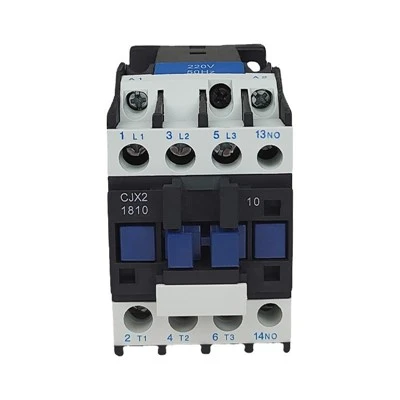
First, let’s get clear on what LV pole mounted circuit breakers are, because their design dictates how you store them. Unlike indoor panel breakers, these are built for outdoor (or semi-outdoor) use: they’re mounted on concrete or wooden utility poles, connected to overhead or underground lines, and rated to handle 600V or less. Most have three core parts: the interrupting unit (which cuts power during faults), the insulated pole housing, and the operating mechanism (the lever or motor that triggers trips and resets). Even though they’re outdoor-rated, that doesn’t mean they’re indestructible during transit or long-term storage. The interrupting unit, for example, relies on a precise seal to keep dust and moisture out—if that seal gets damaged during storage, it can lead to internal arcing or insulation failure later.
The first rule of storage is controlling the environment. I always tell my clients: if you wouldn’t leave your laptop or a wooden tool sitting outside all winter, don’t leave these breakers there either. The ideal storage space is a dry, temperature-controlled area, like a finished warehouse, a climate-controlled storage unit, or a covered, vented equipment shed. Let’s define the parameters here: relative humidity (RH) should stay between 30% and 60% at all times. Any higher, and you risk condensation building up inside the breaker’s housing—even the smallest amount of moisture can corrode the brass or silver contact points, which are critical for conducting electricity. I once had a customer in Florida store a batch of breakers in an uncovered loading dock during the rainy season; by the time they installed them, the contact surfaces had a thin layer of rust that caused 12 units to trip prematurely during testing. The fix? Wiping them down with isopropyl alcohol before installation, but that’s extra labor they didn’t plan for.
Temperature is almost as important. LV breakers work best in storage environments where temperatures stay between -40°F and 140°F, but extreme fluctuations are the real enemy. When temperatures swing wildly from day to night, warm air inside the breaker expands and escapes, then cools and contracts, pulling in damp air through tiny gaps or damaged seals. That’s how you get internal moisture buildup even in a relatively dry space. If you don’t have a climate-controlled space, use dehumidifiers to keep RH in check, and avoid storing breakers near heating vents, air conditioning units, or windows that get direct sunlight for long hours. Direct UV exposure can fade the housing’s insulating material over time, weakening it and making it more prone to cracking when it’s lifted onto a pole.
Next, handling and positioning the breakers correctly. LV pole mounted breakers are heavy—most full units weigh between 100 and 300 pounds, depending on their current rating (100A, 200A, 400A, etc.)—so improper lifting or stacking is a top cause of damage. First, never drag a breaker across concrete or metal floors, even if it’s wrapped in plastic. The bottom of the housing has sharp edges or protruding mounting points that can scratch or puncture the insulation, and dragging can misalign the internal operating mechanism. Always use two people or a pallet jack to move them; we recommend custom pallet cradles that are sized to fit the breaker’s base, which distributes weight evenly and prevents tipping.
When stacking is necessary (say, you have limited space in your warehouse), follow two non-negotiable rules. First, never stack more than two breakers high. The top of a breaker has the operating lever and sealed terminal ports—excessive weight from above can bend these levers, crack the terminal seals, or even compress the interrupting unit, which ruins its calibration. Second, always stack breakers horizontally, not vertically. Wait, I know that sounds counterintuitive for a pole-mounted unit, but vertical stacking (standing them on their base) puts all the weight on the lower mounting flange, which can bend or warp over time. Horizontal stacking also keeps the terminal ports and lever easily accessible for inspections, and reduces the chance of water pooling on the top surface of the breaker if condensation does form. If you have to stack them on pallets, use non-abrasive foam or cardboard between the layers to prevent scratching the housing.
Packaging is another often-overlooked step, and as a supplier, I’ve spent years refining our packaging to protect breakers during storage and transit. When we ship breakers, we use two layers: an inner plastic wrap that’s breathable (to prevent condensation buildup while still keeping dust out) and an outer corrugated crate with reinforced corners. If you receive breakers from a supplier like me and plan to store them for more than 30 days, don’t just remove the outer crate and let them sit in the inner plastic—cut small holes in the plastic wrap to promote air circulation, or transfer them to a breathable nylon cover. Sealed plastic bags trap moisture, even in low-humidity spaces, and we’ve seen this cause hidden corrosion on as many as 15% of stored units. For short-term storage (less than 30 days), keeping them in the original packaging is fine, as long as the packaging isn’t damaged or waterlogged.
Inspection is a critical part of proper storage, not just something you do when you’re ready to install. I recommend doing a quick visual check every month, and a more detailed inspection every three months, if breakers are going to sit in storage for longer than six months. What are you looking for? First, check the housing for cracks, dents, or discoloration—cracks can let water and dust in, while dents can misalign internal parts. Then, check the terminal ports: they should be clean, shiny, and free of rust or corrosion. If you see any white, powdery residue on the contacts, that’s oxidation, and it’s a sign the seal has been compromised. For a quick test, you can use a multimeter to check the continuity between the load and line terminals; if continuity is irregular or non-existent, the breaker is damaged and should be sent back to the supplier. Finally, check the operating lever: it should move smoothly with no sticking or grinding. If it’s stiff, that’s a sign the internal lubrication has broken down, which can lead to failed tripping once it’s in the field.
Now, let’s talk about common mistakes I see clients making, because these are avoidable. The first is storing breakers with other heavy equipment, like transformers or utility poles. If a pallet of breakers is next to a stack of 10-foot wooden poles, a falling pole can crush the breaker housing. The second is labeling incorrectly. Always label each breaker with its amp rating, serial number, and installation date on a durable, weatherproof sticker—this will save you time when you need to pull units for a project, and prevent you from mixing up old and new inventory. The third is not accounting for specific breaker types. For example, a vacuum interrupter breaker (common for medium LV applications) has a hermetically sealed interrupting chamber that’s more sensitive to temperature fluctuations than a fuse-type breaker. If you’re storing vacuum interrupter units, keep the storage temperature even more consistent, and avoid moving them roughly, as a dropped chamber can develop a tiny leak that causes failure in the field.
Wait a second—what if you’re storing breakers that have already been used, not new ones? That’s another common scenario, when a project is delayed or you have extra inventory from a maintenance upgrade. For used LV pole mounted breakers, the storage rules are almost the same, but you’ll want to take an extra step before putting them away: reset the operating mechanism, clean all contact points with a mild electrical contact cleaner, and apply a thin layer of dielectric grease to the terminals to prevent corrosion. Used breakers should also be tested for functionality before storage, so you know they’re working when you pull them out later.
At the end of the day, the goal of proper storage is simple: make sure the breaker that arrives at your pole is in the same condition it left our warehouse. As a supplier, I stand behind every unit we ship, but I also know that poor storage is one of the most common reasons for early failures that fall outside our warranty. If you’re planning a bulk order and want to discuss storage protocols tailored to your project, or if you have a batch of breakers you need to store long-term, don’t hesitate to reach out. We work with contractors, electrical engineers, and utility companies across the country, and we can provide custom packaging guides, on-site storage consultations, or even short-term climate-controlled storage for our clients who need it.
Cable Lug References:
- National Electrical Manufacturers Association (NEMA) Standards for Low-Voltage Switchgear and Controlgear, Publication No. C37.100, 2021.
- Institute of Electrical and Electronics Engineers (IEEE) Guide for Storage of Electrical Equipment, IEEE Standard 141-2013.
- Underwriters Laboratories (UL) Requirements for Low-Voltage Circuit Breakers, UL Standard 489, 2022.
- Occupational Safety and Health Administration (OSHA) Guidelines for Material Handling and Storage in Electrical Workplaces, 2020.
Wenzhou Lanen Electrical Co., Ltd.
Wenzhou Lanen Electrical Co., Ltd. is one of the most professional lv pole mounted circuit breakers manufacturers and suppliers in China, also supports customized service with low price. Please feel free to buy CE approved lv pole mounted circuit breakers made in China here from our factory. Contact us for more discount information.
Address: Zhiguang Liushi Town Yueqing City Wenzhou City Zhejiang Province
E-mail: lanen@luyele.cn
WebSite: https://www.lanenelectrical.com/
