If you’ve ever stood in a workshop, a warehouse loading bay, a small manufacturing shop, or even a home garage renovation site and spotted that compact, motor-driven device lifting pallets, engine blocks, or tool chests with effortless precision, chances are you were looking at a light duty electric hoist. As a supplier of these units, I get asked dozens of questions every day, but one that comes up more often than I expected is: “What exactly is the weight of a light duty electric hoist?” It sounds like a straightforward question, but if you’ve ever shopped for one, you know the answer isn’t a single number. Over the past 12 years I’ve worked in this industry—first repairing hoists for small businesses, now supplying them directly—this is one of the most important details to get right, because getting it wrong can turn a simple lift into a safety hazard or a logistical nightmare. Light Duty Electric Hoist
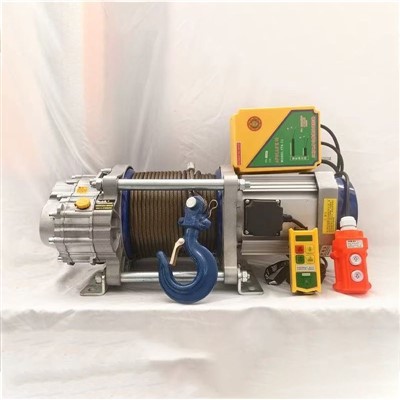
Let’s start with what we actually mean by “light duty.” You can’t talk about weight without first defining the category. In the hoist world, “light duty” isn’t just a marketing buzzword; it’s a set of standards set by organizations like the Hoist Manufacturers Institute (HMI) and the Occupational Safety and Health Administration (OSHA). Light duty hoists are designed for loads up to 2,000 pounds (about 907 kilograms) of maximum rated capacity. They’re built for frequent, regular use, but not for continuous, 24/7 operation—think lifting an engine in a mechanic’s shop all day, moving raw materials in a small fabricating plant, or lifting furniture during a house renovation. Heavy duty hoists, by contrast, handle loads over 2,000 pounds and are built for constant, high-volume use, so they’re much bulkier and heavier.
Now, once we’ve agreed on the load capacity, the weight of the hoist itself depends on a handful of key factors, and every single one of these matters to someone buying one. The first and most obvious is load capacity, but it’s not just the maximum weight the hoist can lift—it’s how that translates to its own body weight. For example, a 1/8-ton light duty hoist (that’s 250 pounds of lift capacity) will weigh roughly 25 to 35 pounds, depending on its design. A 1/4-ton model (500 pounds of lift) jumps to 40 to 50 pounds, a 1/2-ton (1,000 pounds) comes in at 55 to 70 pounds, and a 1-ton (2,000 pounds) light duty hoist usually falls between 85 and 110 pounds. That’s just the basic unit weight, too—before you add the trolley, pendant controller, or any extras.
Why such a wide range for the same capacity? Let’s get into the engineering choices that make that difference. At the core of every light duty electric hoist is the hoist motor. Some are built with a cast iron housing for extra durability, which adds weight, while others use lightweight aluminum housings for situations where portability matters more than 24/7 heavy use. If you’re a small contractor who takes your hoist to job sites every day, an aluminum housing hoist saves you from hauling around extra pounds, but if your hoist will stay bolted to a ceiling in a busy workshop, a cast iron model is worth the extra weight for its resistance to dust, heat, and bumps.
Next is the material of the load chain or wire rope. Light duty hoists come in two main types: chain hoists and wire rope hoists. Chain hoists, the most common for light duty use, use a steel chain to lift loads. The chain itself is made of high-strength alloy steel, and larger links for higher capacity add weight. A 1-ton chain hoist’s chain alone can weigh 10 to 15 pounds, depending on how long the chain is. Wire rope hoists, while less common in strictly light duty applications, use a thin steel cable wrapped around a drum. For the same 1-ton capacity, a wire rope hoist might weigh a little less than a chain hoist, but the cable adds about 5 extra pounds for every 10 feet of length, so that can shift the total weight up quickly if you need a long lift height.
Then there’s the trolley— the part that attaches the hoist to the I-beam or ceiling track. If you’re buying a basic manual trolley (you push the hoist along the beam by hand), that adds 15 to 25 pounds to the total weight. Powered trolleys, which let you move the hoist along the track with the push of a button, add even more—usually 30 to 40 pounds, because they have their own small motor and gear system. If you need the hoist to travel long distances along your workspace, a powered trolley is non-negotiable, but you have to account for that extra weight when calculating how it will mount to your structure. A lot of first-time buyers forget this and end up asking, “Wait, I thought this hoist was only 85 pounds—why is the total unit with the trolley over 120 pounds?” That’s the exact reason.
I remember a customer about three years ago who learned this the hard way. He owned a small custom woodworking shop and bought a 1-ton light duty electric hoist, weighing 95 pounds, for lifting large cabinet panels. He installed it on his existing I-beam, which was rated for 500 pounds of total load (that includes the hoist, trolley, and maximum load). What he didn’t account for was his 1-ton hoist with a powered trolley adding another 35 pounds, plus his typical load of 800 pounds for cabinet panels. Total working load was 95 + 35 + 800 = 930 pounds, which was almost double what his beam could handle. He called me panicking, saying the hoist felt too heavy for his shop, and we ended up swapping it for a 1/2-ton model that was light enough to fit his existing setup. That’s the kind of mistake that comes from not understanding all the variables that go into a hoist’s total weight.
Another big factor is lift height. The lift height is how far the hoist can raise a load from the ground, and it’s measured in feet. A hoist with a 10-foot lift height will have a shorter chain or shorter cable than a hoist with a 20-foot or 30-foot lift. That extra length of chain or cable adds weight, plain and simple. For example, a 1/2-ton hoist with a 10-foot lift will weigh about 60 pounds, but the same model with a 30-foot lift can jump to 70 pounds, just from the extra chain. If you’re lifting items high up in a warehouse, that extra 10 pounds might not seem like much, but if you’re mounting the hoist to a high ceiling, you also have to think about the structure above—drywall, ceiling joists, or I-beams—all have weight limits of their own, so every extra pound matters.
There are also custom features that add weight. If you want a pendant controller with an extra-long cord, that can add 2 to 5 pounds. If you need a load limiter, a safety device that stops the hoist from lifting more than its rated capacity, that adds another 3 to 8 pounds. Even a custom color for the hoist housing, which some clients ask for for branding, can add a tiny bit of weight from extra paint, though that’s negligible compared to the other factors.
Now, let’s put this all together with real examples, not just numbers. The most popular light duty hoist I supply is our 1-ton model, designed for general workshop use. The base unit alone is 92 pounds. Add a manual trolley, and you’re at 110 pounds. Add a powered trolley, and that jumps to 127 pounds. For our 1/2-ton model, the base unit is 62 pounds, 80 pounds with a manual trolley, and 97 pounds with a powered trolley. A 1/4-ton portable hoist, made specifically for contractors who move hoists between job sites, has an aluminum housing to keep weight low—the base unit is only 38 pounds, so it’s easy to load into a work truck and unload by one person.
But here’s the thing: you don’t just want to know the weight of the hoist for handling and installation. You also need to know it for your workplace safety. OSHA requires that all lifting structures—whether that’s an I-beam, a ceiling mount, or a mobile gantry crane—are rated to support the total working load, which includes the weight of the hoist, the trolley, and the load you’re lifting. If you ignore the hoist’s weight and only count the load, you’re setting yourself up for a fall. A friend of mine who runs an inspection service told me he sees at least one near-miss a month where a small business has a beam that’s rated for 1,000 pounds, and they try to lift a 900-pound load with a 100-pound hoist—putting 1,000 pounds on a beam that’s only rated for 900 pounds. It’s a common mistake, and it’s entirely avoidable if you take the hoist’s weight into account.
As a supplier, I also tell my customers that “light duty” refers to the load capacity, not the hoist’s own weight. A lot of people assume a light duty hoist has to be light in body weight too, but that’s not the case. You need a balance between strength, durability, and ease of use. A hoist that’s too light for its capacity will be flimsy, with cheap parts that break after a few uses. A hoist that’s built too heavy will be hard to move, hard to install, and add unnecessary stress to your structure. That’s why we engineer our light duty hoists to hit that sweet spot—strong enough for daily use, light enough to handle easily, with weight that’s calculated to match real world needs.
I’ve had customers come to me asking for a light duty hoist that weighs less than 50 pounds, and they’re usually trying to move it around their workspace or take it to job sites. For those customers, I recommend our portable line of light duty hoists, which use lightweight aluminum housings and optimized chain designs to keep the base weight under 40 pounds, even in the 1/2-ton capacity. They’re not as heavy duty as our workshop models, but they’re perfect for someone who only uses a hoist a few times a week and needs to move it regularly.
The other thing to remember is that weight isn’t the only spec you should look at when buying a light duty electric hoist. Duty cycle, which is how often you use the hoist in an hour, is just as important. If you’re using your hoist for 10 minutes every hour, a lighter, less expensive model will work fine. If you’re using it for an hour straight every day, you’ll want a heavier, more durable model that can handle the constant use. The weight is a piece of the puzzle, but it’s not the whole picture.
Over the years, I’ve learned that the best customers are the ones who ask about weight, not just price. They understand that buying a hoist that’s too light or too heavy for their needs will cost them more in the long run—whether that’s in repair costs, installation fees, or safety risks. I always make sure to walk them through every factor: load capacity, lift height, type of trolley, duty cycle, and how all of that adds up to the total weight they need to work with.

If you’re in the market for a light duty electric hoist, don’t just take a random number from a website. Think about what you’ll be using it for, how much weight you’ll lift, how often you’ll use it, and what kind of structure you’ll mount it to. Take the time to add up all the components—hoist, trolley, any custom features—and make sure your structure can handle the total weight. And if you have questions, don’t hesitate to reach out. I’ve spent thousands of hours helping small business owners, contractors, and workshop managers pick the right hoist for their needs, and I’d be happy to help you too.
Indoor and Outdoor Winches References
Hoist Manufacturers Institute. (2020). Recommended Practice for the Specification, Design, and Operation of Light Duty Electric Chain Hoists. HMI Standard 60.
Occupational Safety and Health Administration. (2022). General Industry Hoist and Crane Safety Standards. 29 CFR Part 1910.
Smith, J. (2021). Material Handling Equipment for Small Workspaces: A Guide to Light Duty Hoists. Industrial Equipment Journal.
Hebei Hengtai Crane Machinery Manufacturing Co., Ltd.
Address: Weigezhuang Village, Donglu Township, Qingyuan District, Baoding City, Hebei Province
E-mail: hbht@cnhengtai.com
WebSite: https://www.cnhengtai.com/
