If you’ve ever shopped for a cap embroidery machine, you’ve probably heard people throw around “stitch count” like it’s the be-all-end-all metric—like more stitches = a better machine, right? Spoiler: it’s not that simple. As a cap embroidery machine supplier who’s talked to hundreds of small business owners, custom hat makers, and even hobbyists who turned their side hustle into a full-time gig, I can tell you the “good” stitch count depends on what you’re actually using the machine for, how fast you want to work, and what kind of caps you’re stitching. No cap, this is the stuff I break down for every customer who walks through our door or hits up our inbox. Cap Embroidery Machine
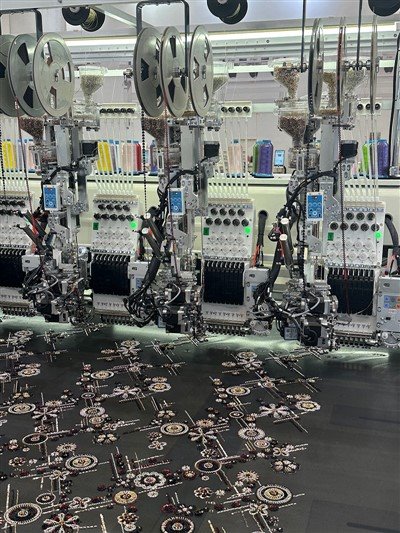
First, let’s get the basics out of the way, no jargon promised. Stitch count here isn’t how many individual stitches a machine can hold in its design library (though that’s a side note) — it’s the number of stitches the machine can make per minute, or SPM, when it’s running. Think of it like this: if you’re a baker making custom embroidered baseball caps for a local sports team, you don’t need a machine that cranks out 1,500 SPM. If you’re a commercial shop doing 1,000 caps a week for a major brand, slacking on speed would kill your profit. That’s the big confusion most new buyers get stuck on. They see a machine with a 1,000 SPM sticker and think it’s garbage, while the pros know 1,000 SPM is actually perfect for their work.
Let’s break it down by use case, because that’s how most people actually embroider caps. If you’re a side hustler or a small custom shop doing 10-50 caps a week—think birthday gifts, local school spirit runs, small business swag—you don’t need a high-end commercial machine. For this crowd, a stitch count between 800 and 1,000 SPM is total gold. Wait, why? Let’s test it: if you’re stitching a 5,000-stitch design (that’s a thick team logo, for example), an 800 SPM machine will knock that out in about 6 and a half minutes. A 1,200 SPM machine would do it in 4 minutes. But here’s the catch—speed can kill quality if your machine isn’t calibrated for cap embroidery specifically. Caps have a curved surface, a thicker brim, and often different fabric than hoodies or shirts. If a machine’s running too fast, it skips stitches, tangles thread, or pulls so tight it warps the cap’s shape. I’ve seen hobbyists buy a 1,500 SPM machine and end up with half their caps ruined because they couldn’t adjust for the curve of the crown. For small shops, that’s a $15-$20 loss per cap—add that up, and you’re wasting more money on a fast machine than you would have saved with a slower, cap-specific one.
Now, if you’re a mid-sized shop doing 50-200 caps a week, or you take on small commercial contracts (think local cafes, church groups), you’ll want to bump that up a bit. A stitch count between 1,000 and 1,200 SPM is the sweet spot here. Why? You get enough speed to keep up with demand without sacrificing the cap-specific quality. Most mid-tier cap machines we sell have adjustable SPM settings, too—so you can dial it back to 900 SPM for a thick, dense logo on a wool baseball cap, or crank it up to 1,100 for a simple text design on a cotton dad hat. That flexibility is key, especially if you’re not just doing one type of cap. I had a customer last month who was doing both plain dad hats for a clothing line and structured wool caps for a hunting brand—being able to adjust stitch count on the fly made his workflow twice as smooth.
Then there’s the commercial crowd: shops doing 200+ caps a week, or big contracts with universities, professional teams, or retail brands. For these folks, stitch count matters more for throughput, but it’s still not about going as high as possible. A 1,200 to 1,500 SPM machine is where you want to be here. Wait, I know what you’re thinking—1,500 SPM sounds fast, but let’s be real: a 10,000-stitch logo on a structured trucker cap? A 1,500 SPM machine will do that in about 7 minutes, vs. 10 minutes on a 1,000 SPM one. For a shop doing 500 of those caps a month, that’s 2,500 minutes saved—over 40 hours a week. That’s not just a time-saver; that’s the difference between taking on a big contract and turning it down because you can’t make the deadline. But again, caveat: you need a machine built for cap embroidery to handle that speed. A general-purpose shirt embroidery machine running at 1,500 SPM will mess up caps every time—its tension settings aren’t calibrated for the curved crown, and its needle bar is too rigid. All the commercial machines we supply have cap-specific tension and needle adjustments, so even at 1,400 SPM, they barely skip a stitch on a trucker cap with a thick foam front.
Wait, let’s talk about the myth that “more stitches = better quality.” I get it—when you’re stitching a tiny 1cm logo, a higher stitch count means more small, tight stitches, right? No. That’s another big mistake people make. A high-speed machine will make those tiny stitches, but if its timing is off, the thread will pull so tight it creates a puckered mess on the cap. Last year, a customer brought in a machine he’d bought online (not from us, obviously) that did 1,800 SPM. He was stitching 1-inch lettering for caps, and every single one had a thick, uneven line. Turns out, even though it had a high stitch count, it didn’t have the ability to adjust the stitch length for small designs—so it was cramming too many stitches into a tiny space, ruining the look. For fine detail work, actually, a slightly lower stitch count (around 900-1,000 SPM) is better. It gives you more control, so you can set each stitch length manually without the machine rushing through and messing it up.
Also, let’s not forget about thread type. If you’re using thick rayon thread for a bulked-up logo on a winter cap, a higher stitch count will cause more tangles. Thread stretches when it’s moving fast through the needle, and thick thread stretches more. I’ve had customers try 1,500 SPM with metallic thread (super popular for sports caps) and end up with half their thread snapped mid-design. Metallic thread needs slower speeds—around 1,000-1,100 SPM—to keep from breaking. On the flip side, thin polyester thread for simple text can handle 1,300 SPM no problem. That’s why we always tell customers: stitch count isn’t a one-size-fits-all number; it’s tied to what you’re stitching, what thread you’re using, and how fast you need to turn it around.
Let’s also touch on a related metric that people sleep on: continuous stitch count. Wait, that’s not a typo. Some machines can show a high SPM, but they can only run at that speed for 10 minutes before they overheat, and then they have to cool down for 20. For commercial shops, that’s a non-starter. I once had a customer who bought a machine with a 1,600 SPM “peak” speed, but it only lasted 8 minutes before overheating. He ended up replacing it with a machine from us that has a 1,300 SPM continuous stitch count—so it can run for 8 hours straight no problem, even with thick cap fabric. That’s way more useful for anyone doing consistent, large orders. Peak speed is a marketing gimmick, basically—ignore it. Continuous stitch count is what actually matters.
Now, let’s circle back to what a “good” stitch count actually is. I can’t just throw a number at you and say “this is it,” because it’s dependent on your business. But here’s the cheat sheet I give every customer:
- Side hustle / <50 caps/week: 800-1,000 SPM (continuous, not peak) – saves you money, avoids quality issues, easy to use.
- Small to mid shop / 50-200 caps/week: 1,000-1,200 SPM (continuous) – perfect balance of speed and control, flexible for different cap types and thread.
- Commercial shop / >200 caps/week: 1,200-1,500 SPM (continuous, cap-specific) – keeps up with big orders, no deadline delays, still maintains quality.
If you’re new to buying a cap embroidery machine, avoid falling for the “highest SPM wins” hype. I’ve seen so many people blow their budget on a fast machine they don’t actually need, then struggle to get good results on caps because it’s not calibrated for that. A lot of brands will advertise their machine at 1,800 SPM, but that’s only for testing on flat t-shirts, not curved caps. That’s where our experience comes in—we don’t just sell machines; we’ve tested every single one with cap embroidery (literally, we stitch hundreds of caps a week here to make sure they work) so we can tell you exactly what stitch count fits your work.
Wait, one more thing: maintenance affects stitch count, too. A machine that’s not oiled, or has a worn needle, will drop stitches even if its SPM is within the good range. We always remind customers to oil their machine every 10 hours of use, replace needles every 5 caps (especially for dense logos), and clean the bobbin case weekly. A well-maintained machine can run at the top end of its recommended stitch count, but if you skip maintenance, you’ll be stuck running it slower than it should be. I had a customer last quarter who thought his machine was broken because it kept dropping stitches—turns out he hadn’t oiled it in 3 months. Once he did that, he was able to crank it back up to 1,200 SPM, and his quality improved instantly.
At the end of the day, a good cap embroidery machine’s stitch count is about matching your needs, not chasing a number. If you’re just starting out, a lower, cap-specific SPM will let you practice without ruining dozens of caps and wasting money. If you’re scaling, a mid-range continuous stitch count will let you grow without hitting a wall on throughput. We’ve helped everyone from students making custom hats for their dorm to big brands outfitting their staff find the right machine, and we never push a higher SPM just to make a sale.
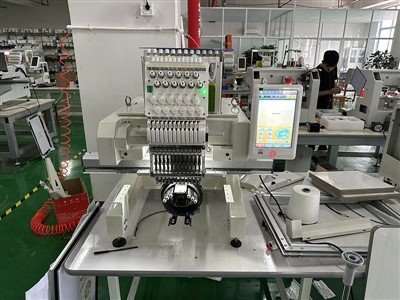
If you’re still not sure what stitch count is right for your cap embroidery work, just reach out. No hard sell, no confusing jargon—we can walk through your workflow, the type of caps you stitch, and how fast you want to work, and point you to the machine that fits. Don’t overcomplicate it with fancy numbers; focus on what you actually need to get the job done well and make money.
Embroidery Machine Accessories References:
- International Embroidery Manufacturers Association. (2022). “Best Practices for Cap Embroidery Equipment”
- Textile Technology Digest. (2021). “Stitch Speed and Fabric Compatibility in Custom Embroidering”
- Small Business Administration. (2023). “Choosing Equipment for Custom Apparel Businesses”
Yiwu Kuhao Import and Export Co., Ltd.
As one of the most professional cap embroidery machine manufacturers in China, our products have good reputation in the market. Welcome to buy discount cap embroidery machine made in China here and get quotation from our factory. All customized products are with high quality and low price.
Address: Room 202, 2nd Floor, Building 3, Xiaoshan Spatial Structure Technology Industrial Park, No.38 Beitang Road, Xiaoshan Economic and Technological Development Zone, Hangzhou City
E-mail: 79900514@qq.com
WebSite: https://www.kuhaoembroidery.com/
