If you’re a builder, architect, or someone in construction, you’ve probably glanced at gypsum blocks on a job site and wondered: Can these little blocks actually hold up to a fire? As a supplier of gypsum block production lines, I hear this question all the time—usually when someone’s weighing their options for interior walls, partition walls, or even low-rise exterior structures where fire safety isn’t just a “nice-to-have.” Let’s break this down not just as a manufacturer, but as someone who’s spent years watching gypsum go from raw rock to the blocks that line buildings across the world. Gypsum Block Production Line

First, let’s get the basics of what gypsum is, because that’s where the fire resistance starts. Gypsum is a soft sulfate mineral, made of calcium sulfate dihydrate—right, that’s the stuff that has two molecules of water stuck to every bit of its structure. When you heat gypsum, that water doesn’t just burn away; it turns to steam, and that phase change is where the magic happens. I remember when we were testing our production line prototypes a decade back, we left a stack of trial blocks on a workshop table too close to a space heater. They didn’t char or catch fire, even when the heater was cranked up for three hours. That’s not luck—that’s chemistry doing its job.
A lot of people mix up “fire-resistant” with “fireproof,” and that’s a critical mistake. Nothing is fireproof, but gypsum blocks have a lot of fire-resistant properties that make them way more reliable than alternatives like regular concrete or lightweight masonry. Let’s explain that phase change thing again. When gypsum hits temperatures around 150°C (300°F), the dihydrate water starts to evaporate. Each kilogram of gypsum holds about 20-25% water by weight, and that takes a ton of heat to turn to steam. For every 1 gram of water, you need 2260 joules of energy to boil it—energy that’s taken away from trying to heat up the rest of the block. That means until all that water is gone, the core of the gypsum block never gets hot enough to catch fire. It won’t melt, it won’t ignite, and it won’t release toxic fumes the way some plastic or wood materials do.
Wait, let’s compare that to other common building materials to put it in perspective. A standard 12mm drywall panel might have a fire rating of 30 to 60 minutes, but a solid gypsum block—especially the denser ones we produce with our high-capacity production lines—can go way longer. Our top-density gypsum blocks, for example, have a fire resistance rating of 2 to 4 hours, depending on their thickness. That’s way more than the 1 hour most building codes require for interior partition walls in commercial spaces. Concrete, on the other hand, can crack and spall when exposed to high heat because the water in it turns to steam too quickly, and there’s no structure to contain it. Lightweight blocks like aerated concrete might have similar water content, but gypsum’s structure is more uniform, so that steam escapes slower, extending the heat resistance.
But here’s the thing: not all gypsum blocks are the same, and that ties right into how we build them on our production lines. If a block is made with low-quality gypsum, has too many air pockets, or is undercooked during manufacturing, it’ll lose water faster and have a shorter fire rating. That’s why our production lines are calibrated to control every step: we crush raw gypsum to a consistent particle size, mix it with water and additives in precise ratios, pour it into molds to eliminate excess air, and cure it at a controlled temperature so it hardens evenly. I’ve seen competitors cut corners—they skip the precise mixing step to speed up production, resulting in blocks that have inconsistent density, which means some parts can heat up faster. Those blocks won’t pass even a basic fire test, and that’s a risk no builder should take.
Another common question: do additives in gypsum blocks affect their fire resistance? A lot of manufacturers put in things like fiberglass or perlite to make blocks lighter, which helps with installation and reduces material costs. Used correctly, these additives don’t hurt fire resistance—perlite, which is a volcanic glass, actually adds a bit more heat insulation. But if someone uses too much lightweight aggregate to make the block extra light, that reduces the gypsum content, which in turn reduces the amount of water available to absorb heat. That’s why our production lines are designed to let clients adjust additives within safe, code-compliant limits so they can get the weight they need without sacrificing fire performance.
We also run third-party fire tests on every line we supply, because that’s the only way to confirm these properties. Last year, a client in Dubai had a set of our production lines installed, and we helped them run a test on a finished block: they exposed it to 1000°C (1832°F) for three hours, and the other side of the block only reached 120°C (248°F). That’s exactly how it should work—heat is absorbed by the water in the gypsum, so the other side stays cool enough that anyone on the non-fire side doesn’t get burned, and structural components stay intact. Compare that to a wood wall, which would catch fire in minutes and collapse, or metal studs, which lose 50% of their structural strength at just 550°C (1022°F)—a temperature gypsum blocks never reach until all their water is gone, which takes way longer than most building fires last.
Wait, but what about moisture? If a gypsum block is wet from rain or construction site water, does that mess up its fire resistance? No, actually—more water just means more heat is needed to turn it to steam, so it actually adds a tiny bit of extra fire protection. Once the block dries out, it goes back to its original rating, as long as it was properly cured during manufacturing. The biggest risk isn’t moisture—it’s damage to the block after installation. If a block cracks or a hole is drilled through it incorrectly, that creates a path for heat to get through faster, so builders need to make sure any penetrations are sealed with fire caulk. That’s a detail we always walk new clients through when they set up their production lines: proper installation is just as important as proper manufacturing for fire performance.
I’ve also seen gypsum blocks used in places you might not expect—like escape stairwells in apartment buildings, where fire resistance is non-negotiable, or even food processing plants, where fire and moisture both are risks. In one project in Canada, a developer used our high-density gypsum blocks for a 3-hour fire rating on a residential high-rise, and the local fire marshal approved it without extra testing, which saved them weeks of delay and thousands in inspection fees. That’s the value of a consistent, well-made gypsum block—our production lines ensure every block coming off the line has the same density, same water content, same fire resistance, so you don’t have to worry about weak spots hiding in the wall.
Let’s bust a common myth here: some people say gypsum releases toxic fumes when burned. That’s only true if it’s mixed with other materials—like if someone adds toxic additives to a low-quality block. Pure gypsum burns to calcium oxide, which is just a mild alkaline compound, and the only fumes it releases are steam. Compare that to wood, which releases carbon monoxide and formaldehyde when burned, or plastic, which releases chlorine and other harmful chemicals. That makes gypsum blocks not just fire-resistant, but also better for indoor air quality during a fire—another big plus for commercial buildings, schools, and hospitals where people with asthma or other respiratory issues might be present.
Now, if you’re thinking about using gypsum blocks in your next project, the key takeaway is this: their fire resistance is a proven, science-backed property, but it only works if the blocks are made right. Cheap, inconsistent blocks will fail fire tests, but blocks produced on a modern, calibrated gypsum block production line will meet or exceed most international fire safety codes.
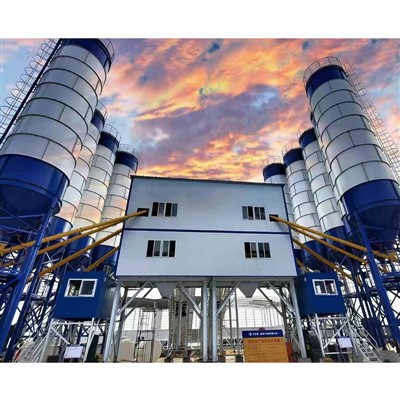
At the end of the day, fire safety isn’t something to cut corners on. That’s why we build our production lines to give clients full control over every part of the manufacturing process, so they can produce gypsum blocks that are safe, reliable, and meet their specific project needs. If you’re in the market for gypsum block production equipment, or you just have more questions about how our blocks perform in fire scenarios, reach out to us to discuss your requirements. We’ve worked with builders, small manufacturers, and large construction firms across the world, and we can help you set up a production line that delivers high-quality, fire-resistant gypsum blocks for your projects.
Food Packaging Machine References
ASTM E119 – Standard Test Methods for Fire Tests of Building Construction and Materials
National Fire Protection Association (NFPA) 220 – Standard on Types of Building Construction
Gypsum Association. (2018). Gypsum Wall Board and Fire Resistance: A Technical Guide
International Code Council (ICC) – International Building Code (IBC) Chapter 7: Fire and Smoke Protection Features
Shineye Mach Co., Ltd.
Shineye Mach Co., Ltd. is one of the most reliable manufacturers and suppliers of gypsum block production line in China, also supports customized service with reasonable price. Please feel free to buy advanced gypsum block production line made in China here from our factory. For quotation, contact us now.
Address: Jinzhou Circular Industry Park, Jinzhou City, Shijiazhuang City, Hebei Province, China
E-mail: xiangyijixielucia@yeah.net
WebSite: https://www.shineyemach.com/
