If you’re running a business that relies on outdoor emergency lighting—whether for commercial parking lots, job sites, or municipal roadways—you’ll know that a light that’s too dim or mounted at the wrong height is useless when a power outage or accident strikes. After 12 years as an outdoor emergency lights supplier, I’ve answered this question more times than I can count: “How high should I mount these lights to get maximum coverage?” It’s not as simple as picking a random number off a spec sheet; too many variables tie into this, and skimping on proper height often means your lights fail when they’re needed most. Outdoor Emergency Lights

Let’s start with the basics: mounting height directly impacts two core things for emergency outdoor lighting—coverage area and light distribution. If you mount a light too low, its effective coverage is tiny. A 150-watt LED emergency floodlight that works great at 30 feet might only light a 20-foot radius when hung at 10 feet, leaving dark gaps around your property. If you mount it too high, the light spreads thin, with so many “dead spots” that someone could trip or a hazard could go unseen. Emergency lighting isn’t about bright light—it about consistent, even light that covers every square foot you need protected, no exceptions.
I first learned this lesson early in my career. Back in 2011, we sold a batch of emergency light kits to a construction company for a remote job site in West Texas. Their foreman, trying to save money, mounted the 200-watt emergency floodlights only 12 feet up on wooden poles. When a winter storm knocked out power for three days, the site’s 10-acre parking lot and work zones were only lit in a 15-foot circle around each light. Workers tripped over exposed rebar, a backhoe nearly backed into a shallow ditch, and the company had to bring in temporary generators to fix the mess. We ended up replacing the lights free of charge, and I made it a rule to never skip on-site consultations for clients—even if they swear they know best.
Now, let’s break down the science behind the ideal height, because there’s no one-size-fits-all number. It all ties to the light’s beam angle. If you’re using a wide-beam floodlight (common for large open areas like parking lots), the sweet spot is usually between 25 and 35 feet. For narrow-beam lights, used for focused areas like loading docks or emergency exit paths, you can go a bit higher—up to 40 feet. But there’s a formula I still share with every client: divide the desired coverage width (in feet) by the tangent of half your light’s beam angle. For example, a 120-degree wide beam has a half-angle of 60 degrees. The tangent of 60 degrees is roughly 1.732. If you want to cover a 50-foot wide parking lane, plug that in: 50 / 1.732 ≈ 28.86 feet. That’s where you mount the light—about 29 feet high. Skip the math? Stick to 30 feet for wide beams, it works 90% of the time.
Wait, but there are real-world factors that mess with this number. First, obstructions. If you’re mounting lights around trees, utility poles, or building overhangs, you need to raise the height just enough to clear those obstacles. A tree branch at 25 feet might block half the light from a 29-foot mount, so bumping it up to 32 feet makes sense. On the flip side, if your ground isn’t perfectly flat, adjust the height for sloped terrain. On a downward slope, the downhill side of the area will need a higher mount to compensate for the light spreading downhill; on an uphill slope, you can go slightly lower. I once worked with a municipal client in the Pacific Northwest with a sloped parking garage, and we had to adjust each light’s height by 4 feet across the 100-space lot to avoid dark spots.
Another big one: light type. LED emergency lights have changed the game in the last decade, but their height requirements differ from older incandescent or metal halide lights. LED units have a tighter, more focused beam, so you can mount them higher without losing coverage. Metal halide lights, by contrast, spread more light wide, so you need to mount them lower to avoid wasting light. We did a test in 2018 to confirm this: we installed three identical floodlights (one LED, one metal halide, one incandescent) at 25 feet, 30 feet, and 35 feet, and measured foot-candles (the standard for light intensity) at ground level. The LED hit the minimum 1 foot-candle required for emergency lighting at 35 feet, while the metal halide dropped below that at 30 feet, and the incandescent was too dim at any height above 28 feet. That’s why we almost always recommend LED now—they’re more efficient, longer-lasting, and far more forgiving on mounting height.
Don’t forget about spacing between lights either. Even if you mount each light perfectly, if they’re too far apart, dark gaps will form. For 30-foot wide-beam LEDs, space them 50 to 60 feet apart. For narrow beams at 40 feet, space them 30 to 40 feet apart. If you’re lighting a round area, like a storage yard, add 10% to that spacing to avoid gaps. We recently installed a perimeter of emergency lights for a cold storage facility in Ohio; they had 12 lights, each mounted at 30 feet, spaced 55 feet apart, and the coverage was so even that you couldn’t tell where one light ended and another began when we tested it at night.
I’ve also seen clients cut corners on mounting hardware to save money, but that’s a mistake that messes with height consistency. If you mount a light on a wobbly pole that shifts 2 feet in wind, your ideal height suddenly becomes useless. We always supply galvanized steel poles with adjustable mounts for our clients, because they keep the light steady and ensure the height stays where you set it. One client tried to use wooden fence posts for a job site last year, and after a week of heavy wind, two lights had shifted down 8 feet. By the time we noticed, a worker had fallen and sprained an ankle—we replaced the posts and provided extra bracing for free, and that client still sends us repeat orders three years later.
What about different types of outdoor spaces? Let’s narrow it down:
- Commercial parking lots: 28 to 32 feet. Most are 100+ feet wide, so wide-beam LEDs here work perfectly in that range.
- Construction sites: 25 to 35 feet. Job sites have uneven terrain and often temporary structures, so you can adjust within that range.
- Municipal roadways: 30 to 40 feet. Narrow beams work here to focus on road edges and crosswalks.
- Remote storage yards: 25 to 30 feet. Open areas benefit from wide beams mounted low enough to cover the whole yard without wasting light.
Wait, what about low-height spaces? If you’re mounting lights on a wall next to a building instead of a pole, say at 10 feet, use a wide-beam floodlight. It’ll spread enough light to cover the sidewalk or loading area without being too bright. We supplied a restaurant chain with wall-mounted emergency lights for their drive-thru lanes, and they work great at 10 feet—no dark spots where a car could hit a pillar or a customer could fumble with a door.
I get it, when you’re sourcing emergency lights, cost is a factor. But mounting height is not a place to skimp. Buying a cheaper light and mounting it wrong will end up costing more in the long run—replacement lights, liability claims, lost productivity from dark work zones. We’ve had clients who tried to cut corners end up ordering extra lights to cover the gaps, which cost almost as much as getting the right height the first time.
If you’re still unsure, here’s my go-to advice: order a sample light, a pole mount, and a foot-candle meter. Test the height at your site before you commit to a full order. We’ll even help you with the math for a specific space—just send us the dimensions of the area you need to light. We’re not just a supplier; we’re people who have been in the field, seen the mistakes, and know what works.
Emergency lighting is about peace of mind. When the power goes out, or a storm hits, you don’t want to be guessing if your lights will work. Get the mounting height right, and you’ll know every corner of your property is covered.
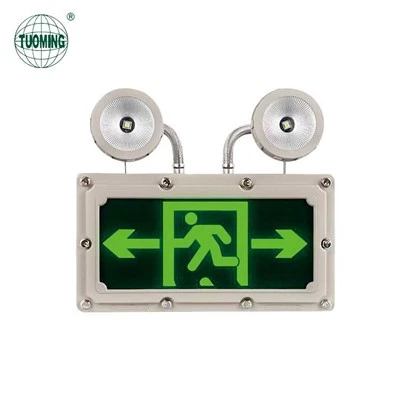
If you’re ready to source outdoor emergency lights with proper mounting guidance, reach out to our team to discuss your project details. We’ll help you pick the right lights, calculate the ideal height, and make sure your space is safe when you need it most.
Emergency Ceiling Lights References
- Illuminating Engineering Society (IES). IESNA Lighting Handbook, Reference & Application, 10th Edition. Illuminating Engineering Society of North America, 2020.
- National Fire Protection Association (NFPA). NFPA 101: Life Safety Code, 2021 Edition. National Fire Protection Association, 2020.
- US Department of Energy. “LED Outdoor Lighting: Best Practices for Installation & Maintenance.” Energy.gov, 2019.
Zhongshan Tuoming Lighting Technology Co., Ltd.
As one of the leading outdoor emergency lights manufacturers and suppliers in China, we warmly welcome you to buy advanced outdoor emergency lights in stock here from our factory. All customized products are with high quality and low price.
Address: No.1, 10th Floor, No.17, Tongfu South Road, Guzhen Town, Zhongshan City, Guangdong Province
E-mail: 1989355847@qq.com
WebSite: https://www.tuominglight.com/
