If you’ve ever stepped into a sheet metal fabrication shop, you’ve probably heard “press” and “press brake” thrown around like they’re the same tool. When I first started in this industry 12 years ago, I made that exact mistake too—during my first on-site sales call, I asked a fabricator if they needed a new press brake for a press upgrade, and he laughed so hard he spilled his coffee. That mix-up isn’t just a rookie error; it’s a common one because both tools look intimidatingly similar at a glance: heavy steel frames, big rams, and hydraulic parts that whir and clank when in use. But for anyone working with sheet metal, choosing the wrong one means wasted material, missed deadlines, and even safety risks. As a sheet metal fabrication machinery supplier, I’ve helped hundreds of shops clarify the difference, and today I’m breaking it down straight—no confusing jargon, just what you need to know. Sheet Metal Fabrication Machinery
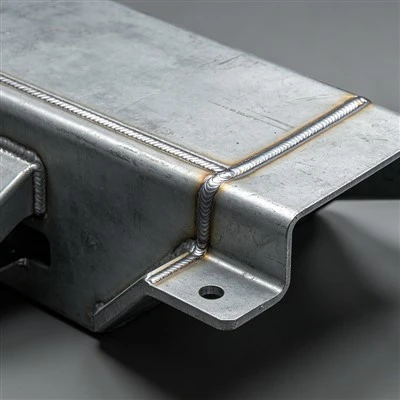
First, let’s start with the basics of each tool, because their core purposes are the first big divider. A standard press is a general-purpose workhorse built to apply massive, linear force to cut, punch, form, or even emboss sheet metal, or shape it into entirely different parts, not just bend it. Think of a garage door: the metal panels are made by stamping flat sheets with specific patterns using a press. The same goes for the metal brackets that hold your fridge shelves, the decorative grilles on office building windows, and even the outer casing of your laptop—all of those go through a press first. Presses come in all sizes, from small manual units for hobby shops to huge industrial ones that can crank out thousands of identical parts an hour. Their magic is precision repetition; they use specialized dies that are fixed to the ram and the bed of the machine, so every part comes out identical, time after time.
A press brake, on the other hand, is purpose-built for bending sheet metal along a straight, linear axis. It’s not for stamping holes or cutting shapes—it’s for creating angles, channels, U-shapes, or bends that give flat sheet metal structure. If you’ve ever seen a custom metal fence with angled rails, or a food truck’s metal exterior that curves slightly at the edges, that bend was made on a press brake. Press brakes let you adjust where the bend goes and how sharp the angle is, which is why they’re a staple in shops that make custom metal parts or small-batch runs. Unlike a press, which uses pre-made dies, a press brake often uses a single V-shaped die on the bed and a matching punch on the ram, letting you bend metal into any angle from 0 to 180 degrees without swapping out the entire tool for every new part.
Now, let’s get into the technical differences that matter most for fabricators, because it’s not just what they do—it’s how they do it, and when you should reach for each one. Let’s start with force output: presses deliver way more force than most press brakes, but that force is distributed differently. A small mechanical press might deliver 50 tons, enough to punch a 1-inch hole through ¼-inch steel, while a big industrial stamping press can hit 2,000 tons, enough to form a entire car body panel in one go. Press brakes, by contrast, are built for precise, controlled bending, so their force is lower. A 100-ton press brake can handle most commercial sheet metal projects, like bending 10-gauge steel into a U-channel for a shelf, while a 500-ton brake is for thicker materials, like ¼-inch aluminum used in large building facades. That lower force is intentional—you don’t need to smash metal flat; you need to bend it evenly, so press brakes have adjustable ram speed and force to avoid damaging thin or delicate sheets.
Next, tooling is another huge difference. Press tooling is specialized for specific tasks: punch dies for cutting holes, forming dies for shaping entire parts, drawing dies for stretching metal. If you want to make a thousand identical metal brackets, you’d design a custom set of dies for a press, run all the parts in one setup, and never touch the dies again until you need a new batch. Press brake tooling, though, is modular. The most common setup is a V-die, where the sheet rests in the V and the punch presses down on the edge to create a bend. There are also different V-dies for different bend widths, and some specialized tooling for things like hemming (folding the edge of a metal sheet to make it smooth) or beading (adding a curved ridge for strength). The big win here is flexibility: if a customer asks for a custom metal shelf with a 90-degree bend on one end and a 45-degree bend on the other, you don’t need two separate dies—you just adjust the press brake’s backgauge to move the sheet to the right spot for each bend. Presses can’t do that; their tooling is fixed for a single shape.
Then there’s the production use case, which is where a lot of my customers mix up the two. Let’s take a small fabrication shop that does both custom jobs and small batch runs. For a custom metal sign that needs a cut-out logo and a bent frame, they’ll use a plasma cutter or laser cutter first to cut the logo shape, then a press brake to bend the frame edges. If they were making 10,000 of those signs for a chain of stores, they’d use a press to stamp the logo shape out in one step, saving hours of cutting per sign. Another example: HVAC ductwork. Most duct shops use press brakes to bend the straight sections of duct, but if they need to punch connection holes along the edges, they might use a press with a punch die for that step. If you tried to use a press brake to punch a hole, you’d either break the punch (since the press brake isn’t built for that sudden, concentrated force) or the hole would be uneven, because the press brake’s ram isn’t rigid enough for that type of precision cutting.
I also get asked a lot about safety, which is a big part of working with heavy machinery. Presses, especially mechanical ones, operate in a single motion: once you activate the ram, it comes down fast, with no way to stop it mid-stroke. That means they need light curtains, two-hand control buttons, and full enclosures to keep operators away from the working area, because a stray hand can get caught in the ram before anyone can react. Press brakes, by contrast, have a much slower, controlled motion—most have CNC controls that let you set the speed, so you can stop the ram at any point mid-bend. That’s not to say they’re safe, but the risk is different: with a press brake, the biggest hazard is misaligned bends or slipping sheets, while with a press, it’s the extreme force that can cause serious injury in an instant.
Over the years, I’ve seen shops waste thousands of dollars by buying the wrong tool. A customer last year came to me because he’d purchased a 200-ton press to do custom bending, and it could barely handle 12-gauge aluminum without warping the metal or breaking the press’s tooling. He’d confused the two because both tools have rams, and he thought more force meant more flexibility. We ended up selling him a mid-sized press brake for his bending work, and we retrofitted his existing press with punch and forming dies for his stamping jobs—he saved $15,000 by not having to buy a second machine. Another customer, a high-volume auto parts maker, upgraded from a old press brake to a servo-electric press when he realized he was spending $20,000 a month on tooling for custom bending; the press let him produce identical small parts faster and with less waste.
The biggest takeaway here is to match the tool to your job, not the other way around. If you’re working on a custom, one-off metal part that needs a few bends, a press brake is the way to go. If you’re making identical parts that need cutting, punching, or shaping into a complex form, a press is your tool. That said, many modern shops use both, and they often complement each other really well. A common setup is a press brake for custom bending and a punch press (a type of press specialized for holes and small cuts) for small batch runs, so you get the flexibility of the brake and the speed of the press.
As a sheet metal fabrication machinery supplier, my job isn’t just to sell you a tool—it’s to make sure you get the right one for what you do every day. Too many fabricators buy a machine because it’s on sale, or because someone else recommended it, and then end up frustrated when it doesn’t do what they need. If you’re in the market for new equipment, or you’re just looking to upgrade your existing setup, don’t hesitate to reach out. I can walk you through your specific projects, help you figure out whether a press, press brake, or a combination of both is the best fit, and even connect you with trusted technicians for installation and training.
Sheet Metal Enclosure References:
- Smith, J. (2021). Sheet Metal Fabrication: A Practical Guide to Tools and Techniques. Industrial Press Inc.
- American Iron and Steel Institute. (2022). Safety Standards for Metalworking Machinery. AISI Press Safety Committee.
- Wilson, T. (2019). Modern Press and Press Brake Technology for Custom Fabrication. Journal of Manufacturing Engineering, 45(3), 112-128.
Hefei Excellent Intelligent Technology Co., Ltd.
As one of the most professional sheet metal fabrication machinery manufacturers in China, we’re featured by quality products and good service. Please rest assured to wholesale bulk customized sheet metal fabrication machinery made in China here from our factory. Also, pricelist is available.
Address: No.3 Jingyi Road, Douzhen Industrial Park, Gangji Town, Changfeng County, Hefei City, Anhui Province
E-mail: 1637201948@qq.com
WebSite: https://www.cnakst.com/
