As a welded wire mesh supplier who’s been in this industry for over 12 years, I hear the same question from new contractors, agricultural growers, and DIY home renovators almost every week: Does welded wire mesh come in custom sizes? Let me cut straight to the answer—yes, it does, and that’s actually one of the biggest advantages of working with a specialized manufacturer instead of grabbing stock rolls at a big-box hardware store. But there’s a lot more nuance to that, from what makes a custom size feasible, why it matters for your specific project, and the small details that can make or break your order. Welded Wire Mesh
First, let’s set the baseline for what “standard sizes” mean, because that’s the benchmark most people are comparing against. Stock welded wire mesh (also called wire cloth, welded wire fabric, or simply WWF) is mass-produced in what we call “run-of-mill” sizes to cover the most common uses. For residential construction, that’s usually 4 feet wide by 8 feet long panels, 6-gauge wire (for concrete reinforcing), with 6×6 inch openings. For fencing or garden use, you’ll often see rolls that are 3 feet tall by 50 feet long with 2×2 inch openings, or 4 feet tall for dog runs. These are great for generic jobs, but what if your project isn’t generic?
Take the agricultural customer I had last quarter: a family-owned horse farm in central Ohio. They needed mesh to line the interior of round feeding troughs to keep hay from spilling out, but their troughs were 2 feet in diameter, so a standard 4×8 panel would have left excess wire bending in places, creating sharp edges that horses could cut themselves. That’s a 18-inch wide by 72-inch tall custom panel—something we can’t hold in stock, because no big-box chain wants to store dozens of weird, one-off sizes. Without custom sizing, that farm would have had to either cut a standard panel down (wasting time and material, and creating frayed edges that fray over time) or settle for a mesh that didn’t fit the space, leading to constant maintenance.
Another example: a commercial solar installer in Texas. They needed wire mesh as a mounting base for small solar panel arrays on sloped residential rooftops. The arrays were offset along the roof’s peak, so each mesh panel needed to be 22 inches wide by 60 inches long, with openings adjusted to fit the exact size of the panels’ mounting brackets. A standard 4×8 panel would have required so much cutting and trimming that it increased installation time by 30% per job. Custom-sized mesh cut that time down, because it fit the space perfectly.
But here’s the thing: custom welded wire mesh isn’t just “cut to whatever you want.” There are practical limits to what we can manufacture, and that’s where a good supplier (like me) comes in, because we’ll walk you through what works and what doesn’t, instead of just saying “yes” and leaving you with a product that’s unusable.
First, the wire gauge and material matter. If you’re working with thin wire, like 19-gauge for window screen or small garden cages, custom sizes can be very precise. We can cut panels as small as 1 foot wide by 1 foot tall, or as large as 12 feet wide by 50 feet long for agricultural or industrial fencing. But if you’re using heavy-gauge wire, like 4-gauge or thicker for concrete reinforcing or livestock pens, the limits shift. For example, 4-gauge wire is thick enough that a panel wider than 8 feet will start to sag under its own weight, unless we add extra cross-wires or stiffeners, which we can do as a custom modification. We also work with different materials: galvanized steel, stainless steel, aluminum, and even PVC-coated wire. PVC-coated mesh, which is popular for playground safety or decorative fencing, has a thicker outer layer, so custom sizes for that material have slightly different limits than bare steel—we can’t make a 10-foot wide PVC panel because the coating would crack during the manufacturing process.
Then there’s the mesh opening size. Standard openings are square, like 2×2 inches or 4×4 inches, but custom openings can be rectangular, too—like 1×4 inches for bird netting, or 6×12 inches for deer fencing. Again, the wire diameter affects this: a 1-inch opening made with 16-gauge wire is feasible, but a ½-inch opening with 6-gauge wire would be too tight to weld properly, so we’ll adjust the opening to match the wire strength. That’s why it’s important to give your supplier details about what the mesh will be used for, not just the dimensions. A customer once came to me asking for a 5×10 foot panel with 2×2 inch openings, but they didn’t mention it was for a lobster trap, so we made it with 12-gauge wire, which was far too flimsy. They needed 8-gauge to hold up against the abrasion of lobster pots dragging on the ocean floor. That small detail made all the difference.
I also want to bust a common myth: some people think custom sizes are way more expensive than stock sizes. It’s true that a one-off order might have a slightly higher setup cost, but that’s only if you only need one panel. If you’re ordering 100 panels of the same custom size, the cost per unit is almost identical to stock, because the manufacturing setup is the same—we just adjust the length and width settings on our welding machines, which is fast and low-cost now with computer-controlled equipment. For small orders, though, if you only need one or two panels, we can often cut them from a large stock roll, so you don’t have to pay for a full custom run. That’s a trick we use for small contractors or homeowners, because I know most people don’t want to pay $50 for a custom panel when a $15 stock panel would work if you cut it to size. But I always tell them: if you can afford the extra $10 for a custom panel that fits perfectly, it saves you time in the long run, and you won’t have sharp edges or frayed wire where you cut it.
Another thing to consider: custom sizes can include modifications beyond just length and width. A lot of customers don’t realize that we can also add pre-cut holes for mounting brackets, bend edges to make frames for garden beds, or even trim the mesh to a curved shape for planters or round troughs. Last year, a landscape designer in Chicago came to us for curved wire mesh to line the sides of raised garden beds in a downtown community garden. Standard straight panels would have looked bulky, so we bent 3-foot tall panels to a 1-foot radius, which fit the curved beds perfectly. That’s a custom modification that stock mesh can’t do, and it’s something specialized suppliers offer because we have the equipment to bend and shape mesh after welding.
Wait, but what about people who are looking for something really tiny, like mesh for crafts or small animal cages? I get a lot of crafters asking for custom sizes for dollhouse furniture or mini greenhouses, and yes, we can do that too. For 10-gauge wire, we can make panels as small as 2 inches wide by 2 inches tall, with openings as small as ¼ inch. For those orders, we usually just cut a small section from a thin stock roll, so it’s affordable and fast. I once had a customer who needed 20 3×5 inch panels for beehive frames, and I made them all in two days, with no extra setup cost, because it was just cutting from a stock roll of thin gauge stainless steel.
Now, let’s talk about what doesn’t work for custom sizes. If you’re asking for a size that’s extreme beyond the limits I mentioned earlier, we might have to suggest an alternative, like a reinforced panel or a different wire gauge. For example, a customer once asked for a 15-foot wide panel with ¼ inch openings, made with 4-gauge wire. That’s impossible, because 4-gauge wire is so thick that welding a ¼ inch opening would create a weak point where the wires cross, and the panel would break under tension. In that case, we suggested switching to 6-gauge wire, which is still strong enough, and adjusted the opening to ½ inch, which would work for their intended use (screening gravel for a driveway). I’d rather be honest about what’s feasible than promise a custom size that would fall apart after a week.
Another limitation is lead time. Stock mesh is usually available for pickup or shipping within 1-2 business days, but custom orders take 3-7 business days, depending on the size and modifications. If you need mesh for an emergency job, like securing a fence after a storm, we can often rush a custom order, but it will cost a little extra because we prioritize it over regular orders. That’s another thing to keep in mind: plan ahead if you’re going the custom route, so you don’t get stuck waiting.
I’ve been in this business long enough to know that one size never fits all. That’s why I push my customers to share as many details as possible when they inquire about custom welded wire mesh: what will you use it for? What size and shape do you need? What material and wire gauge do you prefer? That way, I can give you a product that’s not just a custom size, but a product that works for your project, no matter how specific it is. If you’re a contractor, a farmer, a landscaper, or even a DIYer with a weird project, don’t assume you have to settle for stock sizes. Custom welded wire mesh is designed to fill that gap between stock products and your unique needs.
Whether you need a small panel for a bird feeder, a large roll for a commercial construction project, or something in between, a reliable welded wire mesh supplier can work with you to create a size that fits. All you have to do is reach out, tell us what you need, and we’ll walk you through the options, the limits, and the costs. I’ve seen so many projects go from “this doesn’t fit” to “this is perfect” just by going with a custom size, and that’s why I love what I do.

If you’re ready to turn your project’s specific needs into a perfectly fitted welded wire mesh product, don’t hesitate to reach out to discuss your requirements. We’re here to answer your questions, provide custom quotes, and help you choose the right size, material, and modifications for your job.
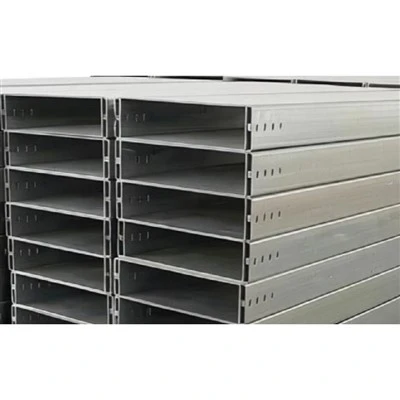
Trough Cable Tray References
- Industrial Welded Wire Mesh: Manufacturing Standards and Customization Capabilities. Wire Association International, 2022.
- Agricultural Applications of Custom Welded Wire Mesh. American Society of Agricultural and Biological Engineers, 2021.
- Construction Grade Welded Wire Mesh: Size Limits and Installation Best Practices. National Association of Home Builders, 2023.
- Small-Scale Custom Wire Mesh for Craft and Hobby Uses. Craft Industry Association, 2022.
Hebei Shenyi Metal Products Co., Ltd.
Hebei Shenyi Metal Products Co., Ltd. is one of the most professional welded wire mesh manufacturers and suppliers in China, featured by quality products and good service. Please rest assured to wholesale durable welded wire mesh in stock here and get free sample from our factory. Customized orders are welcome.
Address: Gengtun Industrial Zone, Gengtun Village, Xiliangwa Township, Anping County, Hengshui City, Hebei Province
E-mail: HBshenyi@outlook.com
WebSite: https://www.shenyimetal.com/
