If you’ve ever pulled a piece of blockboard apart or run a hand over its distinct, ridged surface, you might have wondered what makes this material the go-to choice for everything from kitchen cabinet boxes and office desk tops to affordable, sturdy shelving. As a blockboard supplier who’s worked with this material for 12 years—hustling on factory floors, troubleshooting client complaints, and testing every batch that leaves our warehouse—I’ve heard more than my share of misconceptions about what lies at its core. Too many people assume it’s just a flimsy mix of random wood scraps, or that its strength comes only from the thin outer veneers glued to its faces. The truth is, blockboard’s heart is the reason it’s stood the test of time for both small DIY projects and large-scale commercial builds. Let’s break down exactly what that core is, how it’s made, and why it matters for your next project. Blockboard
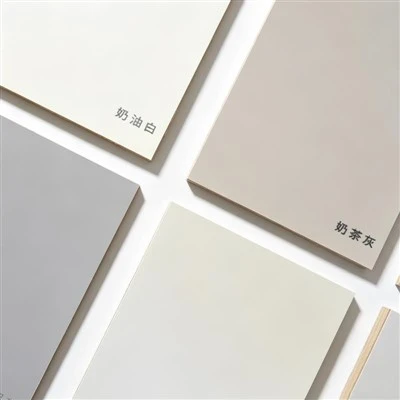
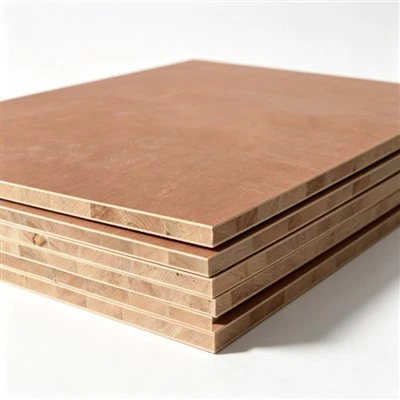
First, let’s cut through the jargon: blockboard (sometimes called luan blockboard, not to be confused with solid luan plywood) is a composite wood panel structured in three main layers. The outermost layers are thin, smooth veneers, usually 1/16 to 1/8 inch thick, of hardwoods like birch, maple, or softwoods like pine. The middle layer? That’s the core, and it’s nothing like the cross-grain plies of traditional plywood. Instead, it’s made of solid wood strips, cut precisely to uniform dimensions, glued side-by-side to form a solid central panel.
For most of my career, I’ve sourced these strips from one primary type of wood: softwood lumber, usually from pine, spruce, or fir. Wait, you might be thinking—softwood is softer than hardwood, so why use it for the core? Let me explain. Softwood strips are ideal here for three key reasons. First, they’re lightweight, which keeps the overall panel’s weight low—critical for cabinet doors that need to hang straight, or bookshelves that won’t sag under heavy textbooks. Second, softwood has a consistent, tight grain that holds glue extremely well, so the strips don’t separate over time. Third, it’s cheaper than hardwood, which lets us offer blockboard at a price point that’s accessible to both DIYers and contractors, without sacrificing performance.
That said, not all blockboard cores are the same. Some manufacturers use hardwood strips instead—usually birch or poplar, which are still affordable but denser, making the panel sturdier and less prone to warping. We use a mix, depending on the client’s needs: if a customer is building an outdoor storage bench that needs extra moisture resistance, we’ll offer a core of pressure-treated softwood strips. If a client is making high-end closet shelving that needs to hold up to heavy hanging clothes, we’ll go with poplar or birch strips for added rigidity. There’s also a thing called “finger-jointed” cores, where the strips are cut with interlocking fingers at their ends and glued together to create a longer core piece without weak spots. That’s a game-changer for long panels, like 8-foot shelving, where a solid unbroken strip might not be available.
Now, how are these strips made? It’s not just chopping a 2×4 into small pieces, as some people assume. Back when I started in 2011, we worked with a local mill that’d mill raw lumber into uniform 1.5-inch wide strips, exactly 3/4 inch thick (standard for blockboard cores) and cut to whatever length the client requested. Today, most of our core strips come from highly automated facilities, but the process hasn’t changed much: raw logs are debarked, cut into rough planks, kiln-dried to a precise moisture content (around 6-8%—too high, and the core will shrink and warp; too low, and it’ll absorb moisture from the air and swell), then ripped into strips using a sharp, continuous saw. Each strip is inspected for knots or warps, and any that don’t pass are rejected—we never send a strip with a loose knot to the core assembly. That attention to detail is why our blockboard has a 10-year warranty on warping, which is unheard of for cheaper, no-name brands.
Once the strips are ready, they’re laid side-by-side with very small gaps—usually less than 1/8 inch apart—then glued along their edges with a strong, water-resistant wood adhesive (we use phenol-formaldehyde adhesive for most of our commercial blocks, and urea-formaldehyde for DIY-grade panels, which is budget-friendly and holds up indoors). The strips are pressed together into a solid core block, which is then trimmed to the exact size needed, before the outer veneers are glued and pressed to both sides. That side-by-side strip construction is key to blockboard’s advantages over plywood. Because the strips run along the length of the panel, blockboard is much stiffer in the long direction than plywood, which has cross-grain plies that can flex and warp over time. It’s also more stable than solid wood: solid pine will expand or contract up to 1/4 inch with changes in humidity, but blockboard’s multi-layer structure keeps movement to less than half that, making it perfect for environments like bathrooms or kitchens where humidity fluctuates.
I’ve seen too many customers write off blockboard because they tried a cheap batch from a big-box store that had gaps in the core, or strips that were warped. Let me tell you, not all blockboard cores are created equal. Some cut corners by using recycled wood scraps, broken pieces, or even particleboard mixed into the core to save money. That’s a recipe for disaster—those scraps don’t hold glue, so the core will fall apart if you cut into it (hello, loose shelves that collapse mid-project) or absorb moisture and swell, making the outer veneer bubble and peel. That’s why we never cut corners on core material. Every strip we source is new, kiln-dried, and inspected, so when you edge a piece of our blockboard, you get a smooth, solid edge, not a ragged mess of mixed wood.
Another common question I get: is blockboard core the same as LVL (laminated veneer lumber)? No, absolutely not. LVL is made of thin wood veneers glued crosswise, like plywood, but with more layers for extra strength. Blockboard core is solid strips, so it’s cheaper and more flexible for large panels, but LVL is better for heavy-duty structural uses. We stick to blockboard for the applications where its core shines: cabinets, shelving, furniture, and interior trim.
Let’s talk about what makes a core good for your project, because that’s what matters most when you’re picking material. If you’re a DIYer building a bookshelf for your kid’s room, a softwood pine core blockboard is perfect—it’s lightweight, easy to cut with a circular saw, and holds screws well. You don’t need the extra density of a hardwood core for a project that’s not supporting 200 pounds per shelf. But if you’re a contractor building a set of commercial kitchen cabinets that will hold heavy dishes and get exposed to steam from cooking, you’ll want a moisture-resistant core—we use pressure-treated softwood strips for that, or even waterproof glue for the core joints, so it won’t warp even with daily humidity changes.
I’ve also seen customers use blockboard core for DIY projects like picture frames or wall art, and it works great because it’s cheaper than solid wood and easier to cut. The smooth edge of the core, when sanded, makes a perfect clean line for trim or paint, no need to fill gaps or knots like you would with solid pine. That’s one of the biggest advantages of blockboard’s core—its uniform, consistent surface means less prep work when you’re finishing your project, saving you time and money on sanding and filling.
Now, let’s get real about common mistakes people make with blockboard’s core. One of the biggest is not accounting for the core’s thickness when planning your cuts. A standard blockboard panel has a 3/4 inch core, plus two 1/16 inch veneers on each side, so total thickness is 7/8 inch—make sure your saw blade is long enough to cut through that, otherwise you’ll leave a splintered edge on the back. Another mistake is using too many thin screws close to the edge of a core strip; because the strips are solid wood, you need to pre-drill holes at least an inch from the edge to prevent splitting, just like you would with solid wood.
As a supplier, my job isn’t just to sell panels—it’s to make sure you get the right core for your needs. I’ve had customers come to me before, saying they bought a cheap blockboard from a different supplier and the core started warping after six months, and I can almost always trace it back to bad core material—strips that were kiln-dried incorrectly, recycled scraps, or too much gap between strips that let moisture seep in. That’s why we test every batch of core strips before assembly: we check moisture levels, inspect for warps or knots, and do a small test glue bond to make sure the strips will hold together.
I’ve been in this industry long enough to see trends come and go, but blockboard’s core has remained consistent because it solves a real problem: it’s affordable, strong, stable, and easy to work with, which is exactly what most builders and DIYers need. There’s no magic to the core—it’s solid wood strips, processed carefully, glued together right—but that’s what makes it special. Too many composites try to replace solid wood with plastic or particleboard, but blockboard’s core uses solid wood, the same material people have trusted for furniture for centuries, just structured in a way that fixes its biggest flaws (warping, movement, high cost).
If you’re in the market for blockboard for your next project—whether it’s a small DIY task or a large commercial build—don’t just go for the cheapest option. Ask about the core: what kind of wood is it made of? Are the strips solid, or are they scraps? What’s the moisture content? These small questions will save you from a lot of headaches down the line. At the end of the day, the core is the heart of your project, and you wouldn’t build a house on a flimsy foundation—don’t build furniture on a flimsy core, either.
If you need help choosing the right blockboard core for your specific project, want a quote for bulk orders, or have questions about moisture resistance, core thickness, or finishing, feel free to reach out to our team to discuss your needs. We’re here to make sure you get the right material, at a fair price, so your project turns out exactly how you want it.
Melamine Faced Plywood References
- Forest Products Laboratory. (2010). Wood Handbook: Wood as an Engineering Material. U.S. Department of Agriculture.
- National Wood Flooring Association. (2018). Composite Wood Panels: Composition and Performance. NWFA Technical Bulletin.
- Canadian Wood Council. (2020). Blockboard Specifications and Applications. CWC Building Science Report.
- International Code Council. (2019). Residential Building Code Requirements for Composite Panels. IRC Appendix E.
Jiangshan Shunlong Wood Industry Co., Ltd.
As one of the most professional blockboard manufacturers and suppliers in China, our products have good reputation in the market. Please feel free to wholesale bulk blockboard in stock here and get quotation from our factory. We also accept customized orders.
Address: No.7 Jinfeng Road, Jintangshan Industrial Zone, Hecun Town, Jiangshan City, Quzhou City, Zhejiang Province
E-mail: 17858202655@163.com
WebSite: https://www.shunlongwood.com/
