If you’ve ever held a perfectly calibrated aerospace component that withstands the extreme temperature swings of high-altitude flight, a medical implant that moves with the body’s natural motion, or a tiny part in a smartphone camera that focuses without friction, you’ve interacted with the result of precision machining. I’ve spent 18 years as a precision machining supplier, and one thing I’ve learned is that this craft isn’t just about cutting metal to tight tolerances—it’s the backbone of industries that can’t afford even a 0.001-inch error. When a client calls at 2 a.m. panicking that a critical part will miss a launch window, I know exactly why: their whole operation hinges on the parts we machine. Let’s break down the industries that rely on precision machining, and why this work matters more than most people realize. Precision Machining
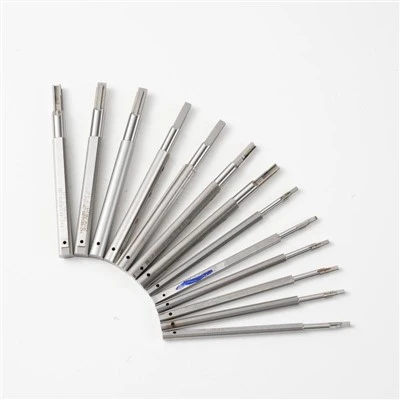
First, aerospace is easily the most demanding industry I work with, and for good reason. When a commercial jet is cruising at 35,000 feet, a single faulty turbine blade can trigger a catastrophic engine failure. The tolerances for aerospace components are often measured in thousandths of an inch—sometimes even millionths, depending on the part. A turbine blade’s aerodynamic profile, for example, has to be so precisely shaped that even a tiny deviation can reduce fuel efficiency by 1% over a transatlantic flight, costing airlines millions in wasted jet fuel. I’ve machined thousands of parts for small satellite constellations too; these tiny satellites orbit 200 miles above Earth, where micrometeoroids travel at 17,000 mph. A precision-machined satellite housing that’s slightly out of spec can shatter on impact, ruining a multi-million-dollar mission. Last year, a client from a regional launch company had to rush 12 custom fuel line connectors after their original supplier missed the tolerance mark by 0.002 inches—those connectors had to fit perfectly to prevent leaks during liftoff. We dropped everything to re-machine them, and they launched on time. That’s the pressure aerospace puts on precision machining.
Next, the medical device industry is another sector where precision isn’t optional—it’s a matter of life and death. I’ve machined orthopedic implants like hip stems and knee replacements that have to fit exactly into a patient’s bone, matching the natural curvature of their anatomy. If a hip stem is even 0.003 inches too narrow, it won’t integrate properly with the bone, leading to painful revisions; if it’s too wide, it can damage surrounding tissue. We also make components for surgical tools, like the tiny gears in a robotic surgery arm. Those gears move with sub-millimeter accuracy, allowing surgeons to perform minimally invasive procedures that would be impossible with human hands alone. I remember a few years back, a startup that made insulin pumps came to us with a problem: their pump’s flow regulator was clogging because a custom machined seal wasn’t smooth enough. We adjusted our tooling to polish the seal to a mirror finish, cutting clog incidents by 98%. That small improvement meant hundreds of thousands of people with diabetes could rely on their pump working consistently. The medical industry’s tolerances are often even stricter than aerospace’s, because they’re working directly with the human body—there’s no room for error.
Then there’s the semiconductor industry, which drives every piece of technology we use today, and it’s entirely dependent on precision machining. Semiconductor manufacturing equipment uses parts like wafer chucks, which hold silicon wafers during the lithography process where patterns are etched into chips. The wafer chuck has to be perfectly flat—within 0.0005 inches—to ensure the patterns line up correctly. If the chuck is warped even a tiny bit, the entire wafer can be ruined, costing a factory tens of thousands of dollars. We also machine the tiny nozzles that spray photoresist onto wafers; those nozzles have to produce uniform droplets to avoid defects in the final chip. A few months ago, a major semiconductor client came to us when their usual supplier couldn’t deliver a custom nozzle on time—their production line was set to shut down in 10 days. We optimized our CNC machines to cut the nozzle from titanium, which is durable and heat-resistant, and delivered them 2 days early. That kept their line running, and they were able to ship chips for new smartphone models on schedule. Without precision machining, we wouldn’t have the advanced semiconductors that power phones, computers, and electric vehicles.
Speaking of electric vehicles (EVs), that’s a fast-growing industry where precision machining is more important than ever. EVs rely on electric motors, battery packs, and lightweight components to maximize range. The motor’s rotor, for example, has to be balanced within 0.001 ounces to prevent vibration at high speeds—imagine driving 70 mph in an EV with a rotor that’s slightly unbalanced; it would cause harsh vibration and wear out the motor quickly. We also machine heat exchangers for EV batteries; these parts have to transfer heat away from the battery cells evenly to prevent overheating, which can cause fires. As EV manufacturers push for longer range, they’re designing parts with thinner walls and tighter tolerances to reduce weight, which makes machining more complex. Last year, we worked with an EV startup to machine custom aluminum chassis components that were 15% lighter than standard parts, without sacrificing strength. That weight reduction translated to an extra 20 miles of range for their vehicle, which was a huge selling point. The EV industry’s growth means we’re seeing more demand for high-precision, lightweight parts—every new model brings a new set of challenges.
I can’t talk about key industries without mentioning defense and military technology, which relies on precision machining for everything from weapon systems to surveillance equipment. Military drones, for example, have tiny, lightweight engine components that have to operate in extreme conditions—desert heat, cold Arctic air, high G-forces during maneuvers. A precision-machined engine part that fails mid-flight can mean losing a $10 million drone, or worse, endangering troops. We’ve machined parts for guided missile systems too; the nose cone has to be shaped with extreme accuracy to ensure the missile tracks its target correctly. Even small components like optical mounts for sniper scopes have to be machined to tight tolerances to keep the crosshairs aligned. A client from a defense contractor once told us that a single misaligned mount could mean a missed target, and that wasn’t acceptable. That’s the level of trust defense industries put in precision machining suppliers—we don’t just make parts, we enable mission success.
Another industry that people often overlook is robotics, both industrial robots and the growing field of collaborative robots (cobots) that work alongside humans. Industrial robots in factories use precision-machined joints and gearboxes to move heavy loads with consistent accuracy. Cobots, which are designed to be safe to work with, have even stricter tolerances because they need to interact with humans without causing harm. We machine tiny gears for cobot grippers, which have to grip fragile items like food or electronics without damaging them. A few years ago, a robotics company came to us when their grippers were slipping on small electronic components—their parts were getting damaged during assembly, leading to thousands of dollars in losses. We machined custom gripper jaws with a textured, precision-cut surface that improved grip without scratching the components. Within weeks, their defect rate dropped by 80%, and they were able to scale production for a major electronics client. Robotics is only going to grow as automation becomes more common, so precision machining will be even more critical here.
All these industries have one thing in common: they can’t use off-the-shelf parts. Every project is unique, requiring custom machining with tight tolerances, specialized materials, and quick turnaround times. That’s why our team invests so much in modern CNC machines and skilled machinists—we need a team that can handle complex projects, troubleshoot issues quickly, and meet tight deadlines. It’s not just about hitting a number on a blueprint; it’s about understanding the end use of the part, so we can adjust our process to deliver a product that works. When a medical implant has to fit a patient’s specific anatomy, when a satellite has to survive space, when an EV has to go 300 miles on a charge—those details matter, and that’s where precision machining comes in.
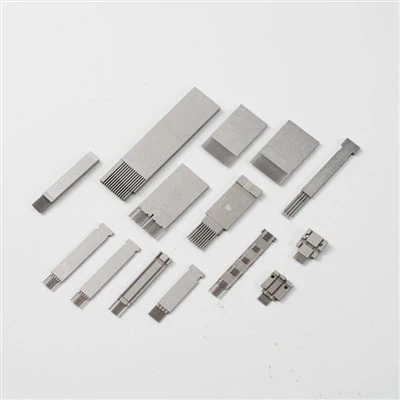
If you’re in any of these industries and need a reliable precision machining supplier, we have the experience, equipment, and expertise to meet your unique needs. Whether you need a single prototype or a large production run, we can deliver parts with the tight tolerances and quick turnaround you require. Contact us today to discuss your project and learn how we can help.
Precision Components References
- American Society for Precision Engineering. (2022). Aerospace Precision Machining: Standards and Applications. Retrieved from industry technical reports
- Medical Device Manufacturing Association. (2023). Precision Machining in Orthopedic Implants: Tolerance Requirements. Retrieved from medical industry publications
- Semiconductor Industry Association. (2021). Equipment Components for Wafer Fabrication: Precision Requirements. Retrieved from semiconductor industry research papers
- International Trade Administration. (2022). Electric Vehicle Components: Precision Machining Needs. Retrieved from U.S. government trade reports
- Association for Unmanned Vehicle Systems International. (2023). Defense Drone Components: Machining Standards. Retrieved from defense industry technical resources
- Robotics Industries Association. (2022). Collaborative Robot Parts: Precision Requirements for Human-Robot Interaction. Retrieved from robotics industry guidelines
Dongguan Hezong Precision Technology Co., Ltd.
With abundant experience, we are one of the most professional precision machining manufacturers and suppliers in China. Please feel free to buy durable precision machining made in China here from our factory. All customized products are with high quality and competitive price.
Address: No.973, Dalang Section of Wozhang Road, Dalang Town, Dongguan City, Guangdong Province
E-mail: postmaster@hezongjingmi.com
WebSite: https://www.hzpre.com/
