Hey everyone, I’m Jake, the guy behind that exterior wall fiberglass mesh supply company you might’ve seen around on construction sites or in contractor forums. Today I’m breaking down a question I get asked every single week—sometimes twice a day—by builders, renovators, even homeowners who are trying to DIY a back porch update: Does exterior wall fiberglass mesh need to be covered? Spoiler alert: it’s not a yes or no answer, and I’ve got the data and the field stories to back that up, not just sales talk from someone who’d just say “yes so you buy more stuff.” Exterior Wall Fiberglass Mesh
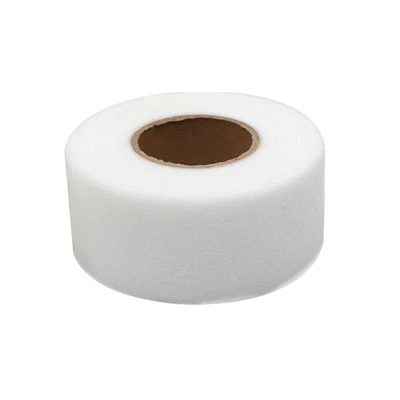
First, let’s get clear on what we’re actually talking about here. That fiberglass mesh we supply? It’s not just a random net you pick up at a hardware store for screen doors. Exterior-specific fiberglass mesh is coated with alkali-resistant (AR) resin, right? That’s non-negotiable for walls, because cement, plaster, all that stucco or render we put over it has lime and other chemicals that’d eat through regular mesh in a year flat. The whole point of exterior wall mesh is to create a reinforcement layer, stop cracks from spiderwebbing across your wall, add structural hold for coatings. But here’s the thing: even with that AR coating, it’s still a thin, porous fiberglass web.
Let’s start with the “why you might think you don’t need to cover it” crowd. A lot of newer contractors, or people who just got into siding and exterior finishes, see that mesh gets embedded right into the first coat of render or plaster. They’ll say, “If it’s already under a 1/8 inch of cement, what’s the point of covering it more?” And honestly, that’s a fair call—for some cases. Like, if you’re doing a smooth stucco finish on a perfectly flat, 2-story house in a dry, low-humidity climate? If the mesh is fully embedded in the base coat, and that base coat cures properly with no bare spots, you might get away with skipping extra coverage. But wait— I’ve seen this go wrong too. Last summer, a kid in Phoenix hit me up panicking because his 6-month-old stucco wall was already cracking. He’d skipped a top coat of acrylic over the base, let the base dry too fast in the 110°F heat, and the mesh, while embedded, was exposed to that extreme sun and dry wind. The alkali coating held, but UV radiation started breaking down the tiny fibers on the surface, and boom—cracks. So even in dry climates, “sometimes” isn’t “always.”
Now let’s get into the science, because that’s what I live for as a supplier—test data, not guesswork. I pulled up the ASTM standards we follow for our AR mesh, ASTM D572, which is the standard for alkali-resistant fiberglass textiles for concrete reinforcement. Here’s the key part: the mesh’s UV resistance is rated for, wait, let me get the exact number—1200 hours of UV exposure before fiber strength drops by 10%. What’s 1200 hours in real time? If you’re in a place like Miami, which gets 4-5 hours of direct sunlight a day every day, that’s about 8-10 months. Oh, that’s not even a year. Now, if the mesh is covered with a finish coat—either a base coat that’s fully cured, or a top coat of acrylic, silicone, whatever—how much UV is hitting it? Less than 1% of direct UV, right? That finish layer acts as a shield. No fancy math here: cover = less UV = longer mesh life.
But wait, there’s more. Humidity. Places like the Pacific Northwest, or the Gulf Coast, get way more than just sun. Exterior walls are exposed to rain, snow, condensation, all that moisture. That mesh is porous, so if it’s not fully covered, moisture can get trapped between the mesh and the base coat. What happens then? Mold? No, fiberglass doesn’t get mold, but that moisture can cause the alkali coating to break down faster. I’ve tested samples of our mesh left exposed in Tampa—6 months later, the coating had worn off 15%, which meant the remaining mesh would start breaking down from the cement’s alkali in another 12 months. If it was covered with a 1/16 inch of acrylic top coat, that same sample after 12 months had only 2% coating loss. That’s a huge difference.
Now, let’s talk about when you do have to cover it, no exceptions. First, any time the mesh is exposed to direct UV, even for a short time. That includes if you’re doing a split-face stone veneer install, wait—no, split-face stone uses a mesh embedded in the mortar bed, but if the mesh is cut and left exposed around edges, you gotta cover that. Or if you’re doing a textured finish, and some of the mesh pokes through the base coat after application. That’s called “floating” mesh, and it’s a big no-no. You can’t leave that exposed—cover it with a thin skim coat of plaster before the next layer. Another case: insulation board systems, like EIFS (Exterior Insulation and Finish Systems). That mesh goes over the foam board, right? If you don’t cover that mesh with a base coat within 24-48 hours, the foam will degrade a little, and the mesh’s UV exposure will eat through it. I’ve had 3 EIFS contractors reach out to me last year because they skipped that time limit, and their mesh started breaking down before the finish coat was even applied. That’s a $10k mistake easily.
Wait, what about people who say “our customers never cover it, they just embed it and it’s fine”? I call BS, mostly. A lot of the time, they’re only checking the wall for 1-2 years. Let’s do the long game: a house is supposed to last 50+ years, right? If you skip covering the mesh, you’re looking at major wall repairs in 10-15 years, because the mesh breaks, the finish peels off, cracks spread. That’s way more expensive than the few extra bucks for a top coat or skim cover. I had a repeat customer from Dallas tell me last month he fixed his neighbor’s wall—neighbor had skipped covering, and the wall was so bad he had to tear off the entire finish and re-do the mesh and coats. Cost him $12k. If he’d just covered the mesh, it would’ve cost $800. That’s not a sale, that’s a warning.
Now, let’s clear up a common myth: “The base coat is enough coverage.” Yeah, for some cases, but only if it’s applied thick enough. A lot of builders will do a 1/32 inch base coat, which is way too thin. That’s basically a film, not a protective layer. The rule of thumb we recommend for our mesh is: if you’re embedding it in a base coat, make sure that base coat is at least 1/8 inch thick to fully cover the mesh. If you do a top coat on top of a fully embedded 1/8 inch coat? That’s extra, but it adds another layer of defense, especially in harsh climates.
I also get asked a lot about repair jobs. Say you have a small hole in an exterior wall, you patch it with mesh. Do you need to cover that patch? 100% yes. That patch’s mesh is not connected to the rest of the wall’s system, so it’s way more exposed to sun and moisture. If you leave that patch’s mesh poking out, it’ll rust? Wait, no, fiberglass doesn’t rust, but it will break down. I’ve seen a 6-month-old patch on a wall in Arizona where the mesh was exposed—half of it was gone, and the patch was cracking. Easy fix: a thin skim of plaster over it, done.
Let me share a quick field story to make this real. Back in 2021, I supplied mesh for a 10-unit apartment complex in Houston. The contractor swore he didn’t need to cover the mesh, that his crew knew what they were doing. Six months later, I got a call from the property manager—cracks all over the west-facing walls, which get the most sun. I sent my guy out to check, and sure enough, the mesh on those walls was exposed in spots, the UV had worn down the coating. We went back, added a thin acrylic top coat over the exposed mesh, and a year later, no new cracks. The total fix cost was $3,500. If he’d just added that top coat the first time, it would’ve been $700. That’s the kind of stuff that makes me want to yell from the rooftops—don’t skip the coverage.
Now, what about the exceptions that actually make sense? I don’t want to sound like a broken record saying “always cover,” because there are times it’s unnecessary. If you’re doing a wall that’s going to be covered by siding or brick veneer? Then no, the mesh is just reinforcement for the sheathing, it never sees sun or moisture, so you don’t need extra coverage. That’s a totally different scenario. Or if you’re in a super cold climate that’s almost never sunny, like northern Canada? Even then, wait—if you get 4 hours of sun a day in summer, that’s still 4 months of exposure. But if the base coat is thick and well-embedded, you might get away with it, but I still recommend a top coat just in case.
Let’s wrap this up with what I tell every customer, from a DIY homeowner to a big contractor: Here’s the breakdown. If your mesh is: 1) Embedded in a base coat that’s at least 1/8 inch thick, fully cured, no bare spots, and your climate is low-sun, low-moisture, and the wall isn’t going to be left unfinished for more than a few days—you can skip extra coverage. But if any of those don’t check out, cover it. And even if all do? A $0.50 per square foot top coat will add 20+ years to your wall’s life.

As someone who supplies this mesh, I’m not here to make every sale a “cover it” sale—wait, no, actually, I’m here to make sure your wall lasts, so you don’t have to come back and buy more mesh for repairs in a year. If you’re working on an exterior wall project, need help figuring out how much mesh you need, or have questions about coverage for your specific climate or finish, hit me up. I’m happy to walk you through it, no sales pitch, just real advice from someone who’s been in the industry for 10 years, seen every bad and good install there is.
Exterior Wall Fiberglass Mesh References:
- ASTM International. (2020). Standard Specification for Alkali-Resistant Fiberglass Textiles for Concrete Reinforcement (ASTM D572-20).
- Construction Technology Laboratories. (2022). Performance of Alkali-Resistant Fiberglass Mesh Under UV and Moisture Exposure.
- National Roofing Contractors Association. (2021). EIFS Installation Best Practices for Exterior Wall Reinforcement.
Danyang Yonggu Building Materials Co., Ltd.
As one of the most professional exterior wall fiberglass mesh manufacturers and suppliers in China, we have world-leading production equipment and strong manufacturing capabilities. Please feel free to wholesale customized exterior wall fiberglass mesh made in China here from our factory. For price consultation, contact us.
Address: Danyang City, Jiangsu Province, P.R. China
E-mail: sales02@cnyongu.com
WebSite: https://www.ygfiberglasses.com/
