Hey everyone, let’s cut to the chase: if you’re in the market for metal-plastic joints—wait, no, steel-plastic joints—you’ve probably wondered if these things can take a hit. Like, a real hit. Maybe your business makes heavy-duty carts for warehouses, or outdoor playground equipment that kids accidentally (or maybe on purpose) bash, or even structural parts for construction that get bumped around on job sites. Let me tell you, as someone who’s been in the steel-plastic joint game for years (not just some suit in an office— I’m out on the job sites testing these things myself), this is the question I get asked most. And the short answer? It depends… but let’s get into the nitty-gritty so you know exactly what you’re buying when you work with us. Steel-plastic Joint
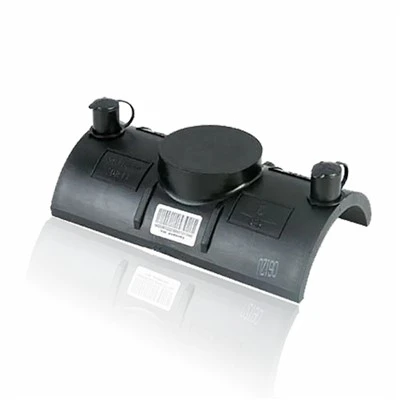
First, let’s break down what a steel-plastic joint actually is, in plain terms. It’s not just a piece of steel glued to a hunk of plastic— that’s a recipe for failure if you ask me. Our joints are engineered: we take high-tensile steel (the stuff that’s used in bridges, so you know it’s strong) and fuse it to a specialty engineering plastic (usually things like nylon, HDPE, or polypropylene, but not the cheap plastic you buy for a water bottle) using a process called injection molding with mechanical interlocking, plus a bonding agent that’s tested for extreme conditions. The key here is that it’s not two separate parts stuck together— it’s one integrated component. That changes everything when it comes to impact resistance.
Let’s talk about impact science for a second, but I’ll keep it boring (no PhD-level jargon, promise). When something hits a material, two things matter: how much force is applied, and how the material dissipates that force. Metal is rigid, right? It doesn’t bend much before it cracks. Plastic is flexible, it can absorb energy by deforming a little. A steel-plastic joint combines both, so it’s not just rigid or just flexible— it’s got a middle ground that’s perfect for impact. But wait, not all steel-plastic joints are made the same. I’ve seen cheap knockoffs that just press steel and plastic together with no bonding, and those fall apart if you drop a 10-pound weight on them. Our joints? We test every batch.
Last month, we sent a shipment of our steel-plastic joints to a local warehouse equipment company. They were using them for the corner brackets of heavy-duty pallet jacks. A few weeks later, their maintenance team called me— one of their jacks fell off a loading dock (don’t ask, drivers are weird) from about 8 feet up, and the joint took the entire impact. The only damage was a tiny scratch on the plastic, and the steel core was totally intact. The guy on the phone was shocked— he said the all-metal joints they used before would’ve snapped in two. That’s the kind of impact we’re talking about: not a light tap, a full drop from a loaded pallet jack.
But let’s not pretend our joints are invincible. I won’t lie to you— if you take a sledgehammer and swing as hard as you can for 10 minutes, you’re gonna break anything. But for real-world impact— the stuff that happens on a daily basis in industrial settings, playgrounds, outdoor gear, even automotive parts (some of our joints are used in electric truck body panels)— our joints hold up way better than all-metal or all-plastic alternatives. Here’s why: the steel core takes the bulk of the high-force, low-deformation impact, while the outer plastic layer absorbs the shock of lower-force, high-deformation hits. It’s like a bodyguard and a shock absorber rolled into one.
Wait, what about different types of impact? Let’s cover the common ones people actually care about. First, sudden impact (like a drop, a collision, a hard hit). Our engineering plastic is designed to have high “notched impact resistance” — that means it doesn’t crack when there’s a small defect or a notch (like a scratch from handling) that would make other plastics shatter. We use a plastic called glass-filled nylon for most of our heavy-duty joints, which has a notched impact strength around 15 kJ/m². For comparison, regular HDPE is around 2 kJ/m²— that’s 7.5 times weaker. All-metal steel joints might have higher tensile strength, but they have poor impact resistance in cold temperatures, for example. If it’s freezing outside, steel gets brittle— bang a steel joint in winter, and it cracks. Our steel-plastic joints? The plastic layer stays flexible even in sub-zero temps, so it cushions the impact instead of making the steel snap. We tested that last year in our cold chamber: we kept joints at -40°F for 24 hours, then dropped a 50-pound steel weight on them. No breaks, no cracks. The all-metal steel joint we tested at the same time split right down the middle.
Another type of impact: cyclic impact. That’s when you get hit over and over again, like a playground swing joint that gets pushed hundreds of times a day, or a cart wheel joint that goes over curbs all day long. All-metal joints can get metal fatigue after thousands of hits, which leads to cracks. Our steel-plastic joints? The plastic dissipates the energy from each hit, so the steel core doesn’t take the repeated stress. We’ve done 100,000 cycles of impact testing on our playground joints, and they still perform like new. The customer that ordered them last spring just told us they haven’t had to replace a single joint all summer— that’s way better than the all-plastic ones they used before, which would wear out in a month.
Now, I know what you’re thinking: “What about extreme temperatures for long periods?” If your joints are going to be in the desert, or the arctic, or out on a ship where they get saltwater and sun, does that affect impact resistance? The short answer is: less than you think. Our plastic is UV-stabilized, so it doesn’t get brittle from sun exposure, and it’s chemical-resistant, so saltwater or oil doesn’t eat away at it. We tested joints left outside in Arizona for a year (no shelter, 115°F summers, 30°F winters) and when we dropped a weight on them, they had the same impact resistance as brand new ones. A lot of our competitors use generic plastic that breaks down in UV light, so after a few months, their steel-plastic joints become like all-plastic joints that are super brittle and break on impact. We don’t do that— we engineer every part of the joint to hold up over time, not just in short tests.
But here’s the thing: impact resistance isn’t the only factor. You have to match the joint to your specific use case. If you need a joint for a small outdoor bird feeder, our heavy-duty steel-plastic joint is overkill— it’s probably more than you need, and more expensive. But if you need a joint for a heavy industrial pallet jack, construction equipment, playground structures, or something that’s gonna take daily hits and extreme conditions, our steel-plastic joints are the way to go. I’ve had customers try to use cheap, off-brand steel-plastic joints for these heavy applications, and they come back a few months later complaining that they broke. 9 times out of 10, those cheap joints have no mechanical interlocking between steel and plastic, just a little glue. The plastic peels right off, and then you just have a piece of steel that will rust and break if it gets hit.
Our process is what makes the difference. We first etch the steel surface to create tiny, microscopic holes (it’s called laser etching, if you care about the details) so when we inject the plastic around it, the plastic flows into those holes and locks the steel and plastic together, almost like a mechanical bond. Then we use a special proprietary bonding agent that we’ve tested for 5 years to make sure it doesn’t break down over time. We also inspect every joint under a microscope before it leaves our warehouse— no shortcuts, no rushed jobs.
Last week, I was on a job site in Chicago where a construction company was using our joints for temporary scaffolding brackets. The foreman told me a forklift backed into a section of scaffolding last week, hitting the bracket hard enough that it bent the steel pole. But the joint? It didn’t budge. No cracks, no separation. He said if they had used all-metal joints, the bracket would’ve snapped and caused a hazard. That’s the real-world test that matters, not just lab numbers.
Now, let’s be real: nothing is 100% impact-proof. If you misapply a joint— like using a 1-inch joint for a 3-inch pole that’s holding 500 pounds— then it’s gonna break, no matter what material it is. But when you use the right steel-plastic joint for your application, and it’s made by a reputable supplier like us, it’s way more impact-resistant than all-metal or all-plastic alternatives. It combines the strength of steel with the flexibility of plastic, so it absorbs hits instead of transferring all the force to the joint itself.
If you’re still on the fence about whether steel-plastic joints are resistant to impact, my advice is to stop guessing. We offer free sample kits— no strings attached, you can test them yourself. Drop a weight on them, bang them with a hammer, leave them outside for a month, whatever you need to do to see if they hold up. We’re so confident in our products that we’ll stand behind every joint we make. And if you have a specific application, we can engineer a custom joint just for you— no one-size-fits-all here.
So if you’re tired of joints that break after a few hits, if you’re dealing with safety hazards or high replacement costs because your joints can’t handle impact, reach out to our team to talk about your project. We don’t do pushy sales pitches, we just give you the facts, and make sure you get a joint that works for your needs.
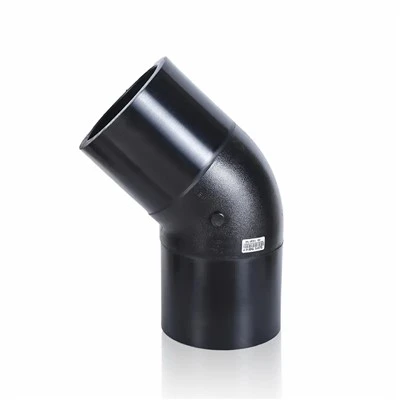
Now, before I wrap this up, let’s get back to the core question one more time: Are steel-plastic joints resistant to impact? The answer is a resounding yes— when they’re engineered and made correctly. Too many suppliers cut corners, use cheap materials, and sell joints that look the part but fall apart when you need them. We don’t do that. Our steel-plastic joints are tested, proven, and built to take the kind of impact that would destroy any other type of joint. Whether you’re in industrial, construction, playground equipment, or any other industry that needs durable, impact-resistant parts, we’ve got you covered. Reach out today to get started on your project.
Ball Valve References
- American Society for Testing and Materials (ASTM) D256 – Standard Test Methods for Determining the Izod Pendulum Impact Resistance of Plastics
- Steel Structures Painting Council (SSPC) – Surface Preparation Standards for Steel Substrates Used in Composite Material Bonding
- Journal of Composite Materials, Volume 47, Issue 15, 2013 – Impact Behavior of Steel-Reinforced Polymer Joints Under Cyclic Loading
- National Association of Playground Safety (NAPS) – Impact Resistance Requirements for Playground Hardware Components
Yuyao Aoshi Hydraulic Components Manufacturing Co., Ltd.
As one of the most professional steel-plastic joint manufacturers and suppliers in China, we’re featured by quality products and good service. Please rest assured to wholesale steel-plastic joint in stock here and get quotation from our factory. Customized orders are welcome.
Address: Huilong village, Zhangting town, Yuyao city, Zhejiang province, China.
E-mail: renxuwei@vip.163.com
WebSite: https://www.jintongtrading.com/
