Hey there, if you’ve been scrolling for e-bikes lately, you’ve definitely seen two terms thrown around a ton: folding e-bikes and step-through e-bikes. And as someone who’s been supplying folding electric bikes for years, I get how easy it is to mix these two up—they both look like compact, easy-to-use rides, but they’re totally designed for different needs. Let’s break this down straight, no sales fluff, just what actually matters if you’re shopping or even thinking about stocking these for your business. Folding Electric Bike
First, let’s start with what each is at their core. A folding e-bike, like the ones we supply, is built around one main thing: portability. Its frame, handlebars, pedals, sometimes even the seat post all fold up into a tiny, neat package—usually somewhere between a carry-on suitcase and a small duffel, depending on the model. The whole point here is you don’t have to leave it locked outside a cafe, subway station, or office. You can toss it in the trunk of your car, haul it onto a bus, or stow it under your desk. That’s non-negotiable for anyone who doesn’t have dedicated storage, or who needs to switch between biking and public transit all day.
A step-through e-bike, on the other hand, isn’t built for folding at all. Its frame has that low, slanted top tube—hence “step-through”—that lets you just swing a leg over without lifting your leg super high. But the frame is rigid, right? It doesn’t fold. If it’s compact, it’s just a regular non-folding e-bike with a low frame, not a foldable one. That’s the biggest structural difference that ripples into every other part of the bike.
Let’s talk about use cases because that’s where the real gap shows up. If you’re someone who commutes the last mile or two from the subway to your office, or works at a warehouse where you need to carry your bike into the building, a folding e-bike is your jam. Let’s be real: nobody wants to shell out $50 for a U-lock just to leave their e-bike chained up to a rack that might get bumped or stolen. With a folding e-bike, you fold it up, carry it inside, prop it by your desk, charge it there overnight. We’ve had customers who are delivery drivers tuck their folding e-bikes into the back of their van between stops, instead of leaving them parked on busy street corners where theft is super common.
Step-through e-bikes? Their sweet spot is accessibility for casual riders. Think about a parent who’s going to the park with their kid, or someone who hasn’t ridden a bike in 20 years and struggles with the high top tube on a standard e-bike. If you’re not hauling your bike up stairs or onto transit, a step-through makes total sense. It’s way easier to mount and dismount, especially if you’re carrying a kid, a grocery bag, or a backpack while you ride. We’ve had a lot of people ask us “should I carry a step-through?” and the answer is only if you don’t need to move it from place to place all day. If you fold it up, the low frame doesn’t really help anymore once it’s folded—you’re just hauling a compact bike, not worrying about mounting.
Next up: size and weight. Folding e-bikes have to be light enough to carry, right? Most of our models weigh between 30 and 50 lbs, with the battery and motor included. A lot of the higher-end ones (which we supply, obviously) use lightweight aluminum alloy frames to keep the poundage down, because you don’t want to try to heave a 60 lb bike up three flights of stairs. Step-through e-bikes, though—since they don’t fold, they can have sturdier frames for heavier loads, like carrying groceries or even a pet carrier. They also usually have bigger batteries because they’re built for longer, less frequent recharging, since you’re not hauling the bike around multiple times a day. A step-through might weigh 55 to 70 lbs, which is totally fine if it’s parked in your garage or apartment lobby, but you’d hate to fold it up and carry that weight around all day.
Brakes and components? Wait, another big difference. Folding bikes have fold joints—those hinges that let you collapse the frame. Those joints add a little complexity, and good ones are designed so they don’t wobble when you’re riding at full speed. A lot of budget folding bikes cut corners here, but the ones we supply have reinforced hinges that lock tight, so you get a smooth ride, not a wobbly mess. Step-through bikes don’t have those hinges, so their frames are a little more rigid overall, which can translate to a slightly smoother ride on bumpy roads. But modern folding e-bikes have come a long way—our mid-range models have hydraulic disc brakes, same as a lot of step-throughs, so stopping power is almost identical these days.
Wait, what about storage when not in use? That’s a huge point a lot of people miss. If you live in a studio apartment, a folding e-bike can be stowed upright in a corner, hanging on a wall, or even under a bed. We have customers who hang them in their entryways instead of a coat rack. A step-through e-bike, even a compact one, still needs the same amount of space as a regular bike—if you’re short on square footage, it’s not going to work without a dedicated rack. That’s a dealbreaker for a lot of city dwellers, which is exactly who buys our folding models.
Now, let’s clear up a common mix-up: can a folding e-bike be a step-through? Technically, some brands make folding bikes with a low step-through frame that folds, but that’s a total niche product, and it comes with tradeoffs. The foldable frame with a slanted top tube is less sturdy than a standard folding frame, so you end up with a heavier ride and sometimes less capacity for cargo. For most people, that hybrid is not worth it—either go full foldable for portability, or full step-through for accessibility. We don’t even stock those hybrid ones, because our customers tell us they’re too inconsistent for daily use.
What about price? Again, this ties back to design. A folding e-bike has to have those precision hinges, lightweight materials, and a compact battery that fits in a small frame, so they tend to be a little more expensive than a non-folding step-through of similar specs. But wait, our customers say the extra cost is worth it for the portability. If you’re someone who uses your bike for multiple modes of transport, being able to fold it up means you don’t have to pay for monthly parking at work, or extra bus fare for carrying a bike. For step-throughs, the lower cost comes from simpler design—no hinges, no need for the frame to collapse, so manufacturers save on materials. But again, if you don’t need portability, that’s a non-issue.
Let’s use real customer examples to make this concrete. Last month, we had a college student reach out to us. She lives in a dorm with no storage for a regular bike, and she bikes to class, then takes the campus shuttle home when it rains. She went with one of our folding e-bikes, and told us later that she folds it up every morning, carries it to her lecture hall, and stows it by the door. That would be impossible with a step-through, because she couldn’t drag it inside without a hassle. On the flip side, another customer was a retired teacher in a suburb who bikes to the library, the grocery store, and meets friends for coffee. She didn’t need to carry her bike anywhere—she just parks it on her porch. She bought a step-through e-bike because it was easy for her to mount after decades of not riding, and it fit her grocery bags perfectly on the rear rack.
So when do you pick which one? Let’s make a quick checklist. If you answer yes to any of these, go for a folding e-bike: you commute with public transit, have no dedicated storage for a full-sized bike, need to bring your bike inside buildings (offices, shops, dorms), or switch between biking and driving. If you answer yes to these, go for a step-through: you don’t need to move your bike from its parked spot regularly, struggle with lifting your leg high to mount a standard frame, or carry lots of cargo (groceries, kids, gear) on your bike.
Now, I know a lot of people ask us, “can I use a folding e-bike as a daily commuter?” Absolutely—most of our customers do. They commute 5 miles to work, fold it up, keep it under their desk, charge it overnight, and do the same on the way home. It’s way more convenient than a car, because you don’t have to deal with traffic or parking costs. Step-throughs are great for casual rides, weekend trips, or short errands where you don’t need to haul the bike around.
Wait, another thing to consider: weight capacity. Folding e-bikes, because of their smaller frames and lighter materials, usually have a lower weight limit—around 250 to 300 lbs. Step-throughs, being sturdier, often have limits up to 350 lbs, which is important if you’re a bigger rider or plan to carry a lot of cargo. Our folding models can handle that, too, but you have to look for the specific one we supply that has reinforced components for higher weight.
I get it, when you’re shopping for an e-bike, it’s easy to just grab the first one that looks nice. But understanding the difference between these two saves you from buying something that doesn’t fit your life. We’ve had customers come back to us a few months after buying a step-through, saying they regret it because they can’t bring it into their office. And vice versa—someone bought a folding bike, tried to use it for a casual ride to the grocery store, and complained it was too heavy to carry around if they stopped at a café for an hour. That’s the kind of stuff we hate to see, which is why we’re always honest about what our folding e-bikes are (and aren’t) good for.
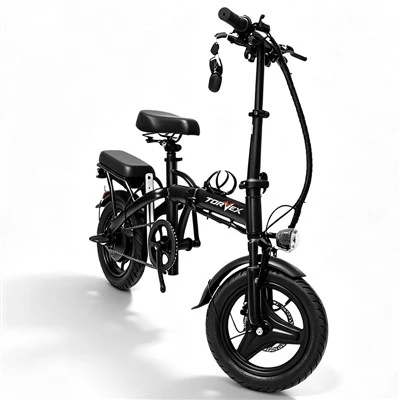
If you’re a retailer looking to stock quality folding electric bikes, or a business owner who needs a reliable ride for your team to commute, let’s chat. We work with partners all over to provide durable, tested folding e-bikes that fit all sorts of needs, and we can help you figure out what works best for your customers or employees. No pressure, just straight talk on what you need.
Carburetor Street Bike References:
- Electric Bike Industry Association. (2023). "Portable E-Bike Design and User Application Trends".
- Cycling Research Institute. (2022). "Accessibility Features of Step-Through Bicycles for Adult Riders".
- Folding Electric Bike Supplier Guide. (2023). "Weight and Portability Standards for Urban E-Bikes".
- Consumer Reports. (2023). "E-Bike Buying Guide: Comparing Folding vs. Standard Step-Through Models".
Shandong Tuowei Locomotive Co., Ltd.
Shandong Tuowei Locomotive Co., Ltd. is one of the most professional folding electric bike manufacturers and suppliers in China. With abundant experience, we warmly welcome you to wholesale high quality folding electric bike at competitive price from our factory. If you have any enquiry about cooperation, please feel free to email us.
Address: No.7, Area E, Advanced Manufacturing Industrial City, Middle Section of Zizhou Avenue, Gaojia Community, Zichuan Economic Development Zone, Zibo City, Shandong Province, P.R.China
E-mail: sales@torvexmoto.com
WebSite: https://www.torvexmoto.com/
