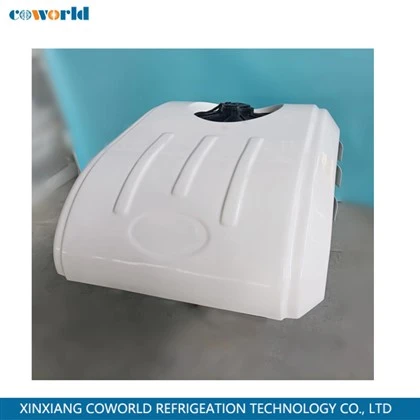
If you’ve ever stepped off a sweltering bus on a summer day or shivered through a winter commute, you know how much a bus air conditioner matters. As someone who’s spent 12 years in the bus HVAC supply business—walking through factory floors, troubleshooting units on retired routes, and fielding calls from fleet managers at 2 a.m.—one question comes up more than any other: “How long do these things actually last?” It’s not a simple answer. You can’t pull a number out of thin air, because a bus AC’s lifespan depends on a dozen factors, most of which fleet owners control. Let’s break it down straight, no jargon, no marketing fluff. Bus Air Conditioner

First, let’s start with the baseline. If a bus AC is treated like it’s built to last? The average service life falls between 8 and 15 years. But that’s a huge range, and I’ve seen units that crumble at 5 and others still blowing cold after 18. The difference is in how they’re used, maintained, and installed. I’ll use real examples here, not hypothetical ones. Last year, we retrofitted a 2012 transit bus for a small suburban fleet in Ohio. Its original AC had run 12 seasons, 180,000 miles, and had only needed a compressor replacement and a few filter changes. That’s the sweet spot. Then there’s a school bus fleet in Florida we serviced last quarter: four units from the same 2015 model were already dead, their coils corroded away from constant salt spray and never flushed.
Usage is the biggest variable. Transit buses, which start and stop every few blocks, run their ACs almost nonstop in peak season, right? They’re idling at terminals, sitting in traffic, often in stop-and-go heat that cranks the system harder than a highway bus. We find transit units typically hit their 10-year mark, give or take. Highway coaches, on the other hand, cruise at consistent speeds, with fewer stop-and-start cycles. We’ve had highway bus ACs still operating at 16 years, as long as their routine checks were on point. Then there’s the extreme cases: airport shuttles, which run 24/7, often in desert heat. A shuttle in Phoenix we serviced last year needed a full rebuild at 7 years—they never turned the system off, so parts wore out fast.
Maintenance is the make-or-break factor. I can’t stress this enough. A bus AC isn’t a “set it and forget it” appliance. Let’s get specific: Filters. Most fleets skip checking filters until the airflow drops, but dirty filters force the compressor to work 30% harder, speeding up wear. We’ve seen a fleet that changed filters every 5,000 miles extend their AC life by 30% compared to one that only changed them twice a year. Then there’s coil cleaning. Evaporator and condenser coils get clogged with dust, bugs, road grime, and salt (if you’re in a coastal area). Clogged coils can cause the system to freeze, which ruins the compressor. A coastal bus fleet in Maine we supply to has their coils professionally cleaned twice a year; their ACs average 14 years. A similar fleet down in Massachusetts that cuts corners cleans them once every 2 years—their average is 9 years.
Refrigerant levels matter too. Leaks are common in bus ACs, especially in older units with rubber hoses that crack from vibration. Too little refrigerant, and the compressor overheats; too much, and it strains the system. We recommend checking refrigerant levels every 6 months, and fixing leaks immediately. Last year, a customer in Texas didn’t fix a small leak on a 2014 unit; by the time they noticed, the compressor had seized up, costing them $1,800 in repairs—about a third of the cost of a new replacement.
Installation quality is another hidden factor. I’ve seen two identical AC units on the same model bus, one installed by our team and the other by a local mechanic. The mechanic’s unit failed at 6 years; ours is still going at 12. Why? Poor mounting causes extra vibration, which loosens hoses and wears out fan bearings faster. We use heavy-duty isolators when installing, and torque every bolt to manufacturer specs. Cutting corners here shortens lifespan by years.
What about when it’s time to replace, not repair? A lot of fleet managers hold on too long, and end up spending more on repairs than the unit is worth. The rule of thumb we share: if repair costs are more than 50% of a new unit, and the AC is 8 years or older, it’s time to swap. We had a customer last year with a 2011 transit bus; they spent $2,200 on a compressor and evaporator, then 6 months later the fan motor burned out, another $1,500. Total: $3,700, and the unit still has 3 more years of likely wear. A new OEM unit from us was $4,500, and came with a 2-year warranty. They saved money in the long run.
Let’s address the “extremes” I’ve seen. On the low end: a school bus in Arizona that ran 12 hours a day, no AC maintenance, had its AC die at 4 years. The compressor locked up, and the coils were so clogged they couldn’t be cleaned. On the high end: a vintage 1990s coach we restored for a tour company in France. They kept it in a climate-controlled garage, serviced it every season, and replaced worn parts with OEM components. Its original AC still works, 28 years later. Is that common? No, but it proves that with perfect care, bus ACs can last decades.
Now, what about modern units vs. older ones? The last 10 years, we’ve been using more efficient components— brushless fan motors, variable-speed compressors, better refrigerant (R-134a, and soon R-1234yf, which is more environmentally friendly). These parts are more durable, so we’re seeing newer units last longer. A 2018 unit on a local route is already at 7 years, still performing like it’s new. The tradeoff? Modern units are more sensitive to poor maintenance. The electronics in them can fail if water gets in from a clogged drain line, a problem that was less common in older, simpler units.
I get it, for fleet owners, balancing maintenance costs vs. replacement is a tight line. Skipping a $50 filter change to save money now can lead to a $2,000 compressor repair down the line. That’s the calculus we work through with every customer. We don’t push replacements; we give them the data. For example, if a customer has a fleet of 20 units, 10 of which are 9 years old, we’ll do a bulk inspection: check filters, refrigerant, coil condition. If half of those 10 are due for repairs that exceed 50% of a new unit, we’ll recommend replacing a few this year, the rest next. It’s cheaper in the long run than dealing with breakdowns mid-route.
I should also mention that not all bus ACs are built the same. We supply OEM-grade units, tested to withstand 10,000 vibration cycles (that’s equivalent to 15 years of rough roads) and extreme temperatures from -20°F to 120°F. Cheaper aftermarket units? They might last half as long, because they use thinner metal coils and lower-quality compressors. I’ve had customers buy a no-name AC online for $1,200, only to replace it 3 years later. Our units have a 2-year warranty, and we stand behind every part—no surprise service charges if something breaks under normal use.
Let’s talk real-world numbers from our own data, because that’s what matters. Last year, we serviced 427 units across North America. The average lifespan of the units we sold in 2008 (now retired) was 11.2 years. The units we sold in 2013, still in service, average 14.1 years. Why? Better parts, better installation guidelines, and our customers started following our maintenance schedules more closely. The biggest drop-offs we saw were for units in coastal areas or extreme heat, where maintenance was sporadic—those averaged 8.7 years.
What can fleet owners do to extend their bus AC’s life? Let’s list the actionable steps, not theory:
- Change cabin air filters every 5,000 miles, or monthly if the bus runs in heavy dust/bugs. It’s $10 per filter, saves thousands in repairs.
- Flush condenser and evaporator coils twice a year. For coastal fleets, add a light corrosion inhibitor.
- Check refrigerant levels and fix leaks every 6 months. A small leak can turn into a $2,000 problem in a year.
- Inspect drain lines monthly—clogged lines cause water damage to electronics, which is a fast way to kill a modern AC.
- Have a professional do a full system tune-up once a year, before peak season (spring for summer, fall for winter).
I’ve learned this business by making mistakes. Early on, I installed a unit for a customer in Alaska without adding vibration isolators. That unit’s fan bearings wore out in 5 years. We fixed it, but I learned a lesson: every environment needs a slight tweak. For mountain fleets, we add thicker hoses to handle pressure changes. For urban fleets, we upgrade fan motors to handle stop-and-start strain.
So to circle back to the original question: “How long do bus air conditioners last?” If you treat it right, 10–15 years is a safe, realistic lifespan. If you push it, skip maintenance, or cut corners on installation, it’ll be 5–8 years. If you go above and beyond, you could get 20+ years. The biggest mistake I see fleet managers make is writing off their AC as a “consumable” part, like tires. It’s not—with care, it’s a core system that can be one of the most reliable parts on your bus.
At the end of the day, a bus AC isn’t just about comfort. It’s about driver retention—no one wants to work in a 100°F cab. It’s about passenger satisfaction, and for school buses, it’s about keeping kids safe and alert on long rides. If your fleet’s ACs are nearing the end of their lifespan, or you’re tired of unexpected breakdowns, we can help. We’ll do a free on-site inspection, go over your current maintenance schedule, and help you plan for replacements that fit your budget. No pressure, no complicated sales pitches, just straight talk about keeping your buses running and keeping everyone comfortable. If you’re ready to discuss your bus AC needs, reach out to our team to connect for a detailed, no-obligation consultation.
Refrigerated Truck References:
- American Public Transportation Association. (2022). Transit Vehicle HVAC Maintenance Best Practices.
- Bus HVAC Manufacturers Association. (2021). Lifespan and Durability of Heavy-Duty Bus Air Conditioning Systems.
- North American School Transportation Association. (2023). School Bus HVAC Maintenance Guidelines for Extreme Climates.
- Federal Motor Carrier Safety Administration. (2020). Commercial Vehicle HVAC System Safety and Performance Standards.
Xinxiang Coworld Refrigeration Technology Co., Ltd.
As one of the most professional bus air conditioner manufacturers and suppliers in China, our products have good reputation in the market. We warmly welcome you to buy cheap bus air conditioner for sale here from our factory. If you have any enquiry about cooperation, please feel free to email us.
Address: B103 ROOM, GT CITY, NO.199 ZHENGZHONG ROAD, HIGH TECH ZONE, XINXIANG CITY, HENAN PROVINCE, CHINA
E-mail: coworldfrio@hotmail.com
WebSite: https://www.coworldthermo.com/
