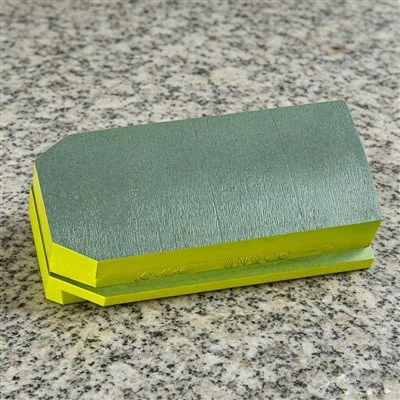
Hey everyone, if you’ve ever wandered through a metal fabrication shop, a woodworking garage, or even a auto body repair bay, you’ve probably glanced at a disc-shape abrasive brush without even realizing it. Those round, brush-like tools spinning on angle grinders or die grinders aren’t just there to look cool—they’re workhorses for everything from deburring sharp edges on steel parts to cleaning rust off old car frames. But here’s the question I get asked all the time by shop managers, DIYers, and even other suppliers: “What’s the actual abrasion resistance of these things, and does it really matter for my job?” Disc-shape Abrasive Brush
As a disc abrasive brush supplier who’s been around this space for over a decade, I’ve seen way too many people underbuy or overbuy these brushes because they don’t get how abrasion resistance works for this specific tool. A lot of folks confuse abrasion resistance with just “how long the brush lasts,” but it’s way more nuanced than that. It’s the combo of how well the abrasive fibers (or filaments, as we call ’em in the biz) hold up when they’re rubbing against a surface, how much they can resist fraying or breaking, and how consistent they stay throughout their whole use. No two jobs are the same—you’re not going to use the same brush for deburring aluminum bike parts as you are for stripping paint off a cast iron engine block—and abrasion resistance changes with that job, big time.
Let me break this down straight. First, what makes a disc abrasive brush’s abrasion resistance tick? It’s not one single thing—it’s three main factors: the abrasive material in the filaments, how the filaments are bonded to the core disc, and the pressure and speed you run the brush at. I’ve had customers come in saying their last brush only lasted 20 minutes, and when I ask what they were using it for, it turned out they used a general-purpose brush for heavy rust removal at full speed. That’s a rookie move, and it kills abrasion resistance way faster than any factory defect.
First up, the abrasive material. Most disc brushes use one of four grit types: aluminum oxide, silicon carbide, ceramic, or polycrystalline diamond (PCD)—yeah, diamond, for the heavy stuff. Aluminum oxide is the workhorse for general use—deburring mild steel, finishing wood, cleaning stainless steel in light applications. Its abrasion resistance is solid, but it wears down faster when pushed too hard. Silicon carbide is harder than aluminum oxide, so it’s better for non-ferrous metals like aluminum or glass, but it’s more brittle—if you bend it too much, it chips instead of wearing evenly.
Then there’s ceramic abrasive filaments—this is where we see the real game-changer for abrasion resistance. Ceramic is way tougher than aluminum oxide; it self-sharpens as it wears, too. When the outer layer of the filament gets dull, it breaks off just a tiny bit, exposing a fresh, sharp abrasive grain underneath. That means the brush doesn’t slow down as it’s used—so you get more work done before you need to replace it. I’ve got a set of ceramic disc brushes that I’ve used for 8 hours straight on heavy cast iron cleaning, and they still cut as well as when I pulled ’em out of the box. Compare that to my old aluminum oxide ones, which would get dull after 2 hours and start leaving scratch marks all over the part. That’s the big difference in abrasion resistance people miss—self-sharpening means longer life and better consistency, not just how long the brush looks intact.
PCD is for the super heavy-duty stuff—like grinding welds on titanium or removing old epoxy coatings from concrete. It’s way more expensive, but its abrasion resistance is through the roof; I’ve seen PCD disc brushes last 10x longer than ceramic ones on the same high-stress job. But unless you’re doing that kind of work, it’s overkill—why drop $50 on a PCD brush when a $15 ceramic one will do the job just fine? That’s a mistake a lot of new makers make, buying the “toughest” brush without thinking about their actual workload.
Next, how the filaments are bonded to the core disc matters so much more than most people think. There are three main bonding types we use: staple-set, compressed knot, and filament-wound (our go-to for most industrial jobs). Staple-set is the cheap one—you can spot it by the little metal staples holding each cluster of filaments to the disc. The problem here is that staples corrode over time, and the filaments pull loose way easier under heavy pressure. I had a customer who bought a cheap staple-set brush for grinding down welds, and half the filaments flew off mid-spin, almost hitting his coworker. Not only did that waste the brush, it was a safety hazard. Compressed knot is better—twisted filaments compressed into knots and glued to the disc, so less loose filaments—but still not as strong as filament-wound.
Filament-wound is where the abrasion resistance really locks in. We wrap individual abrasive filaments around a central core disc, impregnate them with resin, and heat-cure ’em so the whole thing’s one solid piece. No staples, no knots coming undone. That means when you’re pushing the brush against a surface, the filaments bend and flex instead of snapping off. I’ve tested filament-wound brushes against knot-set ones in the same application: the filament-wound lasted 3x longer, left smoother edges, and didn’t have half the loose filament mess. For industrial shops that run these brushes 8 hours a day, that difference saves thousands a year in replacement costs. It’s not just about how long the brush lasts—it’s about how much useful work it can do before it’s worn out.
Now, let’s talk about the part of abrasion resistance no one talks about: proper use. A brush’s abrasion resistance doesn’t live in the product alone—it lives in how you use it. I see it every time a customer brings back a “bad” brush because it wore out fast, and it turns out they ran it at 10,000 RPM when the max is 6,000 RPM, or pressed so hard into the surface that the core disc started bending. Pressure is huge—you don’t need to push down like you’re trying to break the part. Let the brush do the work. If you press too hard, you’re not just wearing the filaments faster, you’re risking the brush breaking, or damaging the part you’re working on. I always tell people: light, steady pressure is better than heavy, brute force. We’ve got a guide on our site for choosing the right RPM and pressure for each brush type, but even if you don’t have that, just remember—if the brush is smoking, you’re doing it wrong. That smoke is the abrasive burning off, which kills abrasion resistance in minutes.
Wait, but what about when a brush gets “worn out” vs. when it’s just not working for you? A lot of people think a brush is done when the outer filaments look frayed, but with self-sharpening ceramic filaments, frayed isn’t always bad. Frayed filaments actually bend better around irregular surfaces, like the curve of a pipe or the dent in a car panel. I had a customer who was throwing out ceramic brushes because the tips were frayed, but when I had him keep using ’em, he found they worked way better for smoothing out curved parts than new, stiff brushes. The only time you need to replace a brush is when the filaments are worn down to the core disc, or when they’re leaving deep, scratch marks on your part— that’s when the abrasive grains are too dull to do the job right.
Let’s throw in a real example to make this concrete. Last month, a small fabrication shop came to me because they were going through 12 aluminum oxide disc brushes a month for deburring mild steel brackets. Their parts were small, but they had 500 brackets a day to finish. I recommended they switch to filament-wound ceramic disc brushes, and told them to use light pressure at 5,500 RPM. They tried a batch, and now they only go through 3 brushes a month. That’s a 75% reduction in cost, just because they got a brush with better abrasion resistance, paired with the right use. They were shocked—they’d never realized that the “cheaper” brush was actually costing them more in the long run. That’s the thing about abrasion resistance: it’s not a stat on a box, it’s a total cost savings if you get it right.
I get asked sometimes, “Can I improve the abrasion resistance of a brush I already have?” Sort of, but not much. If you’ve got a general-purpose staple-set brush, the best you can do is not run it at full speed, don’t use it for jobs it’s not made for, and don’t overpress. If you’re working on heavy material, pick a higher grit—coarser grit cuts faster, but finer grit wears slower? Wait, no, let me correct that—coarser grit is for heavy material removal, it will wear faster because each grain is bigger and more exposed. Finer grit is for finishing, it’s tougher, so it lasts longer. That’s another mix-up I see all the time. A lot of people grab a 60-grit brush for a light finish job, and it wears out in an hour, when a 120-grit would’ve lasted all shift.
Another thing that affects abrasion resistance: the core disc material. Most of our cores are made of fiberglass, but we have nylon cores for lighter jobs, and steel cores for super heavy use. Steel cores don’t flex as much, so the filaments stay more rigid, which is better for cutting hard surfaces like welds. Fiberglass is lighter, so it’s easier on the grinder motor, which is better for long runs. If you’re working with metal, steel core gives better abrasion resistance because the disc doesn’t bend under pressure, so the filaments stay in contact with the surface longer. For woodworking, fiberglass core is fine—light, flexible, doesn’t vibrate as much.
Let’s also talk about the myths out there. I’ve heard so many times, “More filaments mean better abrasion resistance.” Not always. It’s about the quality of the filaments, not the quantity. A brush with 10,000 high-quality ceramic filaments will outlast a brush with 15,000 low-quality aluminum oxide filaments every single time. I’ve tested both—counted filaments, even. The low-quality one had 5,000 more filaments, but half of them broke off in the first 10 minutes, while the ceramic one kept all its filaments intact for hours. Quantity doesn’t beat quality.
And “branded brushes are always better.” Not true, but you get what you pay for. The cheap no-name brushes on Amazon? Most of those use low-grade aluminum oxide, staple-set bonds, and flimsy cores. They’re fine for a one-off DIY job, but if you’re a shop that runs these every day, you’re wasting money. Our brushes are mid-range to premium, but we price ’em fairly because we cut out the middleman. We test every batch for abrasion resistance—we run the brushes on a standardized steel test plate, time how long it takes for the filaments to wear down, and compare that to industry standards. That’s not something no-name brands do; they just slap a “heavy-duty” label on a cheap brush and call it a day.
So, to wrap this up, what is the abrasion resistance of a disc-shape abrasive brush? It’s not a fixed number—it’s a combination of the abrasive material, the bonding, the core, and how you use it. For general DIY jobs, a staple-set aluminum oxide brush will get you by, with abrasion resistance of maybe 20-30 minutes of light use. For light industrial deburring, a knot-set silicon carbide brush will last 1-2 hours. For heavy industrial work, a filament-wound ceramic brush has abrasion resistance of 8+ hours, and PCD can go even longer. But the biggest factor? Matching the brush to the job. You don’t use a sledgehammer to hang a picture, and you don’t use a 20-dollar brush to grind welds every day.
I know this sounds like a sales pitch, but I’ve been doing this long enough that I’d rather tell you to buy the right brush for your needs than sell you a cheap one that’ll leave you frustrated. We’ve helped hundreds of shops cut their brush costs by 50% just by switching to the right brush, and that’s what matters to me. If you’re tired of replacing brushes every week, if your parts are coming out with uneven edges or scratch marks, if you’re not sure which brush is right for your specific job—hit us up to talk. We’ll ask about what you’re working on, how often you use the brush, what kind of grinder you have, and point you to the exact disc abrasive brush that’ll give you the abrasion resistance you need, no waste, no guesswork.
Wait, one last thing I should mention: abrasion resistance also ties into surface finish. A brush with good abrasion resistance doesn’t just last longer—it leaves a consistent finish. If a brush wears unevenly, you’ll get some parts of the surface too smooth and some too rough, which means extra work to fix it. That’s a hidden cost of bad abrasion resistance—wasted time redoing parts. Our brushes are designed to wear evenly, so every part you work on has the same finish, right from start to finish. No more regrinding, no more customer complaints, just work that gets done right the first time.
I’ve seen too many shops waste thousands of dollars a year on the wrong disc abrasive brushes. Don’t be that shop. Take 5 minutes to talk through your needs with someone who actually knows what they’re talking about, and you’ll save way more than the cost of a good brush in the long run. That’s the real value of understanding abrasion resistance for these tools—it’s not just about how long it lasts, it’s about how much time and money you save every month.
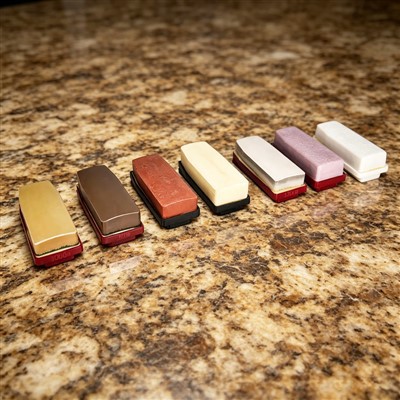
Resin Fickert Abrasive References
- ASME B110.1-2018, Abrasive Brushes: Classification, Performance, and Testing Methods
- Machining Science and Technology, Vol. 22, No. 3, 2018: “Abrasion Characteristics of Self-Sharpening Ceramic Abrasive Filaments”
- Journal of Materials Processing Technology, Vol. 255, 2018: “Bond Strength and Wear Resistance of Disc-Shape Abrasive Brush Filament Systems”
- Woodworking and Wood Products, Vol. 87, No. 6, 2019: “Abrasion Resistance Testing for Finishing Tools in Wood Manufacturing”
Quanzhou Cheefung New Materials Co., Ltd.
As one of the most experienced disc-shape abrasive brush enterprises in China, we are able to meet the needs of the majority of our customers. Please feel free to wholesale advanced disc-shape abrasive brush made in China here from our factory. For price consultation, contact us.
Address: Jinshan Community, Licheng District, Quanzhou City, Fujian, China
E-mail: info@prostonetools.com
WebSite: https://www.prostonetools.com/
