Hey there! If you’ve ever stood next to a regular loading dock door while a truck is being unloaded, you know that cold winter air just floods in and warm summer air slips right out—total waste of energy, right? As a high-speed rolling door supplier, I’ve heard this complaint a hundred times from warehouse managers, restaurant owners, and even grocery store operators. But what most people don’t get is that those clunky, slow doors aren’t just annoying—they’re driving up their heating and cooling bills like crazy. So today, let’s break down exactly how a high-speed rolling door cuts down on heat loss, no fancy jargon, just real stuff we deal with every day. High-Speed Rolling Door
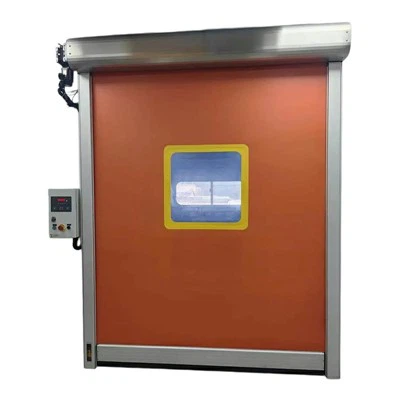
First off, let’s talk about what “heat loss” actually means in industrial and commercial spaces. It’s not just heat escaping through walls or windows. For spaces that get a lot of vehicle traffic—like loading docks, cold storage areas, or even big kitchens—most heat loss happens right at the entrance. When a standard door is open, it’s hanging there for 10, 20, even 30 minutes while a driver backs up a truck, unloads pallets, and moves stuff around. That’s a huge gap for air to flow. A high-speed rolling door, though? It opens and closes in like 1 to 3 seconds flat. That small time difference isn’t just convenient—it changes the whole game when it comes to keeping heat in.
Let’s get into the science part a little, I promise it’s simple. Heat moves from warm to cold, right? So if your warehouse is 68 degrees inside and the outside is 20 degrees in winter, every time the door opens, that warm inside air rises and spills out (hot air is lighter, so it goes up) while cold outside air sinks in. With a slow door, that exchange happens for way too long. Let’s do a quick math example: say a loading door is 10 feet wide and 12 feet tall. That’s 120 square feet of open space. If the outside air is 40 degrees and inside is 70, each minute the door is open, you’re losing roughly 1,800 cubic feet of warm air. Multiply that by 5 minutes per truck, 20 trucks a day, and suddenly you’re looking at 180,000 cubic feet of heat lost every single day. That’s like heating a small living room all day, just gone—because the door was too slow. High-speed doors cut that exchange time by 90% or more, so you’re only losing a tiny fraction of that air.
Another big one: air infiltration. Even when doors are supposed to be closed, standard ones often have gaps around the edges. Old metal doors might warp a little over time, or the rubber seals wear out, so cold air seeps through those small holes 24/7. High-speed rolling doors are built with tight, continuous seals. Most of our doors use dual-edge neoprene seals that press against the frame when closed, and some even have bottom seals that touch the floor, closing any gaps between the door and the ground. For cold storage, that’s a game-changer—cold storage rooms run on way more energy to stay cold, so even a small gap can make the refrigeration system work overtime. We had a client last year, a local frozen food warehouse, who switched from standard swing doors to our high-speed ones. Their refrigeration energy bill dropped 18% in the first quarter. That’s not a guess, that’s actual numbers from their utility company.
Wait, let’s not forget about wind. If you’re in a place with strong outdoor winds—like near a highway, or on a coast—wind can push cold air through open or gaping doors really fast. A slow door takes forever to close, so wind keeps blowing in while you’re waiting. High-speed doors seal shut so quickly that wind can’t create that constant flow. We also offer wind-resistant options for areas with gusty weather—these doors have reinforced panels that don’t budge when wind hits, so you’re not dealing with air sneaking through or the door getting damaged. That’s another hidden heat loss culprit: damaged doors from wind, which lead to even bigger gaps later on.
What about summer? Heat loss isn’t just winter—high-speed doors also keep cool AC air inside when it’s hot out. We’ve had restaurant clients with back-of-house delivery areas, where they used to lose 25% of their AC cool air every time the door opened. After switching, their AC bills went down 12% in summer. The same speed works in reverse—closing fast keeps warm outdoor air from getting a foothold inside, and the tight seals prevent that warm air from seeping through gaps when the door is closed. It’s not just heat we’re stopping; it’s temperature swings that make your HVAC system work harder than it needs to.
Let’s talk about durability too, because a lot of people worry that “fast” means “fragile.” But our high-speed rolling doors are built to last through thousands of openings and closures a day—way more than a standard door, which might only get used a few times an hour. That durability means less downtime, but also, a door that doesn’t warp or wear out as fast. A warped standard door gets bigger gaps, which leads to more heat loss over time. Our doors stay tight for years because the rolling mechanism is designed to move smoothly, so the panels don’t bend or shift. One of our clients has a high-speed door that’s been in use for 7 years, and their energy bills are still as low as the day they installed it. That’s the kind of long-term win we’re all about.
Wait, let’s clear up a common myth: some people think “if the door is only open for a second, does it even matter?” Yeah, it does. Think about a traffic light—if every truck takes an extra 10 seconds to move through, that’s a back-up, but if every truck takes 1 second less, the whole line moves faster. Same with air exchange. Let’s use a real example: a grocery store loading dock that gets 30 deliveries a day. Standard door takes 20 seconds to open, 20 to close—so 40 seconds per use. High-speed takes 2 seconds open, 2 seconds close—4 seconds per use. So instead of the door being open (and air flowing) for 20 seconds each time, it’s only open for 2 seconds. That’s 90% less time for air to escape. Over a day, that’s 12 minutes of total open time vs. 20 minutes. 8 fewer minutes of warm air lost—add that up over a month, and you’re saving hundreds of dollars on energy. It’s not just about the speed, it’s about the consistent, repeated time savings that add up.
Also, for spaces that need specific temperatures—like pharmaceutical cold storage, or food processing areas—keeping heat loss low isn’t just about saving money, it’s about compliance. If your refrigeration system is working overtime because of a leaky, slow door, you might not maintain the exact temperature required for your products. That can lead to spoiled goods, which is a huge financial hit. Our high-speed doors help you stay within those temperature ranges, so you’re not just saving energy—you’re protecting your inventory. We had a biotech lab client a while back who switched to our doors, and they stopped having temperature fluctuations that were spoiling test samples. That’s a double win: lower energy bills and no more wasted research.
Now, I know what you’re thinking: “Is this just a sales pitch?” No, honestly—we’re a high-speed rolling door supplier, but we’ve seen way too many clients throw money at slow, inefficient doors without realizing how much they’re wasting. Heat loss is one of the biggest hidden costs in commercial spaces, and it’s easy to miss until you see the numbers change after installing a high-speed door.
Let’s wrap this up. So the main ways a high-speed rolling door reduces heat loss are: super fast open/close times that minimize air exchange, tight continuous seals that stop air from seeping through gaps, wind resistance that prevents extra air flow in gusty weather, and durable design that keeps the door working tight for years. All of these add up to lower energy bills, less wasted heat (or cool air), and even protection for your inventory.

If you’re tired of throwing money away on energy because of a slow, leaky loading dock door, we can help. We work with all kinds of spaces—cold storage, warehouses, restaurants, retail, even biotech labs. We’ll walk you through your specific needs, show you how much you could save, and get the right door installed fast. No pushy sales stuff, just real solutions for real energy waste.
Fast Roll-up Door References
- Industrial Door & Access Systems Manufacturers Association (DASMA). Energy Efficiency Guidelines for Commercial Loading Dock Doors, 2022.
- U.S. Department of Energy. "Reducing Energy Loss in Commercial Buildings Through High-Speed Doors," 2023.
- Food Marketing Institute. Cold Storage Energy Efficiency Best Practices, 2021.
Suzhou Denasi Intelligent Technology Co., Ltd.
As one of the leading high-speed rolling door manufacturers and suppliers in China, we warmly welcome you to buy discount high-speed rolling door for sale here from our factory. All products are with high quality and competitive price. Contact us for quotation.
Address: No. 898 Jinsheng Road, Jinjiaba, Lili Town, Wujiang District, Suzhou City, Jiangsu Province
E-mail: ChinaDenas@163.com
WebSite: https://www.densiclean.com/
