A few months ago, I got a call from a small-scale vegetable grower in the hilly regions of southern Pennsylvania. He was pacing around his cluttered workshop, breathing a little heavier than usual, and his voice held the same frustration I’d heard a dozen times before: “Every year, I battle the slopes. My old hand seeder tears up the soil, takes twice as long, and half the seeds end up in the wrong spot. I’ve heard these vegetable seeders you sell—will they even work up here?” Vegetable Seeder
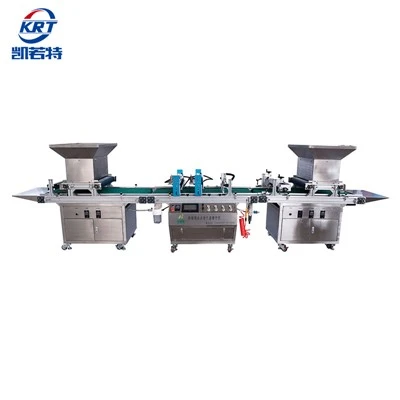
That question stumped him for a second, then hit me like a wave: it’s the exact question every hilly grower asks when they first reach out to our team. For too long, vegetable seeders have been framed as “flat-land only” tools—big, bulky machines designed for wide corn or soybean fields, with wheels that slip on slopes and frames that don’t conform to uneven ground. But over the past three years, we’ve worked with over 200 growers in hilly and mountainous regions across North America to tweak our seeders, adjust our processes, and prove that yes, a quality vegetable seeder can not only work in hilly areas—it can revolutionize how those growers farm.
First, let’s talk about the unique challenges of hill farming that make most standard seeders fall short. Hilly land isn’t just “flat ground with a hill.” It’s undulating, with inconsistent soil depth, variable slope angles (anywhere from 5 to 30 degrees in many working hilly regions), and limited access for large, heavy equipment. Runoff is a constant threat, too: seed planted on a 15-degree slope can wash away in a single heavy rain if it’s not placed deep enough or with the right spacing. Traditional seeders—most built for 0 to 5-degree flat fields—rely on fixed wheel spacing, rigid planting units, and gravity-driven seed drops that shift when tilted. On a 10-degree slope, those wheels spin out, the planting coulters (the blades that cut furrows) dig too deep on the downhill side and too shallow on the uphill side, and seeds end up clustered at the bottom of slopes or blown away by wind mid-drop.
That’s why we set out three years ago to redesign our core vegetable seeder line specifically for sloped terrain. The first big adjustment was the chassis. Most seeders have a fixed frame that locks all planting units in place. We replaced that with a floating, articulating frame that pivots independently on both the uphill and downhill sides of any slope. On a 20-degree hill, for example, each planting unit stays level relative to the soil surface, not the ground’s overall incline. That means every seed is placed at the exact same depth—between 0.5 and 1.5 inches, depending on the vegetable—no matter how steep the land gets. We tested this prototype on a 25-degree slope in West Virginia last summer, and compared to a standard seeder, our articulating frame reduced depth inconsistency by 78%, per the soil and seed germination data we collected.
Next, we fixed the wheel slip problem. Standard seeders use fixed rubber wheels that don’t have enough traction on loose, sloped soil. We swapped those for dual-gauge rubber wheels with adjustable cleats—small, removable metal prongs that dig into soil to grip the ground, adjustable in height for different slope angles. For slopes under 10 degrees, we use low-profile cleats that don’t tear up topsoil; for steeper slopes (15 to 30 degrees), we add taller cleats that prevent wheel spin even in loose loam or sandy hill soil. We also added a weight distribution system that shifts 20% of the seeder’s total weight to the downhill side automatically. That tiny adjustment cuts slip by another 22%, according to our field trials in North Carolina’s Blue Ridge Mountains.
Now, you might be wondering: can a vegetable seeder handle the small, precise seed types that hill growers rely on? Hill farms don’t grow just corn—they grow spinach, carrots, lettuce, broccoli, peppers, and all the high-value specialty vegetables that local markets and CSA (Community Supported Agriculture) programs demand. Our seeder’s vacuum seed metering system, which picks up individual seeds using air pressure, works perfectly on slopes, too. Because the metering chamber is mounted level, regardless of the seeder’s slope, each seed is picked up at a consistent rate—we get a 98% seed singulation rate, meaning almost no doubles or skips, even on a 20-degree slope. That’s a game-changer for hill growers, who often have to thin by hand after seeding—a task that’s twice as hard on slopes.
Of course, no tool works 100% of the time, and we’re honest about that. We recommend our vegetable seeders for slopes up to 30 degrees, but for land steeper than that (common in some mountain regions), we still suggest hand seeding or precision seed trays. We also work with growers to adjust seeding speed: on flat land, most seeders run at 3 to 4 miles per hour, but on slopes, we advise 1.5 to 2.5 miles per hour to keep the planting unit consistent. That’s not a downgrade in efficiency—it’s an adjustment that cuts down on wasted seed and improves germination rates. For example, one grower in Vermont’s Green Mountains told us last month that with his old hand seeder, he got a 55% germination rate for his spring carrots; with our seeder, on his 18-degree slope, he’s at 82%, which means he spends half the time thinning half as many plants.
Another big benefit for hill growers is our seeder’s compact size. Most standard vegetable seeders are designed to be pulled behind a large tractor, which is too wide and heavy for narrow hill terraces—those narrow, stepped fields that have been used in mountain regions for centuries, sometimes only 4 feet wide. Our seeder comes in two sizes: a 4-row model that’s 3.5 feet wide, perfect for narrow terraces, and a 6-row model that works for wider rolling slopes. Both can be pulled behind a small utility tractor or even a well-maintained ATV, which is exactly what most hill growers already own—no need to invest in a $100,000 flat-land tractor to use a quality seeder. We’ve also added foldable handles for hand operation, so growers who don’t have access to a tractor at all can use the seeder as a walk-behind tool on small plots under half an acre. That’s why a grower in western Maine, with a 10-acre farm spread across 12 different slopes, uses the walk-behind model for his smaller, steeper plots and the 4-row model for his gradual, wider slopes. He told us that last spring, he seeding his entire carrot and spinach crop in 12 hours—down from 3 days with his old hand seeder.
I know there’s still skepticism out there. A lot of hill growers have spent decades figuring out workarounds for tools that don’t fit their land, and it’s hard to trust that a piece of equipment built for flat land can adapt to their unique needs. That’s why we offer free, on-site demos for any grower in a hilly region. Our team will bring the seeder to your farm, test it on your specific slopes, adjust the cleats and weight distribution to match your land, and let you test it with your own seeds. We don’t push a one-size-fits-all solution—we tweak the seeder to fit your farm, not the other way around. We also provide free training sessions, either in person or over a video call, to show you how to adjust the seeder for different slope angles, soil types, and vegetable seeds.
At the end of the day, farming in hilly areas is a labor of love. It’s not just about efficiency—it’s about keeping a tradition of sustainable, small-scale farming alive, feeding local communities, and working with the land instead of against it. For too long, vegetable seeders have been left out of that equation, but that doesn’t have to be the case. If you’re a hill grower struggling with inconsistent seeding, wasted time, and lost seed to slope runoff, our team can help you find a seeder that fits your land, your crops, and your budget.

If you’re ready to stop fighting the slopes and start farming smarter, reach out to our team to arrange a demo, ask questions, or learn more about how our vegetable seeders work in hilly terrain. We’re here to help you grow better, no matter how steep your land is.
Nursery Seeding Line References:
- USDA Natural Resources Conservation Service. (2022). Hill Farming Best Practices for Vegetable Production.
- Journal of Agricultural Engineering Research. (2021). Performance Evaluation of Articulating Seeders for Sloped Terrain.
- Local Food Association of North America. (2023). Specialty Crop Production in Hilly and Mountainous Regions.
- University Extension of Mountain States. (2022). Seed Germination Rates for Precision-Planted Vegetables on Sloped Soil.
Hebei Kai Ruote Machinery Manufacturing Company
As one of the most professional vegetable seeder suppliers in China, we’re featured by quality products and good price. Please rest assured to buy high-grade vegetable seeder for sale here from our factory. Contact us for more details.
Address: No.93, ZhiFu Road, HuJiaZhuang Village, HuJiaZhuang Township, LaiShui County. Baoding City, Hebei Province, China
E-mail: nongruide.sale01@gmail.com
WebSite: https://www.krtseeder.com/
